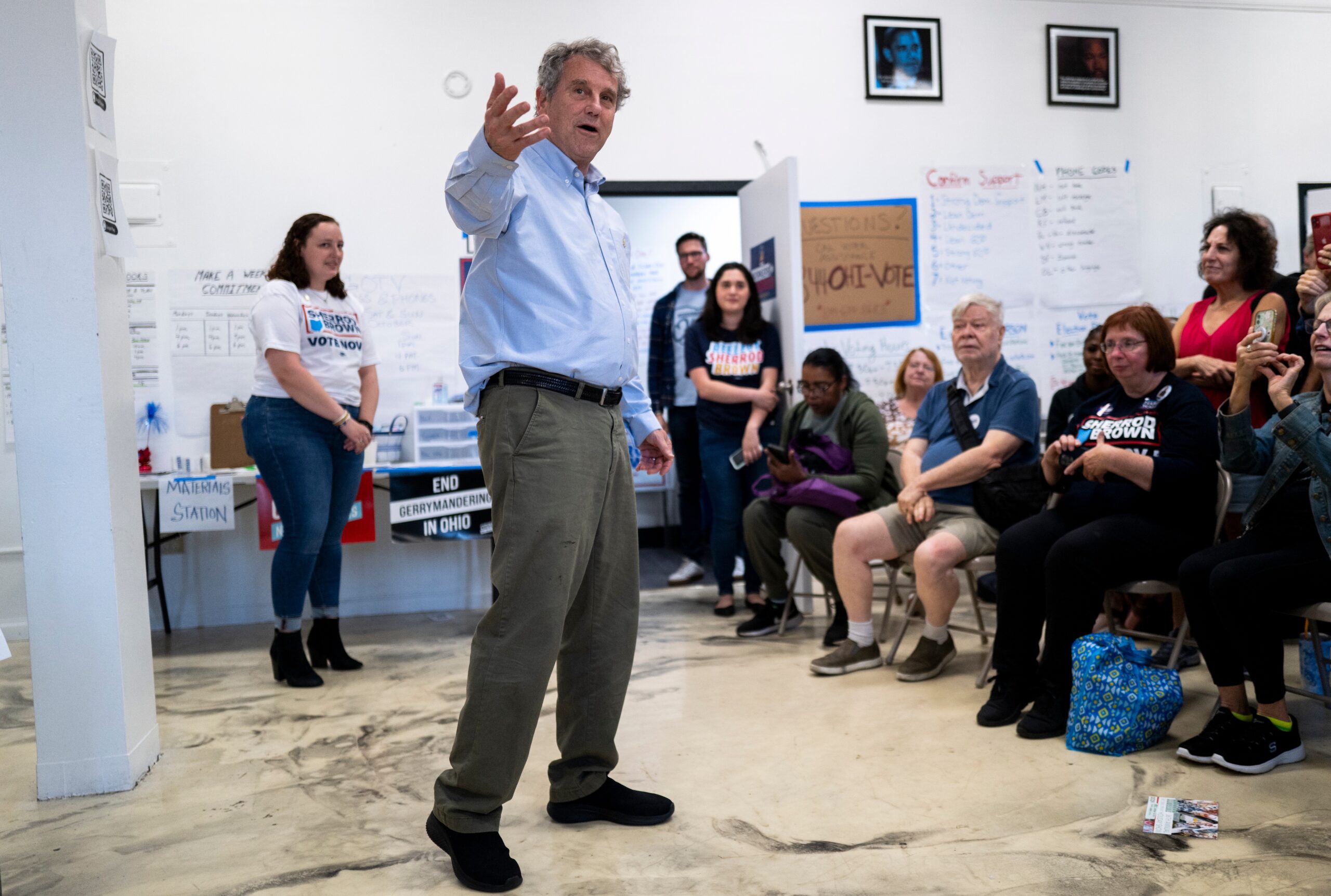

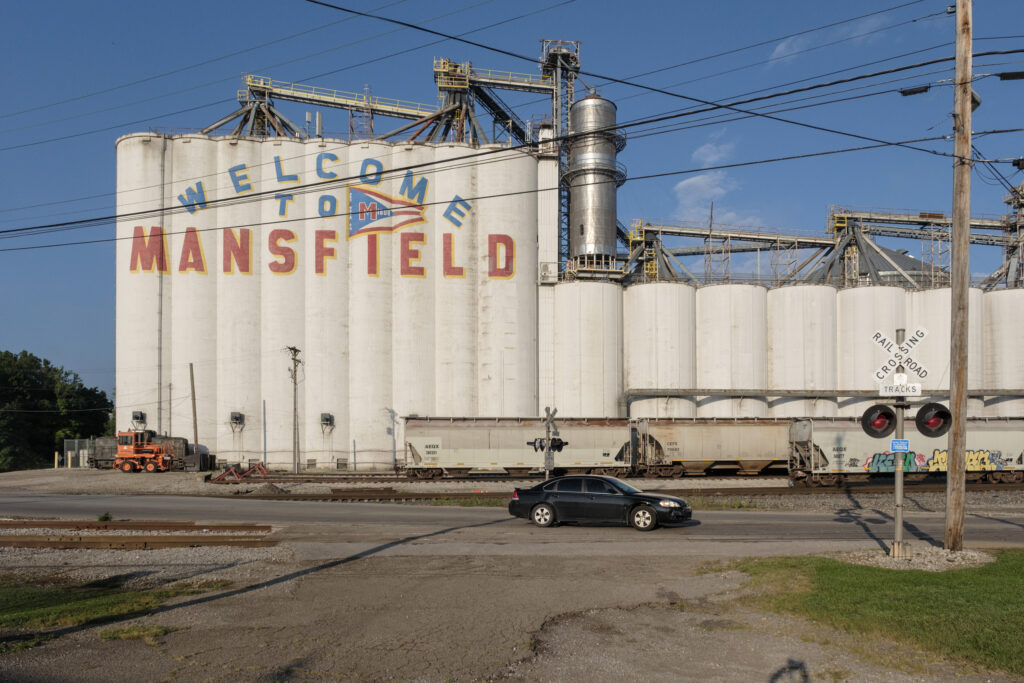
MANSFIELD, Ohio — Former Democratic senator Sherrod Brown spent 50 years forging a bond with Ohio’s working-class voters, starting in the 1970s as a young state lawmaker who often dropped by the union halls in this small industrial city he represented to talk with workers.
Read more Takeaways from a disruptive primary election season
Brown won reelection to the Senate during President Donald Trump’s first term even as Ohio started turning redder — but he lost his seat in 2024 with Trump on the ballot, as many blue-collar voters embraced Trump and abandoned Brown and his party.
Now, Brown, 73, is trying to return to Washington in a race that is testing whether he can win back some of the working-class voters he lost in places like Mansfield — and that could determine whether Democrats retake control of the chamber.
Sen. Jon Husted (R-Ohio), whom Brown is challenging, is also trying to win over those voters, criticizing Brown as an ineffective fighter for the working class whose decades in office did little to help them.
A handful of labor unions that supported Brown in the past have endorsed Husted this year. But most union leaders who have endorsed are sticking with Brown, and there are tentative signs that he could run stronger with union members than he did in 2024.
The Trump shirts that many union members sported at work two years ago have largely disappeared, local labor leaders say. Workers who voted Republican in part because of frustration with the rising cost of living in 2024 remain upset. And some union workers who voted for Bernie Moreno, the Republican who defeated Brown, have told labor leaders that they plan to back Brown this year.
Most public polling in recent months has found Brown leading Husted. A Fox News poll conducted last month found Brown leading Husted 64 percent to 33 percent with voters in union households — a much bigger advantage than Brown’s margin with those voters in 2024, according to AP VoteCast and network exit polling. Union households made up about 20 percent of the electorate in Ohio two years ago, according to AP VoteCast.
“The mood of the electorate has shifted dramatically in Ohio,” said Tim Burga, the president of the Ohio AFL-CIO.
Ohio is crucial to Democrats’ drive to retake the Senate in November’s midterm elections. Democrats need to pick up four seats to recapture the Senate majority, including at least two in states such as Ohio that Trump carried by double-digit margins two years ago.
Brown lost reelection by less than four percentage points in 2024, running more than seven points ahead of Kamala Harris in Ohio. He won union households but by a narrower margin than he did in 2018, according to AP VoteCast and exit polls.
Union members are a subset of a larger group of working-class voters who have shifted toward the Republican Party in the Trump era. Brown also lost with voters without bachelor’s degrees — another proxy for the working class — in 2024 after winning them six years earlier.
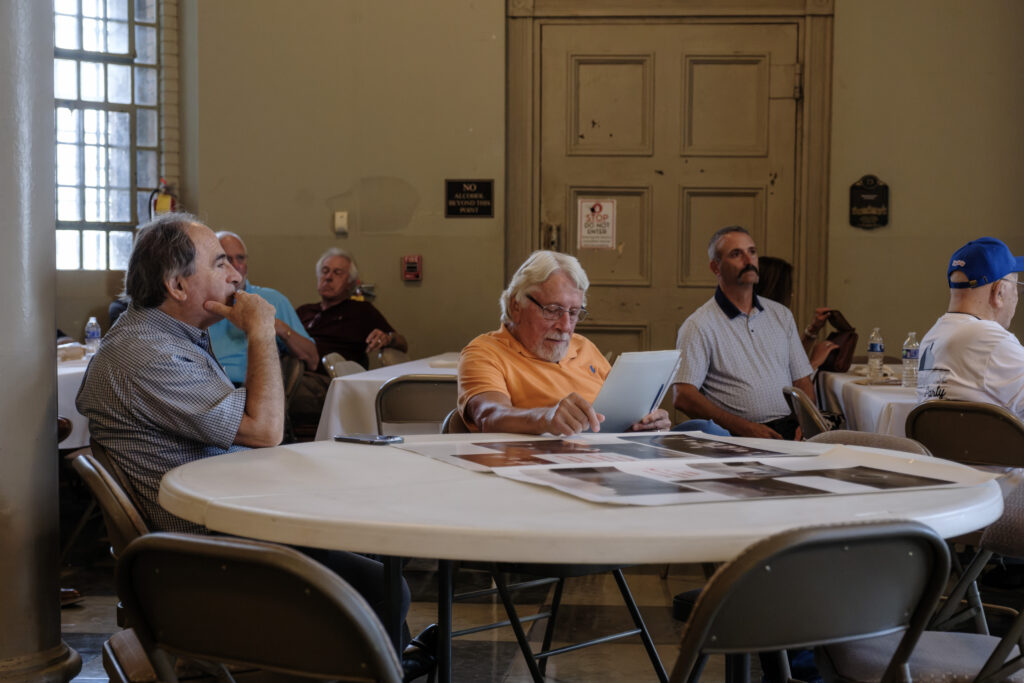
Brown says he has also sensed a shift this year among union voters. In an interview this month, he said union leaders seemed to be talking with their members about the race more than they did in 2024. Ohioans did not vote for war with Iran or skyrocketing gas prices, he said.
“They’re a much more receptive audience,” Brown said. “People are upset for very good reason at what’s happened, and they look at somebody like me and they know I’ve been making these fights. It’s not [like] I’m a late convert to fighting for workers.”
Ron Adkins, the president of Lorain County AFL-CIO Federation of Labor, said he expected a significant number of his members who supported Moreno in 2024 to vote for Brown, driven by economic frustrations.
“I’m seeing a lot of buyers’ remorse,” Adkins said. “So I think Sherrod’s going to win this.”
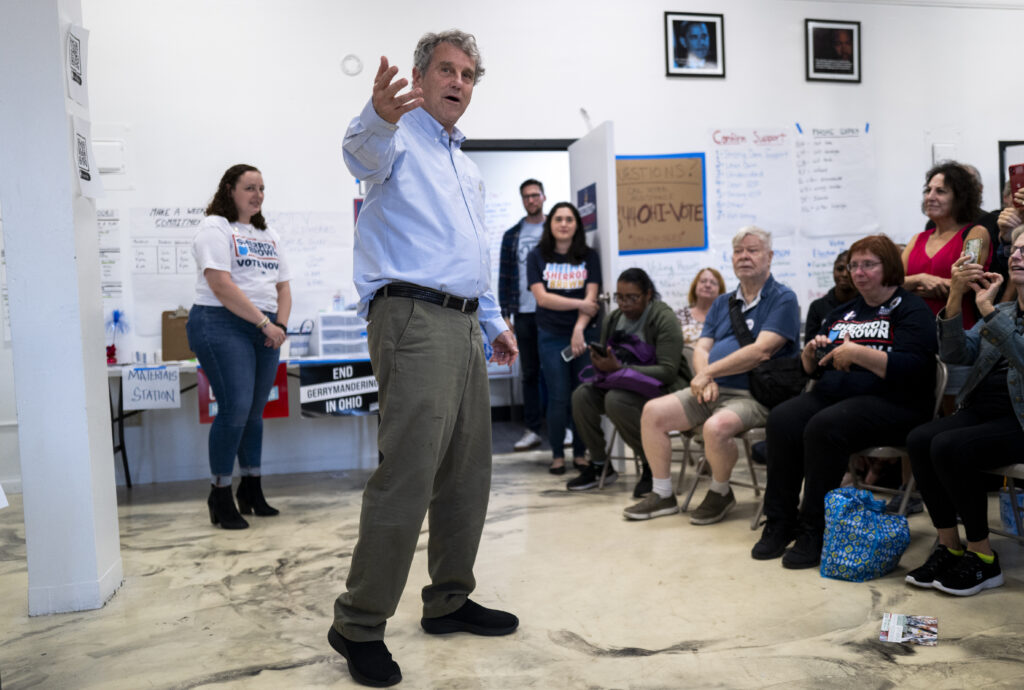
Brown is not a son of the working class. He grew up in Mansfield, where his father was a doctor and his mother was active in the local Democratic Party. But he has spoken often about going to school with the children of workers at Mansfield’s industrial powerhouses: Westinghouse and General Motors, Mansfield Tire and Rubber Company and Tappan Stove.
Brown left for Yale but returned to Mansfield after graduating and ran for state representative in 1974, winning his seat days before his 22nd birthday. By the time he won, he has said, the jobs that sustained his classmates’ parents had been disappearing for years. He spent hours at the United Steelworkers union hall in Mansfield, “listening to workers talk about their dreams,” as he put it in a Senate floor speech in 2018.
Kenneth Cooper, the international president of the International Brotherhood of Electrical Workers, who grew up in the same town, said he thought Brown’s experience watching “really good people suffering” in Mansfield shaped Brown’s fierce advocacy for unions.
“I really believe that a lot of Sherrod’s values came from seeing that happen in that town,” Cooper said.
Brown won a House seat in 1992 and became an outspoken critic of the North American Free Trade Agreement, writing a book titled “Myths of Free Trade: Why American Trade Policy Has Failed.” In the Senate, he helped pass legislation to shore up union pension plans and to allow retirees who receive state or local pensions to get their full Social Security benefits. He supported Trump’s tariffs on imported steel during his first term, though he has criticized the more sweeping tariffs that Trump imposed in his second term as “nonsensical.”
Read more Trump told Republicans to talk about him. Data shows they aren’t listening.
Brown’s record earned the loyalty of Ohio labor leaders. But he could not overcome the flight of blue-collar voters — including many in unions — away from Democrats as they voted for Trump. He even lost Mansfield in 2024 after carrying the city during his previous Senate campaigns.
After the election, Brown pointed to working-class voters’ defections as the reason he lost.
“Workers have slowly migrated out of the Democratic Party,” he told The Washington Post at the time.

Husted, 59, argues that Brown lost because he has failed to improve working-class voters’ lives.
Husted is trying to appeal to those same voters. He has talked about watching his father lose his job at the Mohawk Tools factory in Montpelier, Ohio. He has campaigned on the Republican tax and domestic policy law that Trump signed last year — which Democrats opposed — arguing that it helped blue-collar workers by cutting taxes on overtime. And he has criticized Brown for supporting the Biden administration’s border policies, which he said undermined working-class wages.
Brown hasn’t changed, Husted said, but after decades in office, “the voters in Ohio have figured him out.”
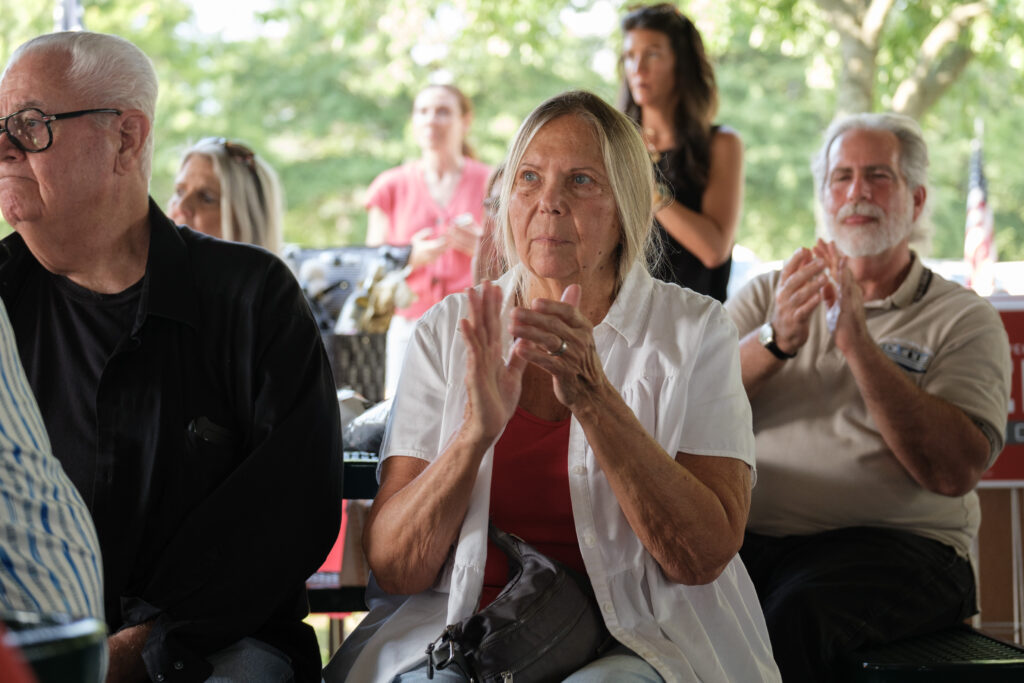
“That’s why he lost to Bernie Moreno two years ago, and that’s why he’s going to lose again this year,” Husted told a crowd on a sunny Thursday evening last month at the Stark County Republican Party picnic.
Several unions that supported Brown in 2024 are backing Husted. So is the Cleveland Building and Construction Trades Council, which remained neutral two years ago.
Dave Wondolowski, the executive director of the Cleveland union, said he had seen no indication union members are more willing to support Brown than they were in 2024.
Wondolowski said Husted’s office has aided his union by helping push through more than a dozen project labor agreements, which set pay and conditions for workers on specific construction projects. He also faulted Brown’s ads aggressively criticizing data centers, which provide construction work for his union’s members.
“My members are standing back scratching their heads, saying, ‘I thought this guy said he was for us, and now he’s opposed to one of the biggest job creators that we’ve seen in decades,’” Wondolowski said.

In Mansfield, though, local labor leaders said some of their members who voted for Moreno in 2024 are more open to supporting Brown this year.
Brian McPeek II, the business manager of IBEW Local 688, said his members split roughly evenly between Brown and Moreno two years ago. Some complained that Brown had been in office too long.
This year, McPeek said, his union’s members remain frustrated with the economy — and he expects them to vote overwhelmingly for Brown.
“‘We don’t like the change that has happened, and we want change again,’” McPeek said, describing the attitude of his members. “Honestly, the majority of the conversations that I’ve had have been like that.”
Morgan Hollenbach, 28, a union worker at the steel mill in Mansfield, said he voted for Trump and Moreno in 2024 but has been disappointed by Trump’s second term.
“I expected a lot of improvements within the economy that happened in 2017, and stuff’s only getting more expensive,” he said. “The price of gas is insane.”
Brown won over Hollenbach by visiting the picket line in nearby Shelby in February when steelworkers there went on strike — one of five picket lines that Brown has joined in Ohio since launching his campaign. He was “dumbfounded” Brown showed up, he said.
“So many politicians, prior to them getting in office, they say all these beautiful-sounding things to get you to vote for them — and then one thing leads to another and they fall short on a lot of their promises,” Hollenbach said. “But that guy was there, and I think it meant a lot to a lot of people. I know it did to me.”
Read more The midterms are over. Sort of.