Six months of primaries offer pointed insights into how voters feel heading into the November midterms.
Read more Trump told Republicans to talk about him. Data shows they aren’t listening.

The primaries for the 2026 midterms are over now that Delaware voters cast the final primary ballots Tuesday.
But lessons from these contests — including the problems both parties are facing with their brands and voters’ deep economic concerns — will play a major role in the critical midterm elections less than seven weeks away and the open presidential contest to follow.
Here is what we learned from six months of primaries:
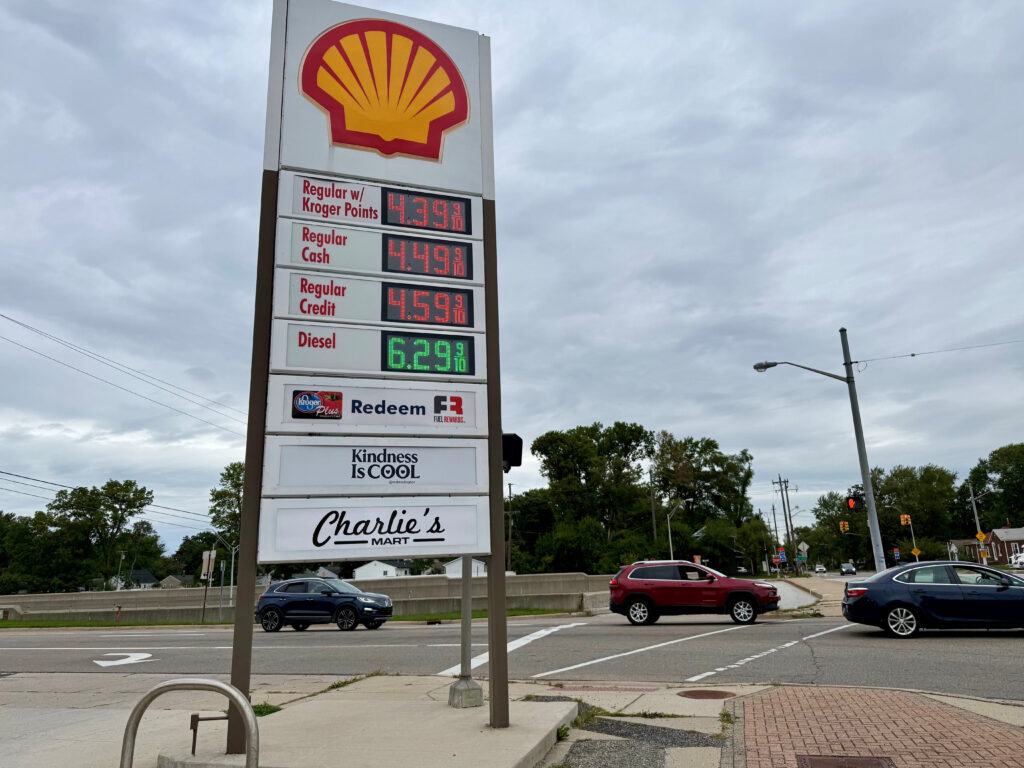
No issue is more important this election than the state of the economy and high prices on gas, groceries and more. And voters on both sides of the political divide are practically, and in some cases literally, screaming this at their elected officials.
The economy was always going to be a major issue in this election, driven by rising prices from President Donald Trump’s increased tariffs and other economic factors. But that dynamic grew stronger when the United States began a war with Iran in February, a conflict that has dragged on for months and sent gas prices skyrocketing.
“Every time you ask voters what they care most about … essentially they say cost of living in three different ways,” said Mike Smith, the head of House Majority PAC, the top Democratic super PAC focused on winning control of the House.
A Marquette Law School poll released last month found that half of American voters feel either “inflation and the cost of living” or broadly “the economy” is the top issue heading into the midterms.
What stands out in the polling, however, is how even Republicans have soured on Trump’s leadership on economic issues. Just 29 percent of Republicans said the economy is better now than it was a year ago, according to a New York Times-Siena poll released this week. That’s down from 72 percent in a January poll.
Trump has struggled to defend his economic record. While he named himself the “affordability president” last year, he later dismissed a focus on affordability as “a con job by the Democrats” and said higher gas prices are a small price to pay for the war in Iran.
Republicans like Rep. Ashley Hinson, who is running in a competitive Senate race in Iowa, have argued on the campaign trail that Trump and Republicans are working to improve things but are still rebuilding from where Democrats left the economy in 2024.
“That is at the heart of everything,” Hinson told The Washington Post. “And I’m reminding folks we are moving things forward and we’re trying to fix these problems. I understand that there is more to do here and that’s exactly why I’m running.”

Democrats’ energy is coming from the left, with several notable establishment candidates losing to more progressive, and often younger, opponents.
One of the first hints came in Maine, where Gov. Janet Mills (D) failed to overcome a challenge from progressive Graham Platner in the state’s critical Senate primary. Mills was among Senate Minority Leader Chuck Schumer (D-New York)’s top recruits, with Democrats hell-bent on ousting Sen. Susan Collins (R). But Mills never overcame the energy and momentum Platner built, eventually bowing out weeks before the primary.
Platner would go on to end his own campaign after a woman he previously dated publicly accused him of sexual assault amid a string of other controversies. But in a sign of progressive power, former Maine state senator Troy Jackson (D), a Platner acolyte with many of the same positions, was picked by party activists to replace him.
Progressives picked up another Senate win in Michigan, where Abdul El-Sayed (D), a former public health official, defeated Rep. Haley Stevens (D) in a contentious race that turned on the progressive lambasting the congresswoman as a product of Washington.
“The left successfully tapped into the deep frustrations around the economy and the status quo and the establishments in both parties,” said Morris Katz, a Democratic operative who advised Platner and other progressive candidates. “That should be harnessed in general elections too. People do not want just more of the same.”
The left’s power was also defined by the rise of the Democratic Socialists of America, a once obscure group in American politics whose influence has grown after some members unexpectedly won House primaries and big-city mayoral elections.
One example came in Florida, where state Rep. Angie Nixon defeated Lt. Col. Alex Vindman, a key witness in Trump’s first impeachment trial, in the state’s Senate primary. Nixon, a member of the democratic socialist organization, raised just under $1 million in the primary, a staggeringly low number compared with the $16 million Vindman brought in. But the energy on the party’s left propelled Nixon to victory, stunning Democrats who thought Vindman would run away with the contest.
While there is clear energy on the left, it remains unclear whether it will help or hurt the party in November. Polls show Democrats are significantly more eager to vote in the midterm elections, and Republicans are starting to worry about a “scary” lack of enthusiasm among core voters ahead of midterms, a mood that could doom candidates in particularly tight races.
But the rise of the party’s far left has become a frequent campaign-trail attack.
“Primary season taught the country one clear verdict, and it’s that the Democrat Party handed the keys to the radical socialists who are now in complete control of their party,” said Mike Marinella, a spokesperson for House Republicans’ campaign arm, who called this trend “a big reason why Democrats are walking into a November rout.”
Read more The midterms are over. Sort of.

It’s a bad time to be an incumbent.
Several high-profile incumbents — Democrats and Republicans — lost their primaries this year, often to opponents who seized on antiestablishment anger and voters’ disdain for Washington.
Republican Sens. John Cornyn (Texas) and Bill Cassidy (Louisiana) lost their primaries after Trump backed their opponents. The story was similar for Rep. Thomas Massie (R-Kentucky), who fell to a Trump-backed challenger after bucking his party on several issues.
Establishment Democrats had it even worse. House incumbents — in New York, Colorado and Michigan — lost as part of the above-mentioned progressive wave.
Some incumbents — including longtime Rep. Al Green (D-Texas) — were also hit by Trump’s unprecedented campaign to draw new House districts outside the normal 10-year process.
Age also played a role in incumbent takedowns. Rep. John B. Larson, who was seeking a 15th term in office, lost his Connecticut primary to the former mayor of Hartford. But the record was mixed on questions about political gerontocracy. Sen. Ed Markey survived a challenge from Rep. Seth Moulton earlier this month, fending off questions about whether someone who will be 86 when their next term ends should keep serving.
Possibly the clearest example of anti-Washington fervor affecting a longtime elected official came in Colorado, when Sen. Michael Bennet (D) lost his primary to be the state’s next Democratic nominee for governor to state Attorney General Phil Weiser, who made the case to voters that he had been more aggressive in confronting Trump and lambasted Bennet as part of the problem in Washington.
“There is a great deal of cynicism about politicians and politics in general,” said Eileen Laubacher (D), a Navy veteran hoping anti-incumbent fervor will help her underdog bid to oust Rep. Lauren Boebert (R-Colorado) in November. “People are looking for seriousness, and for people who they think are not actual politicians, who are not looking … to become internet famous, to become wealthy, to be powerful. They want something different.”

Trump’s endorsement has long been the most powerful in Republican politics.
He boasted an impressive record this primary season — pushing through several candidates others in his party regarded as flawed. But there were also signs his hold is weakening in some notable races.
Last month alone, his endorsed candidates lost major primaries in Minnesota, Michigan and Tennessee. They also lost several races in Florida, his adopted home state.
Trump is well aware of his win-loss record and has, at least once, tried to save face. In June, when his candidate for South Carolina’s primary for governor showed signs of struggle, he expanded his endorsement to a second candidate. He won, sort of.
Trump has fumed at any suggestion that he had a less-than-perfect success rate.
Trump did have some clear wins. He helped Texas Attorney General Ken Paxton (R) defeat Cornyn in the primary despite a sweep of scandals, successfully pushed Sen. Darline Graham through a competitive primary to replace her brother, the late Sen. Lindsey Graham, in South Carolina, and successfully ousted most of the Indiana state senators who defied his call to redistrict the state.
But the losses — once rare for the Republican leader — hint at a restive Republican base open to options beyond the party’s standard bearer for over a decade.
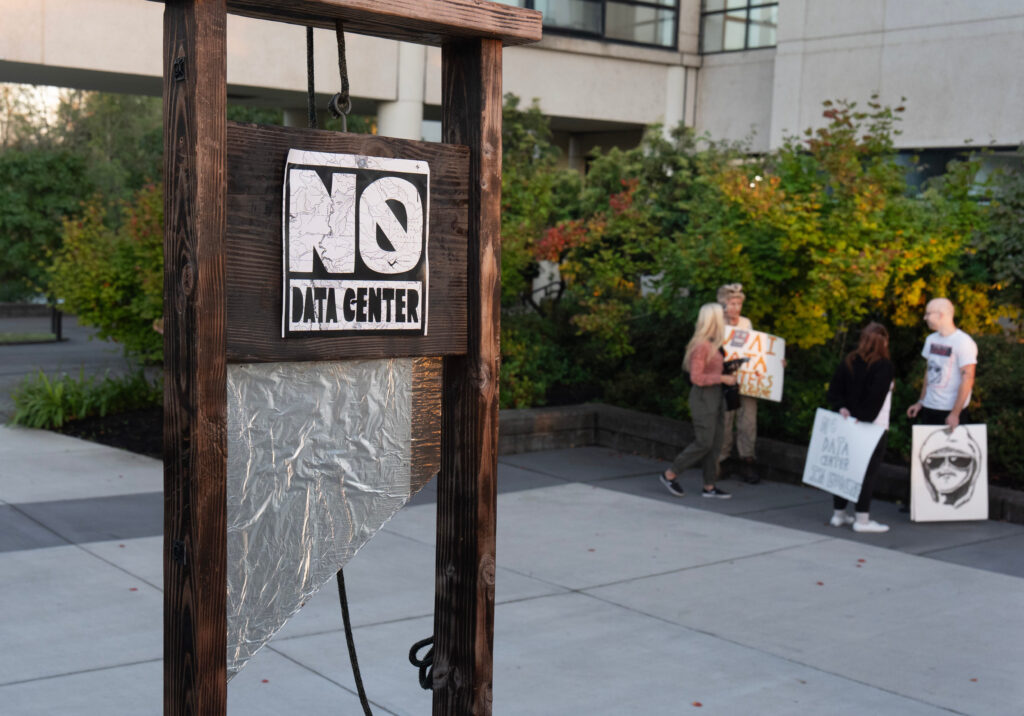
Two years ago, the rise of data centers was largely an issue playing out in city council chambers and small community meeting halls.
Today, no single new issue may be more resonant with Americans than the proliferation of these buildings, with voters seeing them as relevant to concerns such as energy prices, job insecurity and the rise of unchecked technology.
“The pervasiveness of tech in our lives is felt everywhere and yet it is invisible,” said Sacha Haworth, the head of the Tech Oversight Project, an accountability organization focused on the technology industry. “A data center is the physical manifestation of tech’s pervasiveness in our lives.”
The issue has energized candidates nationwide, becoming a symbol of Americans’ rage and bringing Democrats and Republicans together in a way few other concerns have.
Democrats have looked to seize on this antipathy, with many running ads and speaking out about data center projects in communities that do not want them. Some have called for an outright moratorium.
Trump has positioned his party behind data centers, though some candidates have started to stray. “The only reason that communities throughout the U.S.A. should not want Data Centers is if they want to end up being backwards and poor,” Trump wrote recently.
Other more niche issues have captured the political zeitgeist, too. Surveillance systems known as automated license-plate readers, especially those produced by Flock, have become a relevant campaign issue with bipartisan detractors.
And Democrats saw this year that money from the American Israel Public Affairs Committee, a pro-Israel organization that drew the ire of Democratic voters because of Israel’s war with Gaza, was a focal point in primaries. The trend led to some of the most fervent attacks against candidates who accepted money tied to the group, a movement that could become relevant in the general election as the group boosts Republicans in key races.
Read more Trump’s third surgeon general nominee, Nicole Saphier, to face Senate