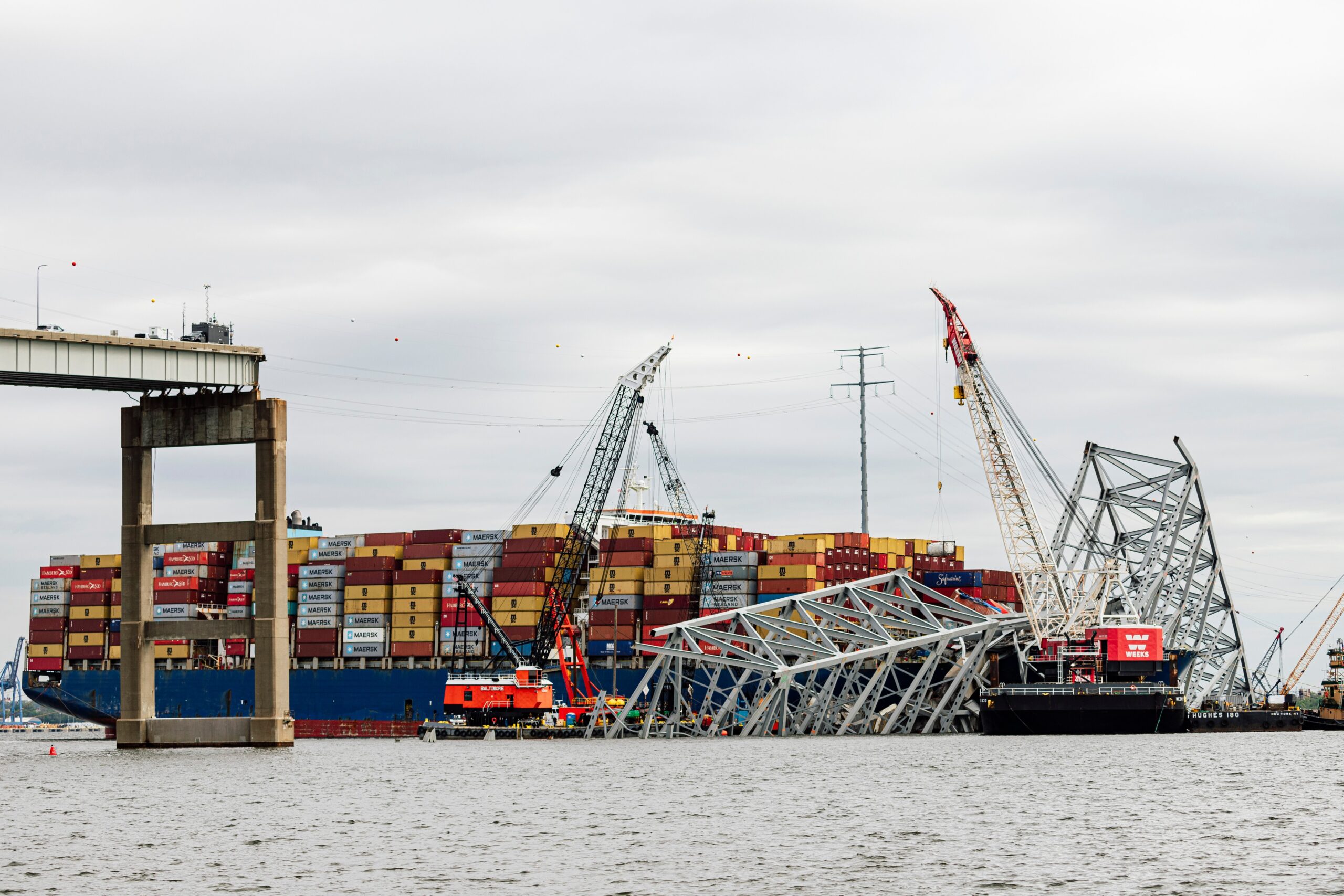
Prosecutors accused the Singapore-based company and subsidiaries of failing to maintain proper systems on the Dali cargo ship, which crashed into the Baltimore bridge in 2024.
Read more Trump shares post calling for Obama’s arrest
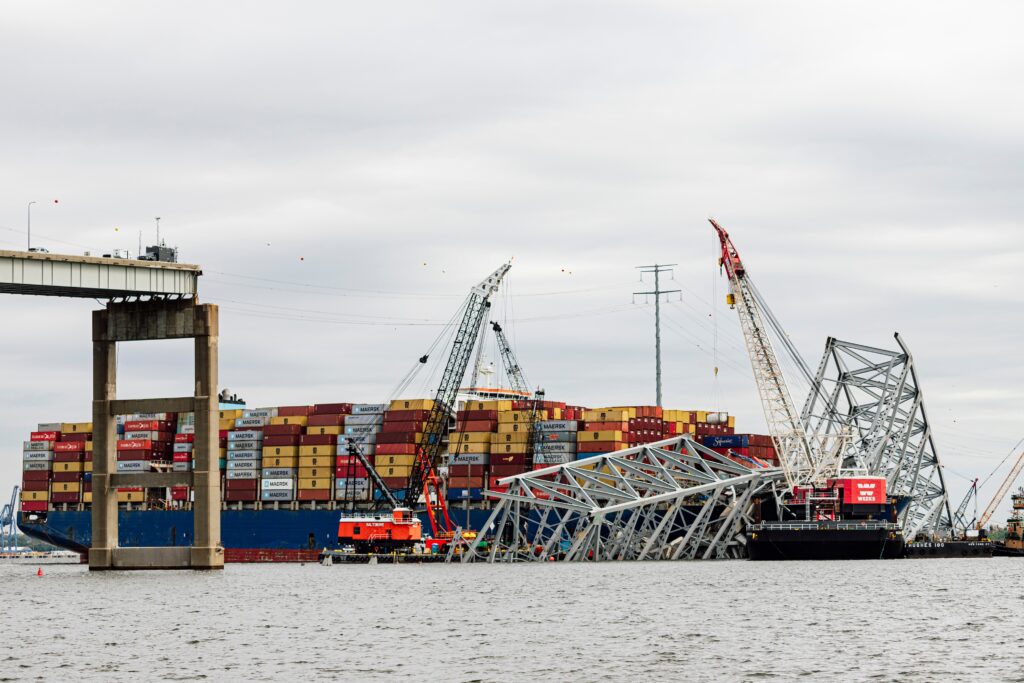
Federal prosecutors announced criminal charges Tuesday against a Singapore-based global shipping company and subsidiaries, accusing them of safety violations that led to the massive container ship crash that caused the 2024 collapse of Baltimore’s Francis Scott Key Bridge.
An indictment filed in federal court in Baltimore accused entities of Synergy Marine Group of failing to maintain proper systems aboard its ship, the Dali, and others in its fleet. Those lapses left the Dali unable to recover from a blackout of its systems and unable to veer away as it crashed into the bridge in the early hours of March 26, 2024. The disaster left six men dead, prompted the closure of one of the East Coast’s busiest ports for months and dealt more than $5 billion of economic loss to Baltimore and Maryland.
The indictment, returned under seal last month, also alleges the company and the Dali’s technical supervisor, Radhakrishnan Karthik Nair, falsified safety inspection records and lied to investigators with the FBI and National Transportation Safety Board after the crash.
The companies and Nair face charges including counts of conspiracy; misconduct or neglect of ship officers resulting in death; violations of the Clean Water Act and Ports and Waterways Safety Act; and obstruction of an agency proceeding.
Kelly O. Hayes, the U.S. attorney for the District of Maryland, announced the charges at a news conference Tuesday aboard a ship docked in the Port of Baltimore. Flanked by officials from the FBI, the Justice Department’s Environmental and Natural Resources Division, and the Environmental Protection Agency, she called the indictment a “first step” in holding those responsible for the crash to account.
“The Key Bridge collapse forever changed Maryland,” said Jimmy Paul, special agent in charge of the FBI’s Maryland field office. “The collapse should never have happened. As alleged, the bridge was struck and collapsed because those who were responsible for the ship’s operation deliberately cut corners at the expense of safety.”
If convicted, the companies could have to pay a fine of up to twice the economic loss from the collapse as well as restitution and possible criminal forfeiture.
A spokesperson for Synergy said the company was “deeply disappointed” by prosecutors’ decision to file charges in the case.
“Synergy will defend against these allegations with vigor and remains committed to pursuing all legal avenues to ensure those truly responsible for the allision with the Francis Scott Key Bridge are held to account,” the company said in a statement.
The charges come after a two-year criminal investigation that commenced just weeks after the crash. The FBI and other federal authorities raided the Dali at sunrise, as the Key Bridge’s twisted steel beams still lay draped across the trapped shipping container in the frigid Patapsco River.
That raid, first reported by The Washington Post, was the earliest sign that the Justice Department was probing whether the crew and the ship’s owner and operator — Singapore-based Grace Ocean Private Limited and Synergy Marine Private Ltd. — had knowingly allowed the vessel to leave the Port of Baltimore despite evidence that it had serious system problems.
Investigators with the National Transportation Safety Board later said that the 985-foot Singapore-flagged ship lost power twice while leaving the port and slammed into one of the bridge’s support pillars. Before the vessel left port, it had experienced two previous electrical blackouts.
Months after the initial raid, in September 2024, federal law enforcement agents boarded a second ship in Baltimore’s port, the Maersk Saltoro, which was managed by the same parent company as the Dali.
Read more Hegseth, Caine encounter intense bipartisan frustration with Iran war
Attention instead has focused on the independent NTSB investigation, the civil liability case in U.S. District Court in Maryland and the cost of rebuilding the critical span, a project officials have said they do not expect to fully complete until 2030.
During a public hearing last fall, NTSB investigators spent hours presenting their final finding: that the Dali careened into the Key Bridge at about 1:30 a.m. because of a combination of technical and management problems that preceded its departure from the Port of Baltimore.
The NTSB determined that the probable cause of the deadly crash was a critical loose wire on the Dali that created a “precarious electrical connection” and ultimately a blackout, resulting in the ship losing its propulsion and steering close to the bridge.
Although power was briefly restored, the Dali suffered a second blackout, which investigators said was the fault of inappropriately configured fuel pumps that had starved the ship of fuel needed for steering power and control.
Prosecutors said Tuesday that Synergy improperly relied on an unapproved flushing pump to supply fuel to two of the four generators aboard the Dali. That pump was not designed to automatically restart following the first blackout and the ship’s crew was unable to manually restart it in time to prevent the crash, according to the indictment.
In its final report, the NTSB said Synergy Marine likely knew about the improper fuel pumps but did not address the problem. Crew members said they did not know the pumps were wrongly configured, investigators said, and Synergy had no policies in place regarding the matter at the time of the crash.
The indictment unsealed Tuesday accused the company and Nair of lying to NTSB investigators and later a federal grand jury about the use of the flushing pump. Nair and others also falsified safety inspection records during investigations of the incident, prosecutors said.
Hayes said Tuesday that Nair, a resident of India, had not been taken into custody but vowed the Justice Department would use every possible tool to bring him to the United States to stand trial.
As part of the broader investigation, federal safety officials also pointed to state officials at the Maryland Transportation Authority — which managed the Key Bridge — for what they said was a failure to conduct a recommended vulnerability assessment of the span. Such an assessment could have prompted a number of countermeasures that could have better protected the bridge against collapse from a ship strike.
In addition, the investigators concluded that better emergency communication protocols could have prevented the deaths of the six construction workers on the bridge when it collapsed: José Mynor López, Miguel Angel Luna Gonzalez, Alejandro Hernandez Fuentes, Dorlian Ronial Castillo Cabrera, Maynor Yasir Suazo Sandoval and Carlos Daniel Hernández Estrella.
Julio Cervantes Suarez, a seventh member of the construction crew, fell into the river but survived. The crew’s inspector, Damon Davis, also survived, running to safety seconds before the collapse when he felt the roadway shake beneath him.
The two survivors, as well as the families of those who died, have been tied up in litigation with Synergy Marine and Grace Ocean since the disaster. Days after the crash, the owner and operator asked a Maryland federal judge to cap their liability at $43.6 million, prompting dozens of individuals, businesses and government agencies to file lawsuits accusing Synergy Marine and Grace Ocean of negligence and arguing there should be no limit on what the companies might pay for that alleged wrongdoing.
The trial for the civil case is scheduled to begin in early June and expected to last a month.
Read more Hegseth, Caine encounter intense bipartisan frustration with Iran war
This is a developing story and will be updated.