The month-long event will span countries, include 16 more teams and make FIFA billions. But some worry its scope will take a toll on players and fans alike.
Read more Why is Brendan Sorsby still eligible after gambling? What to know after QB wins injunction vs. NCAA
This summer’s World Cup will be, by all relevant metrics, the largest sporting event ever staged.
Soccer’s quadrennial showcase already outpaced the Olympics in duration, attendance and global audience. After FIFA expanded the 32-team World Cup to 48 nations? That scale only escalated.
A 29-day schedule is now 39. Instead of 64 matches, they’ll play 104. Three host countries. Sixteen stadiums, more than ever, and most of them NFL behemoths. More than 5 million fans are expected to attend matches, easily eclipsing the record 3.6 million set at the 1994 tournament in the U.S. FIFA is aiming for 6 billion viewers globally.
“The fan base will increase,” said Jill Ellis, the former U.S. women’s coach who serves as FIFA’s chief football officer. “The attention will increase. As a coach, the participation levels are really important because you want kids to pick up the ball and go out and be inspired. But I think in terms of what it does — and it draws the attention and creates the next generation — that’s the most important thing [about] the legacy of a World Cup.”

But all that reach — and revenue, expected to reach $9 billion for FIFA — is not without costs.
The expanded field inevitably dilutes the prestige of punching a World Cup ticket. A 63 percent increase in matches is naturally going to test fans’ passion and patience. Players must navigate not seven but eight games while also navigating North America heat, humidity and travel.
It all raises questions: Will a bigger, longer tournament, with more teams in more places, ultimately be better for fans? Players? The sport?
“We fear that, in the end, the World Cup will just turn into the survival of the fittest,” said Maheta Molango, who runs the Professional Footballers’ Association in England and Wales and serves on the board of the FIFPRO players’ union. “There’s a big chance that this may be the case, because some of the most talented ones who play for the most prestigious team will get to a stage where it’s just too much.”
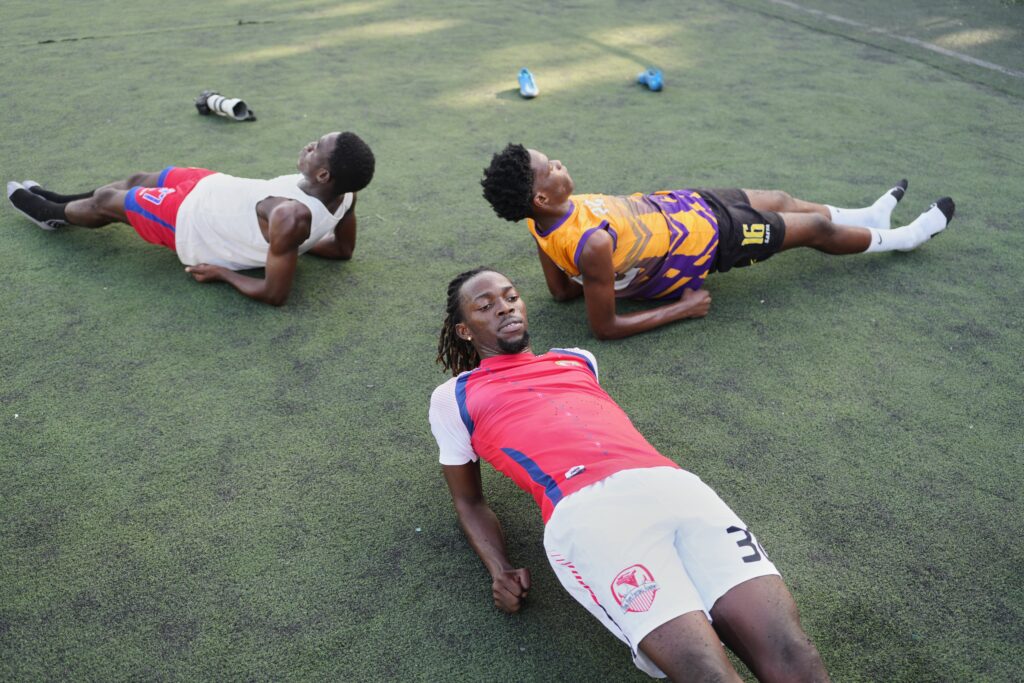
The World Cup is no stranger to expansion. After fluctuating between 13 and 16 teams in its early iterations, from 1930 to 1950, the tournament field was set at 16 in 1954, then 24 in 1982 and 32 in 1998. In January 2017, the FIFA Council unanimously voted to increase the competition to 48 nations for the 2026 event.
“We are in the 21st century, and we should shape the World Cup for the 21st century,” FIFA President Gianni Infantino told reporters after that 2017 vote. “Football is more than Europe and South America — football is global.”
Europe’s 13-team allotment increased to 16 with the change, and South America went from four to six. But the growth mostly underscores FIFA’S long-standing push to popularize the game in budding soccer regions.
Africa, which had five teams at the 2022 event, will send nine. Asia surged from five to eight. Concacaf, the confederation representing North and Central America and the Caribbean, doubled from three to six. Every region except Europe also got a spot in the intercontinental playoffs that decided the final qualifiers. Concacaf got two.
Four years ago, Concacaf’s modern powers — the U.S., Canada and Mexico — nabbed the confederation’s three direct World Cup berths, leaving the rest of the region to scrap for one spot in a playoff. This time around, there was not only space for Panama and Haiti to each make their second World Cup but for Curaçao — an island of some 150,000 residents off the coast of Venezuela — to become the smallest qualifier in the event’s history.
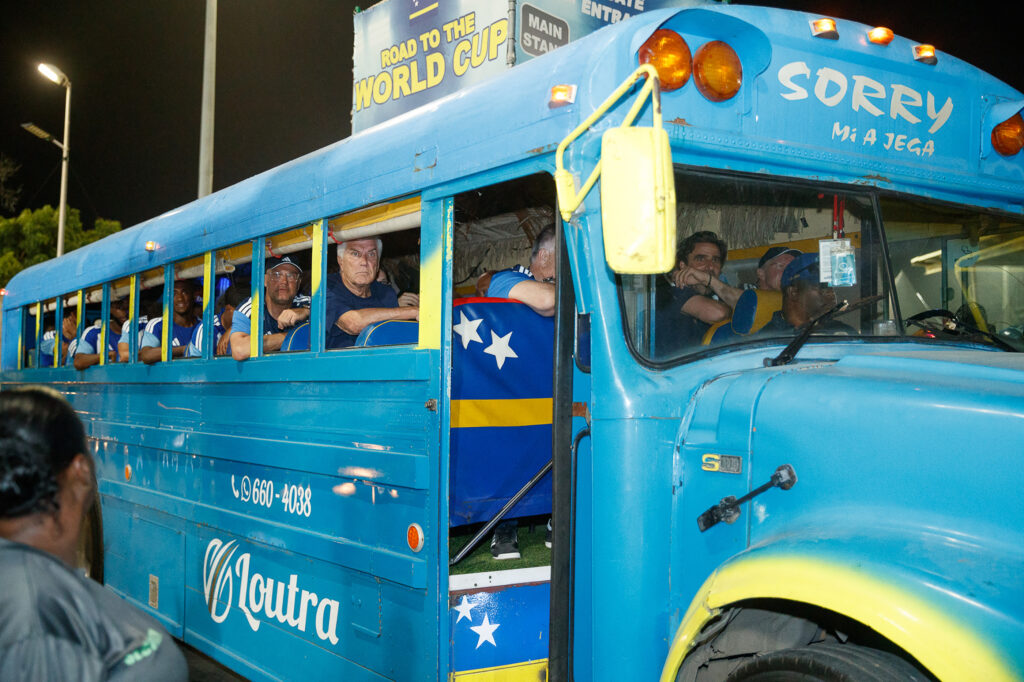
“It’s a huge, huge thing, not only for us as players, but for the whole country,” said Eloy Room, Curaçao’s goalkeeper. “Of course, people also have some negative things to say about [the expansion]. But I think they have to see the bigger picture and what it means for us as an island to participate in the World Cup. People who maybe before didn’t want to watch the World Cup, or didn’t even know about it, they’re maybe now excited to watch it because different countries are there.”
The increase in spots sapped some of the intrigue out of the qualifying process, a 2½-year marathon that required some teams to play more than 20 matches. But the tournament isn’t without its notable snubs. Denmark, Poland and four-time champion Italy did not survive the European qualifying gantlet. Traditional African powers Nigeria and Cameroon also didn’t make it. Costa Rica, a recent World Cup regular, missed out despite Concacaf’s increased allotment. And the 48 teams still represent just 23 percent of FIFA’s 211 member nations.
“I’m quite optimistic, because to qualify you need to beat the teams of your confederation, and that’s a sign of quality,” said Arsene Wenger, the former Arsenal coach who now works as a FIFA executive. “It’s just down to results.”
Yet the effect on the tournament’s entertainment value remains to be seen. One reliable star of the World Cup is its “group of death,” when two or three powerhouses draw each other in the opening round. (In 2022, Spain, Germany, Japan and Costa Rica fought for two spots in the knockout round.) But while this summer’s group stage has some tantalizing encounters — Brazil-Morocco, Spain-Uruguay, Portugal-Colombia, England-Croatia — the increase from eight groups to 12 spread thin the elite.
“Part of me gets excited for different teams and countries to get to experience the World Cup,” said John O’Brien, a former U.S. midfielder who played in two World Cups. “But the first round — and this might be common or not — I’m feeling a little bit less excited about. [Previously] I’d be like, ‘Oh day one, I’m going to be watching all the games.’ I don’t feel that way now. I feel a little bit like, ‘Okay, I’ll pick up some games here and there in the first round.’”
Then there’s the mental toll of adding another 10 days to a tournament where athletes are already under unspeakable pressure — particularly those from soccer-crazed hotbeds such as Brazil, Argentina and England. Now a sports psychologist in Colorado, O’Brien identified the prevalence of outside narratives as a key obstacle players must overcome on the World Cup stage. With a longer tournament comes more time for such distractions to take hold.
Read more From tennis to T-ball, the White House’s South Lawn is no stranger to sports. But not like the UFC
“The expectations start building up, and usually that’s just kind of a myth,” O’Brien said. “You’re focusing on the important tasks that you need to do and not playing too much into the whole storyline that the media is going to be creating.”
FIFA initially aimed to keep players’ workloads the same in the 48-team format, adding the round of 32 to the knockout stage but reducing the group stage from three matches per team to two. But then the organization voted in 2023 to retain the three-game group stage after all, adding another match to the workload for title-contending teams.
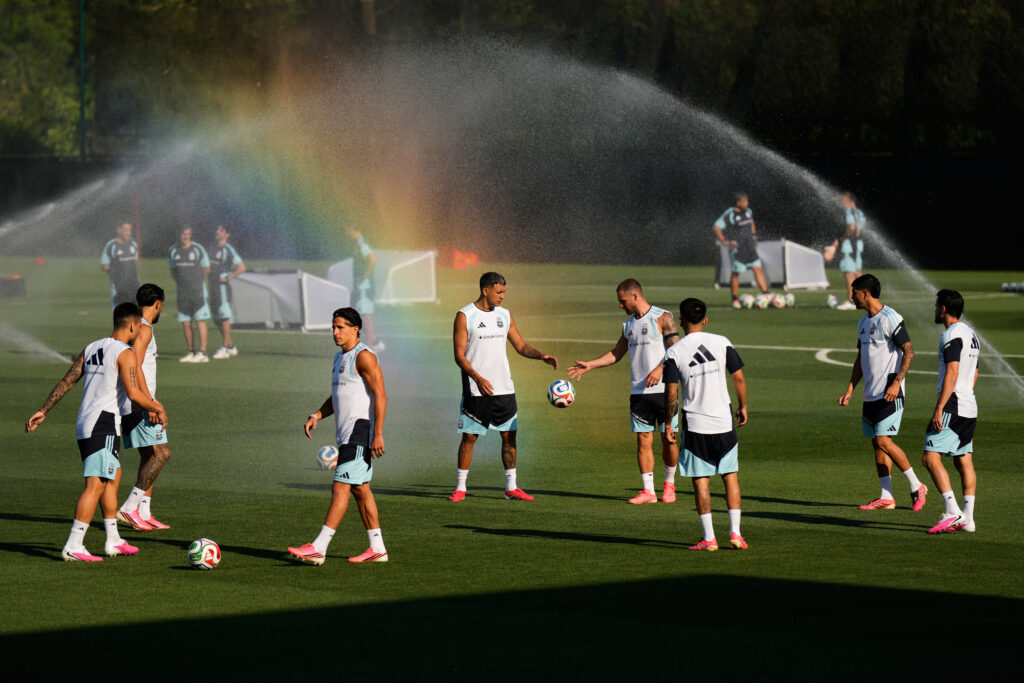
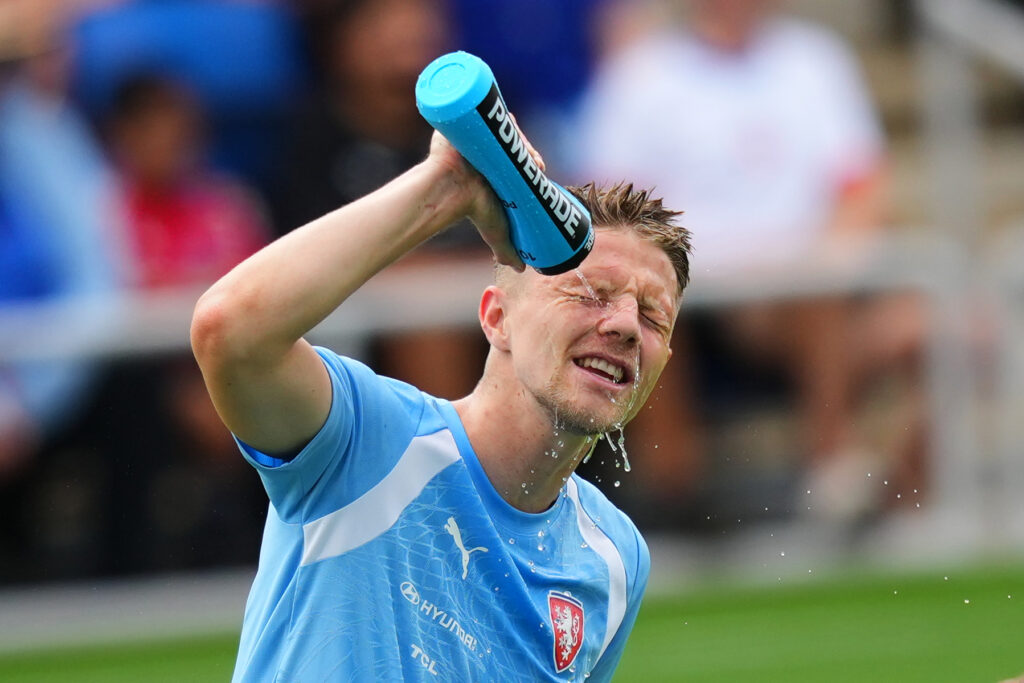
The North American summer heat will only exacerbate the issue. Yes, many matches will be played in the evening, and there are domed, climate-controlled venues in the Atlanta, Dallas, Houston, Los Angeles and Vancouver markets. But the research group World Weather Attribution still found that roughly a quarter of the games are likely to be played amid heat and humidity levels that make it harder for the body to stay cool.
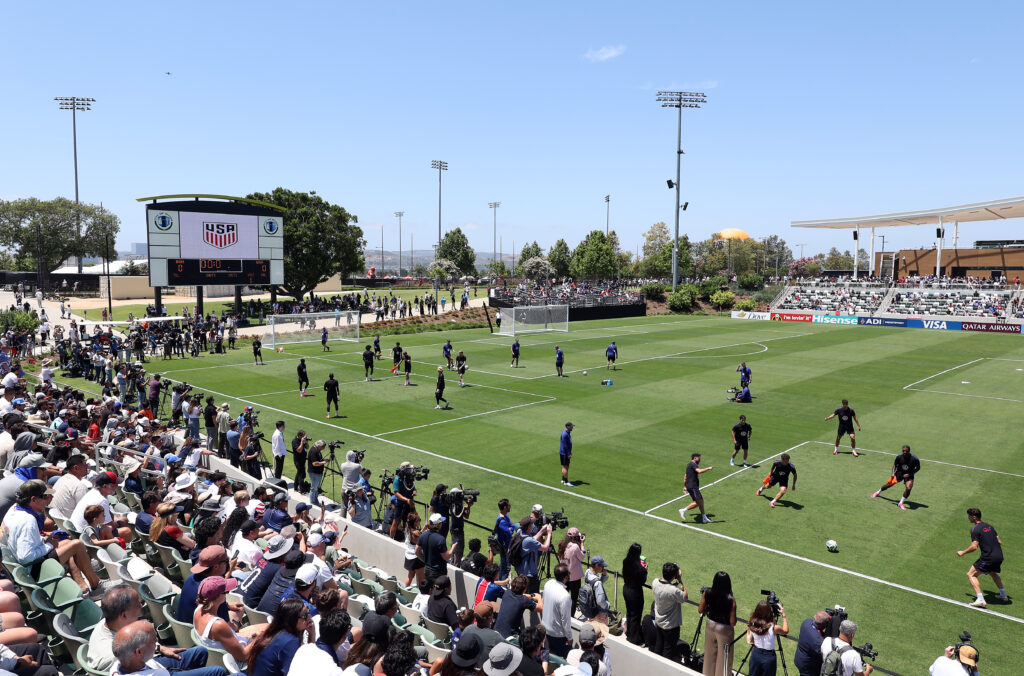
“You can travel in different cities and the weather is completely different,” French defender Ibrahima Konate said. “If you go to Miami, it’s more humid. If you go to L.A., it’s more dry. It’s always about adaptation, adaptation, adaptation. I was here last summer for holiday, and I was like: ‘Wow, it’s very hot. We’re going play in this weather?’ You know, it’s not easy.”
Travel will also test players’ bodies and biorhythms. The 2022 World Cup was played in Qatar, a nation roughly the size of Connecticut. This tournament offers hours-long flights, four time zones and varying altitudes.
“It’s another factor that’s going to increase the level of fatigue for the players,” said Gregory Dupont, a former conditioning coach for Real Madrid and the French national team.
FIFA said in a statement that it is “committed to protecting the health and safety of all players, referees, fans, volunteers and staff.” For the first time, every match will include a three-minute hydration break midway through each half. There will be climate-controlled benches at all outdoor games, and FIFA hosted a session on heat mitigation strategies and heat-related illnesses for team medical officers in March.
Travel during the group stage has also been centralized. Every team in the United States’ group, for example, will play all three matches on the West Coast. The group featuring France, the 2018 champion and 2022 runner-up, will play only on the East Coast.
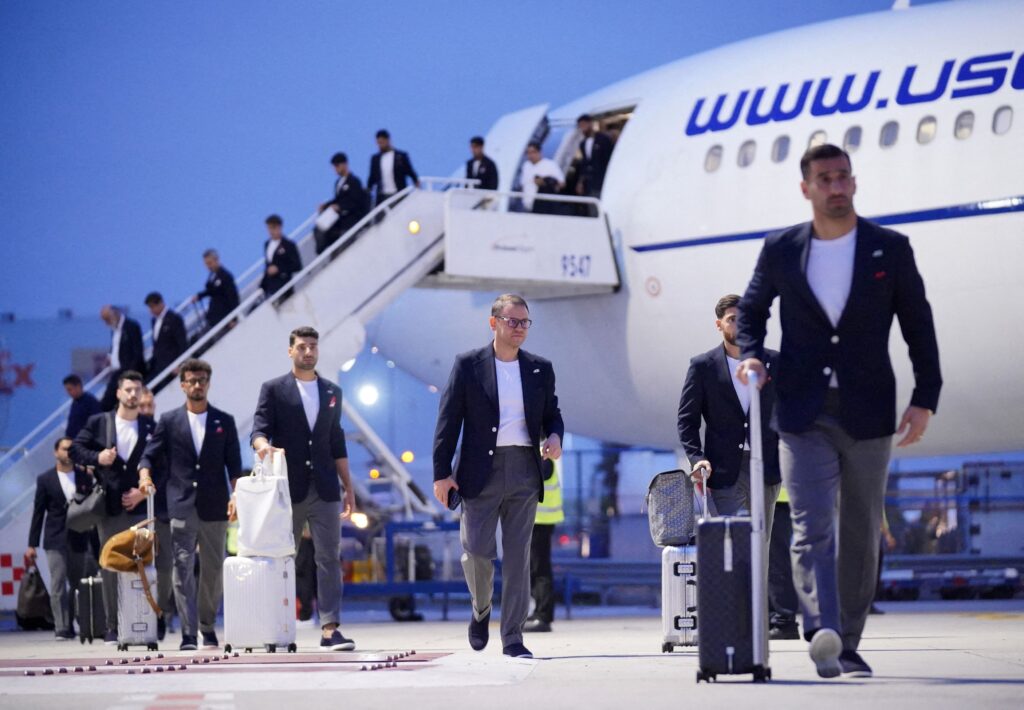
“We play in Boston, Philadelphia and New York,” French captain Kylian Mbappé said, describing his team’s opening-round schedule. “So let’s see how it goes.”
The rest days have also increased: After teams typically played once every four days in 2022, squads will mostly take the field once every five or six days during the group stage this summer.
“You’re going through full training cycles in between games,” U.S. goalkeeper Matt Turner said. “It’s not just a quick three, four days, get yourself ready and go and go and go. There’s a lot of more time.”
Still, teams rarely make it to the final with a fully fit and healthy squad. Throw in an extra match and the summer heat’s toll, and the odds increase that the World Cup’s most crucial contests could turn into games of attrition.
“Heat doesn’t necessarily add to the injury risk in that particular moment,” said Darren Burgess, the performance director at Italian club Juventus who also works with FIFPRO. “But it adds to the total workload and the accumulation of fatigue that we can expect.”
The title game is a particular concern. Eschewing domed venues or an evening kickoff, FIFA set the final for 3 p.m. Eastern at MetLife Stadium in East Rutherford, New Jersey. Both previous World Cups hosted in the U.S. summer — the 1994 men’s tournament and 1999 women’s event — culminated with afternoon kickoffs at the Rose Bowl in Pasadena, California, where temperatures hovered around 100 degrees. In both cases, the teams slogged through 120 scoreless minutes before deciding the match on penalty kicks.
“If it’s a final of the World Cup, the game has to be amazing,” Konate said. “But if players play a little bit in slow motion because of the weather and because players are tired, that can be sad as well.”

All of the variables raise the possibility of a decidedly unpredictable World Cup. Could a favorite like England struggle through a knockout path that’ll probably take it through Mexico City’s intense elevation and Miami’s sweating humidity? Will the need for rest and rotation reward deep squads over a stacked starting lineup?
“I’m excited to see how some of the big teams maybe struggle a bit with the ways in which this tournament’s different,” said John Strong, Fox’s lead play-by-play announcer for the tournament. “I love chaos.”
But for all of the focus on this World Cup’s unprecedented scale, the game itself remains the same. One ball. Eleven players a side. Ninety minutes. To many players, it’s as simple as that.
“I think the conditions are what they are,” Belgian captain Youri Tielemans said. “Whether it’s hot or cold, it doesn’t really matter — we are there for one job, and it’s to play for our country, to play football and to perform at the highest level.”
Read more World Cup ref from Somalia who was denied entry to the US was about to make history for his country
Rick Maese contributed to this report.