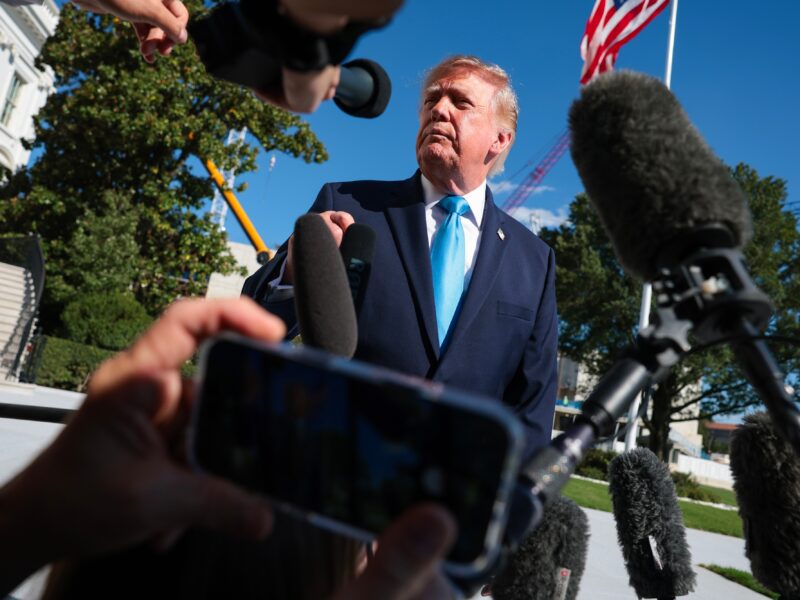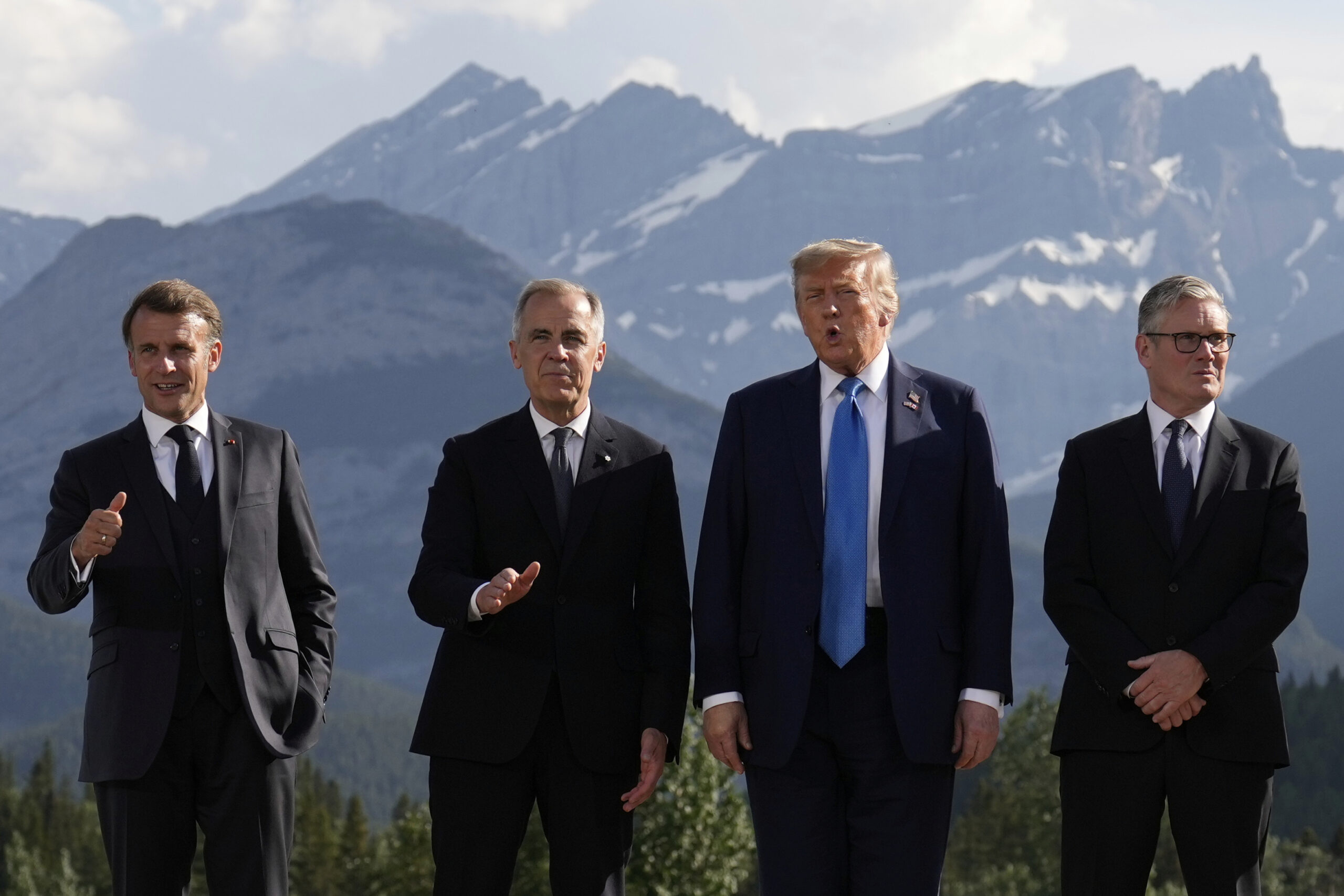
After a decade of trying to manage Donald Trump, the shape will shift this week as Europe’s leaders balance cooperation with a growing resistance to U.S. pressure.
Read more World Cup racism monitor urges FIFA to remove match official over hand gesture on TV broadcast
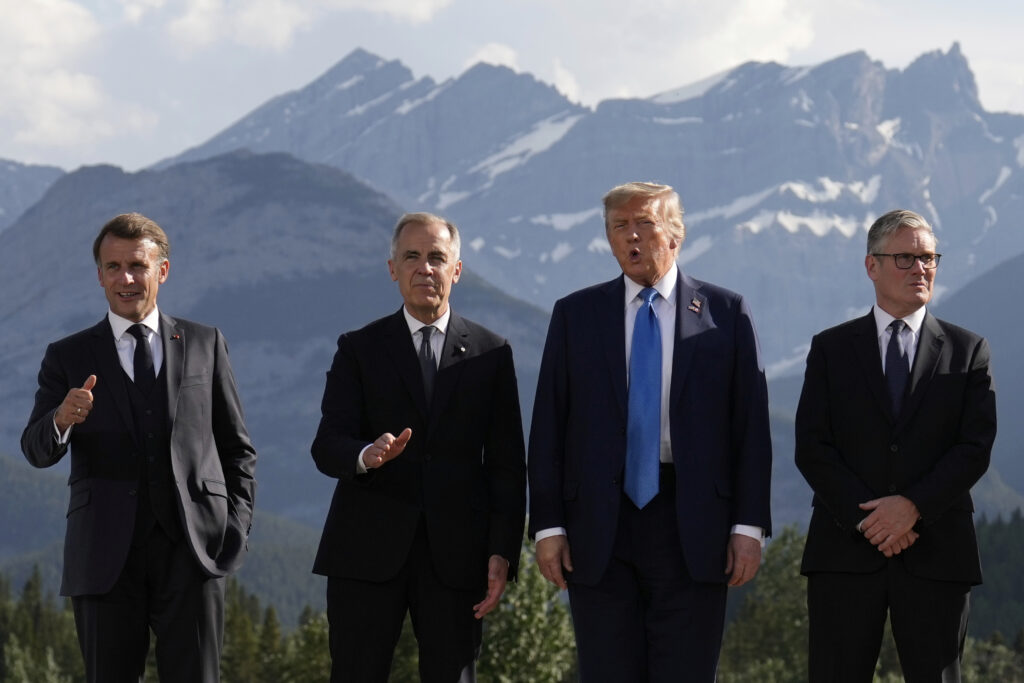
ÉVIAN-LES-BAINS, France — When President Donald Trump arrives on the shores of Lake Geneva for this week’s Group of Seven summit, he will find America’s closest allies in a new posture: increasingly willing to tell him no.
After years of tariff threats, diplomatic whiplash and public confrontations, many world leaders have concluded that Trump is not an interruption to the international order but a feature of it — a reordering likely to endure regardless of who sits in the Oval Office. Rather than simply accommodating Trump, they are increasingly preparing for a future in which the U.S. is a less predictable partner and Europe is less inclined to follow America’s lead.
The shift will hang over the summit, which begins today as fallout over the Iran war continues to jolt the global economy, shifting energy markets and raising fears of renewed inflation even as Trump on Sunday announced an end to hostilities. Trump will arrive seeking evidence that his disruptive approach to diplomacy is producing results — that allies are adapting to American priorities on trade, artificial intelligence, security and China. Many of the leaders gathering here share some of America’s broader goals, but they are also increasingly willing to resist U.S. pressure.
“Europe is in a fundamentally different place than it was a few years ago,” said Max Bergmann, director of the Europe, Russia and Eurasia Program at the Center for Strategic and International Studies. “There are political limits now to simply accommodating every demand from Washington.”
The United States remains the indispensable military power in the Western alliance, providing the nuclear umbrella, intelligence capabilities and much of NATO’s logistical backbone. But an increasing number of leaders are exploring what a world looks like when America is no longer willing — or no longer expected — to lead every international response.
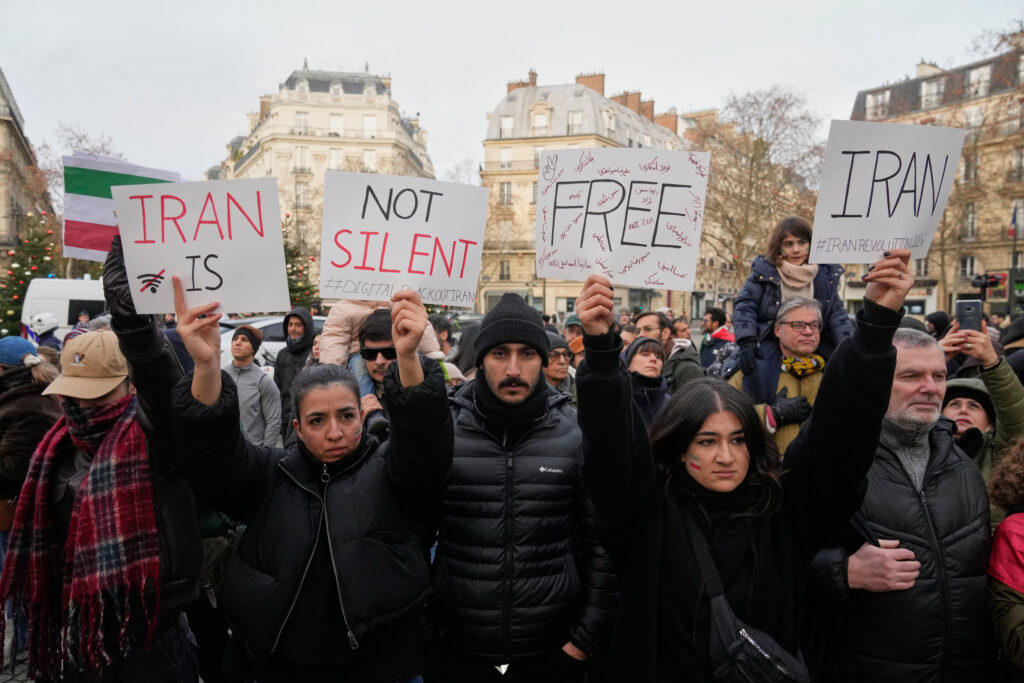
That debate gained urgency over Iran, a conflict that exposed growing discomfort in European capitals with the consequences of decisions made in the U.S. that reverberate far beyond it borders. Three of Trump’s four bilateral meetings this week will be with Middle East leaders. World leaders have been eager for a resolution to the war, but its impacts endure, and Trump’s weak approval ratings overseas mean that every handshake, photo op and public embrace carries political risk.
Yet even as European leaders prepare for a future less reliant on Washington, they remain eager to avoid an open rupture with Trump.
The summit’s organizers have sought to avoid some of the diplomatic friction that has accompanied Trump’s recent dealings with foreign leaders. The gathering was postponed by a day to accommodate Trump’s 80th birthday celebration — a White House event dubbed “UFC Freedom 250.” South African President Cyril Ramaphosa, who endured a contentious Oval Office meeting last year after Trump amplified unfounded claims of a white genocide in South Africa, was not invited. And Macron will give Trump a crown jewel of French statecraft: a private dinner at the Palace of Versailles before he returns to the United States.
Still, an enduring challenge of the summit for world leaders is anticipating which version of the president will step off Air Force One.
Trump has demonstrated a capacity for warm personal diplomacy and dealmaking, but also for public confrontations with allies, abrupt policy shifts and departures from carefully negotiated consensus. European leaders have had nearly a decade to perfect the art of managing Trump’s mercurial moods and were able to skate through most of their encounters last year. But the trade-offs changed for them this year after the U.S. president mounted a weeks-long effort to wrest control of Greenland from Denmark.
At one point, some European leaders believed that Trump was on the verge of ordering U.S. troops to invade the frigid island territory — a move that would have inverted the United States from being NATO’s main military power into being its main military threat. Trump was already relatively unpopular across Europe. But the Greenland episode drove his ratings to new lows, creating perils even for some of his natural allies to be seen as too close to him.
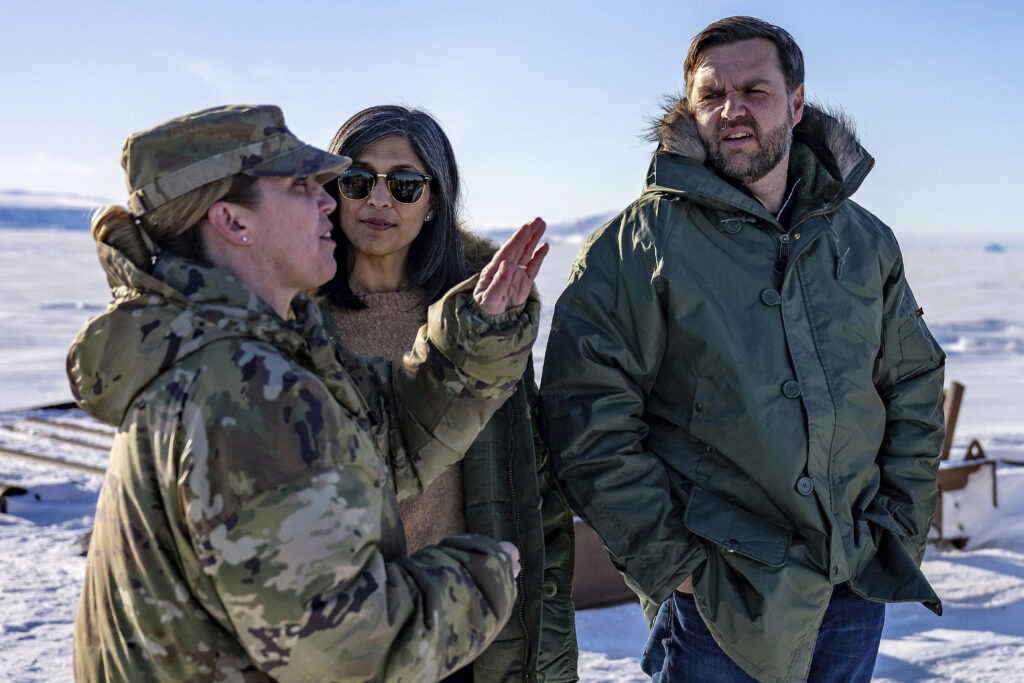
“Historians will point to Greenland as a point when the transatlantic alliance began to break, when the divorce really started to happen,” Bergmann said, adding that European leaders have asked “what do they really get from sucking up to Trump and from bending the knee.”
The summit is expected to serve not only as a forum for addressing global challenges but also as a measure of how America’s partners navigate a more uncertain era of U.S. diplomacy.
Few leaders have championed the European autonomy argument more forcefully than the G-7 summit’s host, French President Emmanuel Macron. For years, Macron has urged Europe to become more strategically independent, arguing that the continent should be capable of defending its interests and projecting power even when America’s priorities diverge from its own. As he enters the final year of his presidency, Macron has continued to push that vision, even as some European governments were reluctant to move too far from the U.S. security umbrella.
White House officials previewing the president’s trip said Trump will continue to push European countries to play a larger role in their own defense.
Read more A big trade swing, then a bold reset that powered the Hurricanes to the Stanley Cup
“The United States can’t be the lead in every single region of the world, and there’s countries in Europe that have tremendous capability to take on more burden sharing,” said a senior administration official, who spoke on the condition of anonymity because they were not authorized to speak publicly.
Amid those tensions, Macron, who will meet with Trump on Monday night, has shown himself more willing to criticize Trump.
“We should not underestimate that this is a unique moment where a U.S. president, a Russian president, a Chinese president are dead against the Europeans. So, this is the right moment for us to wake up,” Macron said during an informal meeting of European Union leaders in April. “Now, a lot of colleagues are more lucid, because after so many years, we say, okay, we have to react. We have to act as Europeans, to be more united, to defend ourselves, our own interests. And for me, this is the right direction.”
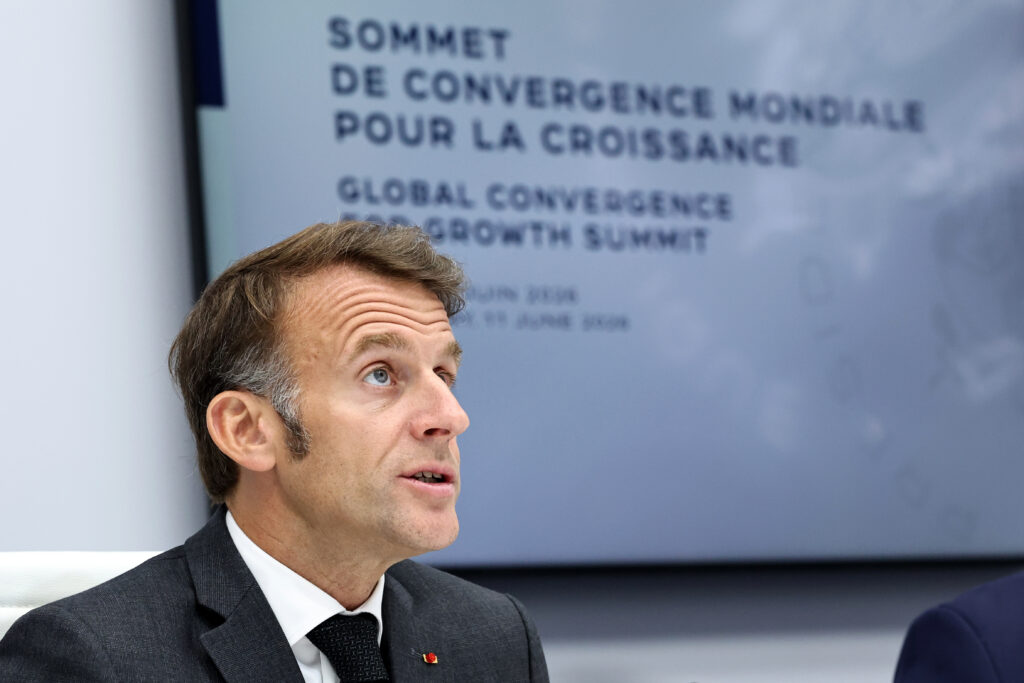
Yet Macron’s pursuit of greater European independence has not meant abandoning the United States or alienating Trump. He has often paired calls for European self-reliance with an unusually personal approach to managing his U.S. counterpart. Over the years, Macron has sought to cultivate the American president through a mix of diplomacy and spectacle, hosting him at the Eiffel Tower, giving him a front-row seat at France’s Bastille Day military parade and welcoming him to the reopening of Notre Dame Cathedral.
But more recently, the U.S. war with Iran has pushed European politicians to distance themselves from U.S. conflicts and its president. Even for some of Trump’s closest allies here, chief among them Italian Prime Minister Giorgia Meloni, aligning with the president has become riskier since the crisis over Greenland and as war roils the global economy.
Japanese Prime Minister Sanae Takaichi, attending her first G-7 summit, is expected to use her relationships with Trump, European leaders and key Middle Eastern partners to help ease tensions. Japan has sought to play a diplomatic role in the aftermath of the U.S.-Israeli war in Iran while maintaining close ties across the region.
Britain’s embattled prime minister, Keir Starmer, arrives at Évian at low points in both his political standing at home and in his relationship with Trump. The prime minister faces a brewing leadership challenge within his own party and has endured the president’s fury over not joining the attacks on Iran.
Both factors have pushed Starmer’s government closer to Europe, nearly a decade after Britons voted to leave the European Union.
It is unclear whether Starmer will return to Trump’s good graces. The president’s public contempt for Starmer over Iran — calling him cowardly, mocking British aircraft carriers, describing the United Kingdom as “very, very uncooperative” — has curdled the special relationship that Starmer spent his first year in office tending.
The tightrope European leaders are walking can be upended by Trump, who has repeatedly shown a willingness to expose the gap between their public posturing and private diplomacy.
Last year Trump published private text messages from NATO Secretary General Mark Rutte praising the president’s efforts to pressure European governments into spending more on defense, making private leader-to-leader diplomacy public.
One European leader later remarked that if Trump exposed similar messages from them, voters back home would revolt.
The episode underscored a challenge facing many leaders gathering in France: balancing public resistance to Trump with the private accommodations often required to manage him — all while dealing with a president who has shown a willingness to pull back the curtain on the performance.
If Évian is the opening act, the sequel comes three weeks later in Ankara, Turkey, when many of the same leaders will gather again for a NATO summit on defense spending, military commitments and the future of the transatlantic alliance.
Michael Birnbaum and Dan Diamond contributed reporting from Washington. Steve Hendrix contributed reporting from London. Chie Tanaka reported from Tokyo.
Read more Once a journeyman, Brandon Bussi backstops the Hurricanes to the Stanley Cup championship