A day after President Donald Trump announced a tentative peace deal, Iran took the field in front of thousands of conflicted fans and played to a 2-2 tie with New Zealand.
Read more Dustin May perfect into 7th inning and completes 1-hitter as Cardinals blank Padres 3-0
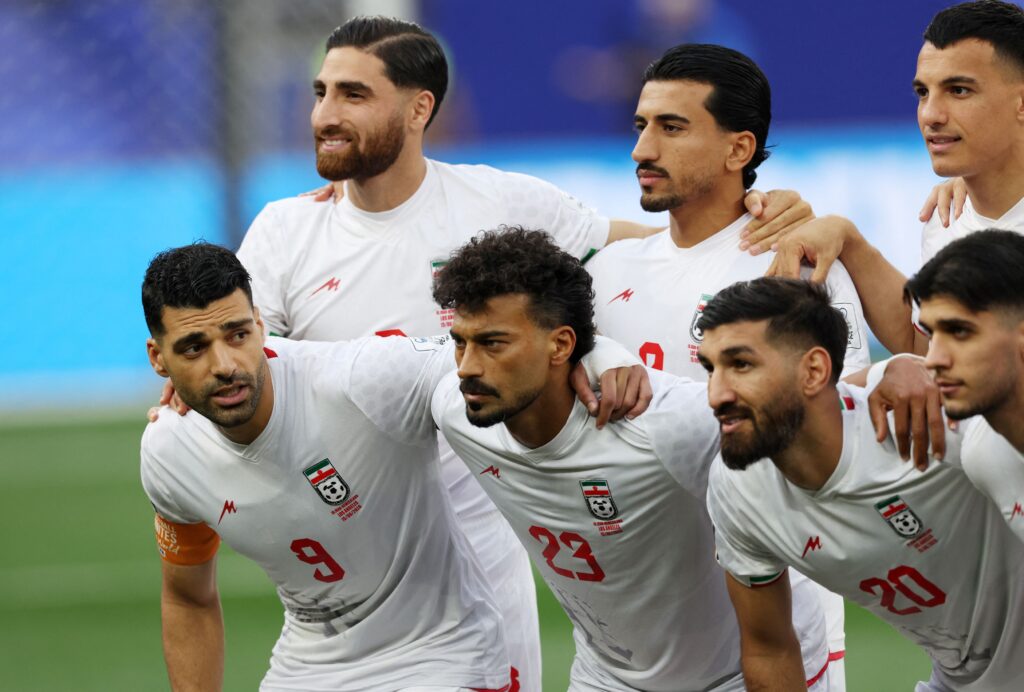
INGLEWOOD, Calif. — With their sanctioned green, white and red flag covering nearly half the field, Iran’s players stood shoulder to shoulder and belted their national anthem.
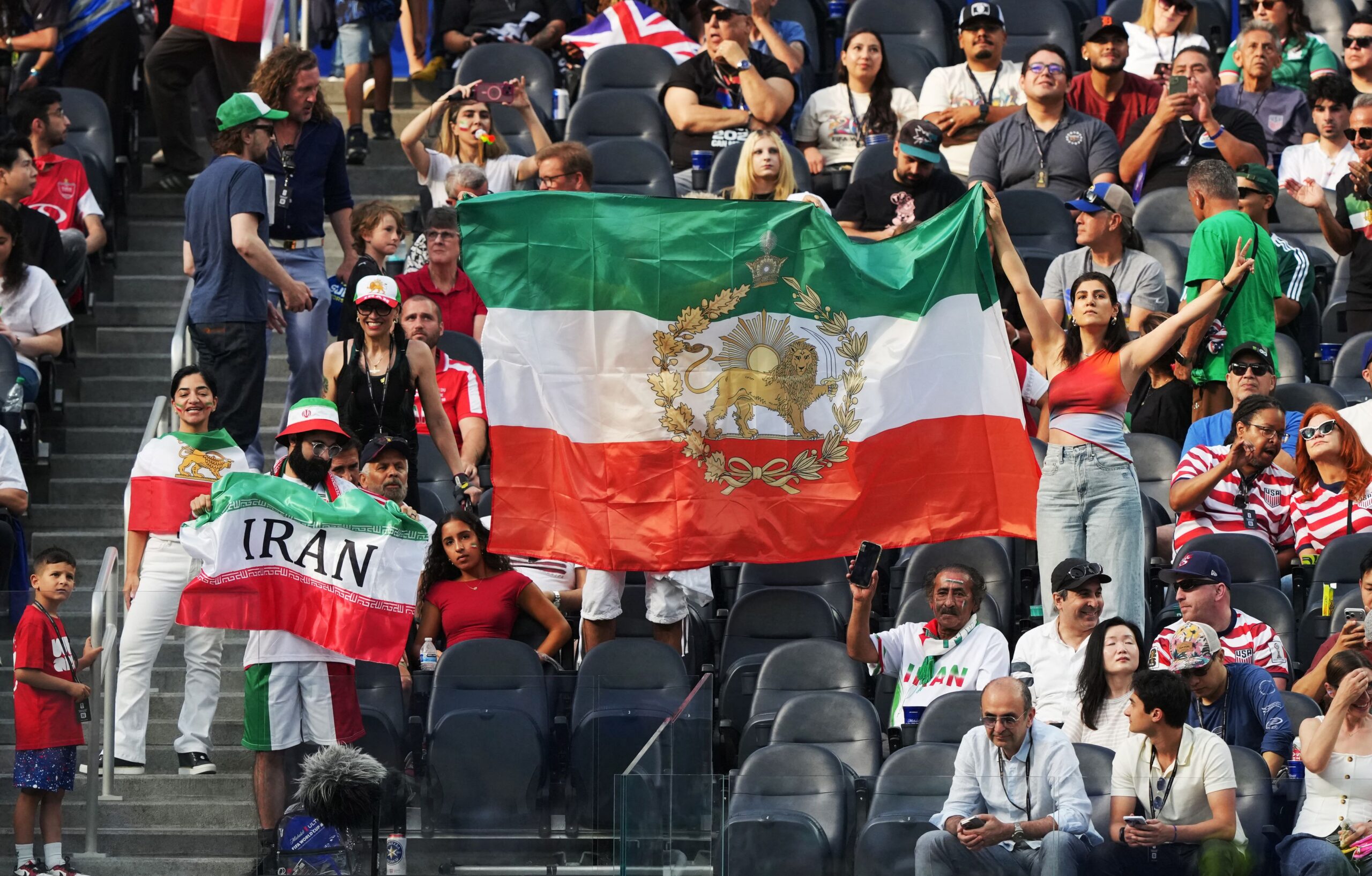
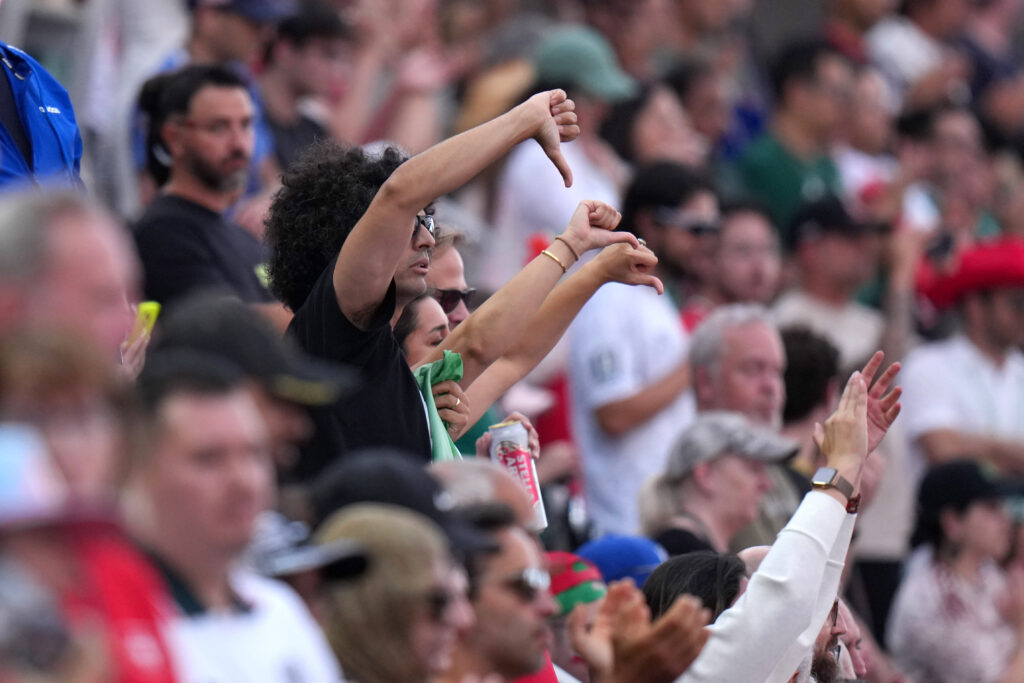
Up in the stands, fans waved their own flags — including some sneaked in over the objections of FIFA and the courts — and wrestled with emotions, as boos, howls and hisses rained down from all corners of the stadium.
It was a World Cup soccer game, but before the ball moved an inch in Monday’s match between Iran and New Zealand, it had become something larger: a stage of protest, a symbol of division for some and unity for others, and one of the strangest spectacles of this tournament — a national team playing inside the country with which it had been at war until one day earlier.
President Donald Trump announced Sunday a deal was in place to end the conflict, but the tension around Iran’s national team had not faded.
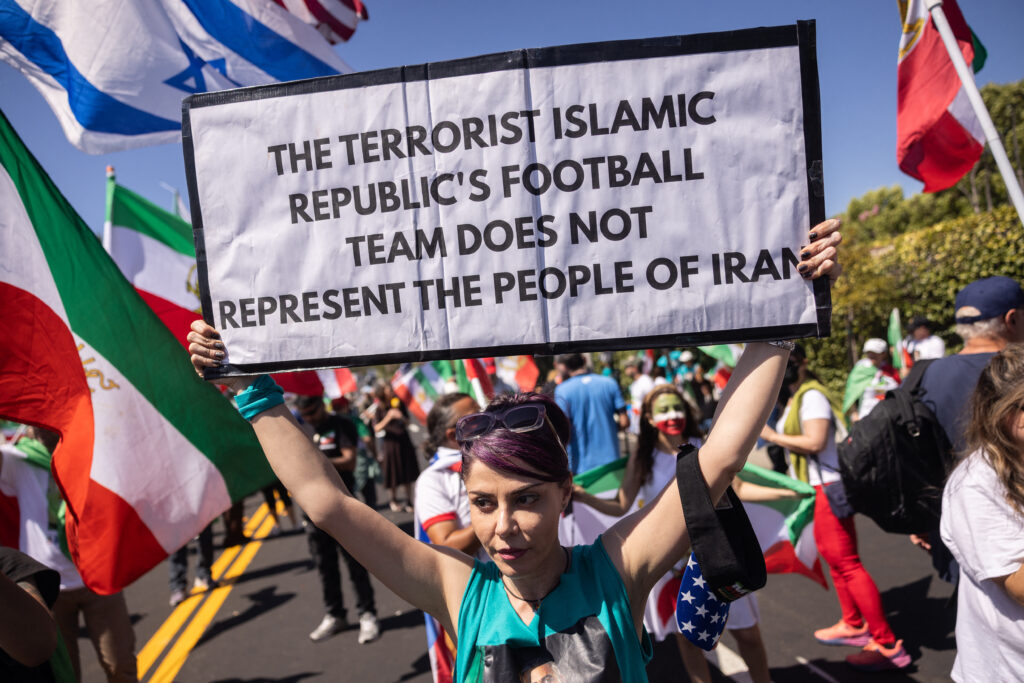
The Los Angeles area is home to more than 80,000 people of Iranian ancestry, the largest concentration in the United States. Many live in the Westwood corridor long known as Tehrangeles, only 10 miles from Monday night’s match. But their feelings about the war, the regime and what has become of the country they love are anything but uniform.
The electric crowd at SoFi Stadium, temporarily called Los Angeles Stadium under FIFA rules, was loud enough at times to make the night feel like any other World Cup spectacle. But Iran’s 2-2 draw with New Zealand offered little certainty, on the field or beyond it.
The feared large-scale protests did not materialize Monday, but small groups of demonstrators gathered near the stadium, saying the team was a symbol a government they loathe, not the homeland they love.
“Islamic regime is terrorists,” a protester chanted into a megaphone. “No peace with terrorists.”
Nearby, a woman wearing a shirt that said “IRAN” with a red heart held a sign bearing photos of slain soccer players. She said she planned to enter the stadium and boo “my lungs out.”
“The team that today is going to play in this stadium is representative of IRGC,” she said. “That is not Iran’s national team.”
The woman identified herself as Rose but declined to give her last name saying she feared retribution against herself or relatives. She planned to sneak in the lion-and-sun flag, the pre-revolutionary Iranian flag that some opponents of the Islamic Republic embrace as a symbol of national identity and resistance.
FIFA, which has a history of quashing political protest and expression, had barred the flag from stadiums, citing long-standing rules prohibiting political symbols. A Los Angeles County Superior Court judge on Monday denied a last-minute effort to block the ban.
To Rose, the flag was not a political statement but a marker of identity, and there were plenty lion-and-sun flags on display during Monday’s match. Even after the match began, there was no clear line where soccer ended and politics began. At one point early in the game, a giant sign was unfurled in the stands that read: “42,000 #IranMassacre.”
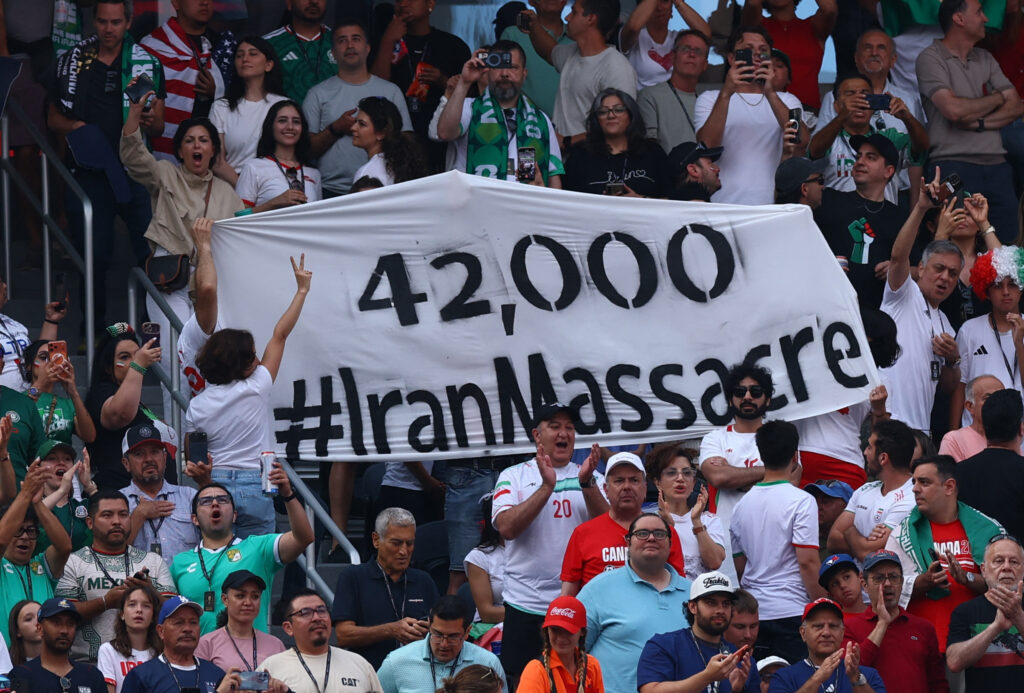
“We are in war,” Rose said. “We are going to use any opportunity that we can get to be the voice of the people.”
For Arash Behnam, a 45-year-old father from the Bay Area, the night meant something else. His face was painted green, white and red, and he donned tall Cat-in-the-Hat-style head ware in the same colors. He had watched Iran compete in the 1998 World Cup alongside his father. This time, he brought his 18-year-old daughter.
“At the end of the day, it’s football,” Behnam said. “It is a sport. My father brought me here. I get to bring my daughter. It’s a beautiful moment. It’s deeper than politics.”
Iran’s players and coaches had made a similar plea. Coach Amir Ghalenoei said his team came to represent the “great nation of Iran,” including the diaspora. Star player Mehdi Taremi said the team respected all Iranians and hoped to bring them joy.
Read more Tigers’ Colt Keith rediscovers power stroke with 3-homer game in Houston
“Football,” he said, “can always unite all factions.”
But Taremi acknowledged this World Cup felt different. Visa problems, training camp changes and the tension surrounding Iran’s presence had eroded the usual sense of anticipation.
“This kind of tension undermines that joy,” Taremi said, “and it undermines the message of FIFA and our people, which is that football brings about peace.”
The team had planned to train in Tucson. But with Trump issuing threats and amid uncertainty over whether Iran’s delegation would be allowed into the United States, Iran settled instead across the border in Tijuana, Mexico.
“I think perhaps our team is the most oppressed one in the whole World Cup,” Iran Coach Amir Ghalenoei said through an interpreter Monday night.
Kevan Harris, a UCLA sociology professor who studies Iran, said the team had become a symbol onto which different people projected different meanings. Some still saw Team Melli — literally, the national team — as belonging to the people. Others had begun calling it the government team.
“There’s no way to say that there’s a kind of apolitical football,” Harris said. “It’s just who’s projecting what onto the team.”
For decades, Iran’s national team had been one of the few institutions around which Iranians could widely rally, across generations, politics and geography. The team’s qualification for the 1998 World Cup sparked celebrations in Iran and across the diaspora.
But in recent years, Team Melli has become a more contested vessel. Some Iranians criticized players for not speaking out more forcefully against the government. Others defended them as athletes trapped in a political structure they did not create.
Harris said that instability is part of what sports can do. People may arrive with fixed views, only to find themselves pulled into the collective experience of a game. A goal can soften old arguments for a moment. A loss can harden them. A win can be claimed by everyone.
“If the Iranian team does well,” Harris said, “people might be pulled into this experience that even they themselves didn’t know they were going to feel.”
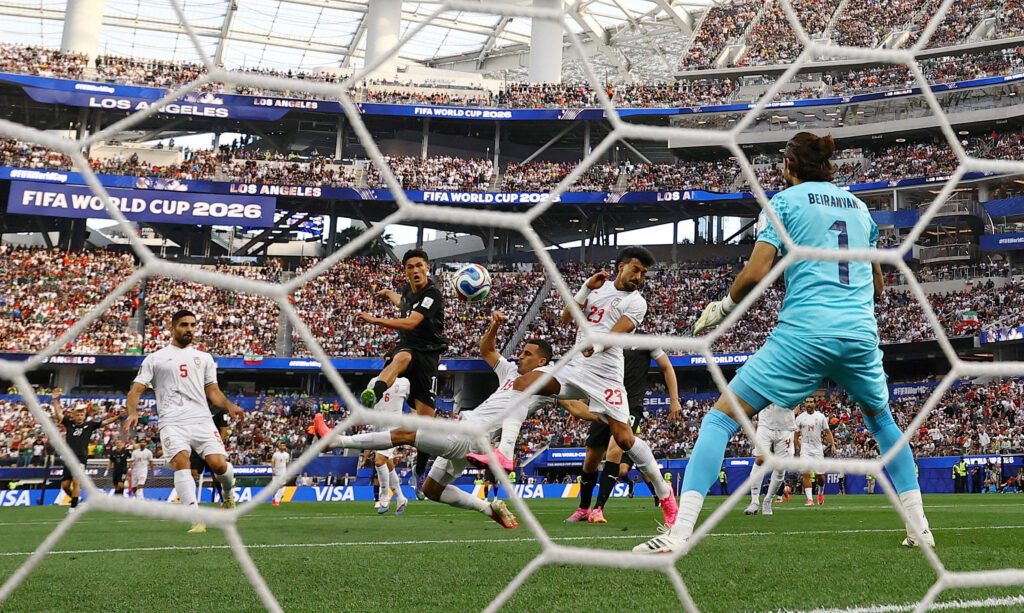
The game itself provided plenty of opportunities for cheers, and jeers, for the announced crowd of 70,108. The two squads traded goals in each half, prompting chanting, howling and confetti, while leaving both players and fans alike out of breath when the final whistle blew.
After scoring Iran’s first goal of the tournament, Ramin Rezaeian pulled his jersey over his face, a gesture the right back said he took “because I don’t want to see the world.”
“It’s something political,” he added. “I don’t want to talk about that.”
He said the boos during the anthem was “difficult” to hear but declined to entertain non-soccer questions.
“Everyone in the world now knows about my people,” he said. “If there’s any problems between us, it is our business. It’s none of your business. I just respect you, but this is something between us.”
When it was over, Iran’s players had another border crossing ahead of them.
They had come north only for the night, into the country that had barred them from staying, and were due to return to Mexico, where they will stay until their next game Sunday against Belgium, also in Inglewood.
Their fans moved the other direction, out through the gates and into the California night. The game had ended. The argument over what it meant had not.
Read more Sorsby won’t play for Texas Tech after unprecedented legal fight over his eligibility for gambling
Thomas Floyd contributed to this report.