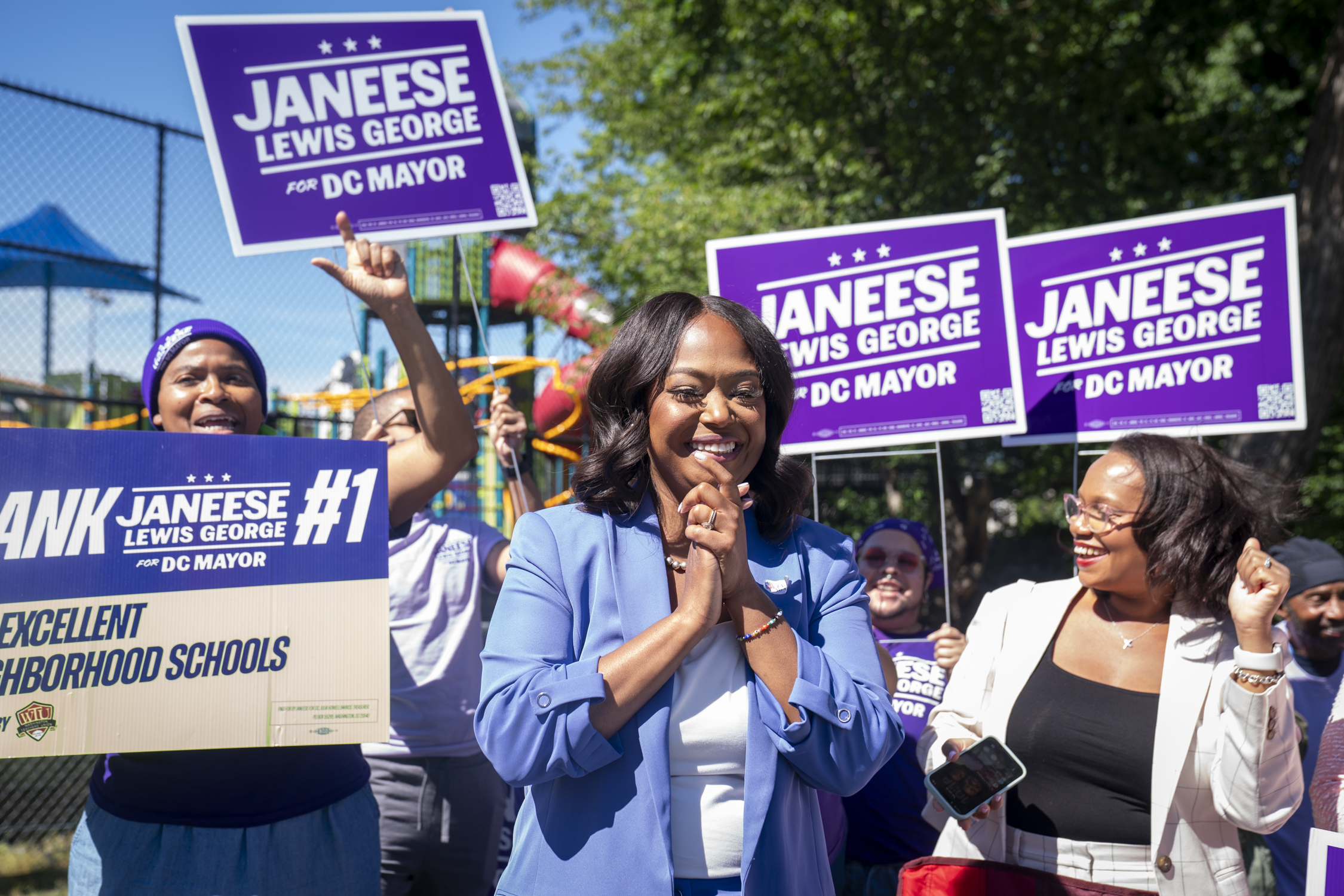
Democratic socialists who are gaining power in large cities notched another major win this week, with Janeese Lewis George heavily favored to become the next mayor of the nation’s capital.
Read more Flesh-eating maggot outbreak puts Trump administration response under scrutiny
Lewis George defeated a more moderate candidate in the Democratic primary for D.C. mayor, which is tantamount to the general election in a deep-blue city. She would join other recently elected city leaders aligned with the Democratic Socialists of America, including New York Mayor Zohran Mamdani and Seattle Mayor Katie Wilson, both of whom took office this year.
Their victories are made possible by a mix of factors that are not purely ideological. Voters gravitated to democratic socialists as an alternative to traditional Democrats because they are frustrated by President Donald Trump, establishment Democrats and the high cost of living, according to DSA activists and political strategists.
“People are feeling like they have to work way harder to get by, and meanwhile they’re seeing Elon Musk become the first trillionaire in the world,” said national DSA co-chair Ashik Siddique, a former District resident who volunteered for Lewis George’s 2020 D.C. Council campaign. “The Trump administration is just administering policies that make people’s lives worse, and many people feel like the Democratic Party establishment is not really putting up a fight.”
Democratic socialism, a loosely defined ideology popularized by the 2016 presidential campaign of Sen. Bernie Sanders (I-Vermont), combines strong support for democracy with policies further left than those of mainstream Democrats designed to reduce economic inequality, expand social programs and strengthen worker rights. DSA members pay dues to the organization, which does not directly cut large checks to candidates but does offer a large national network of small donors that can boost campaigns.
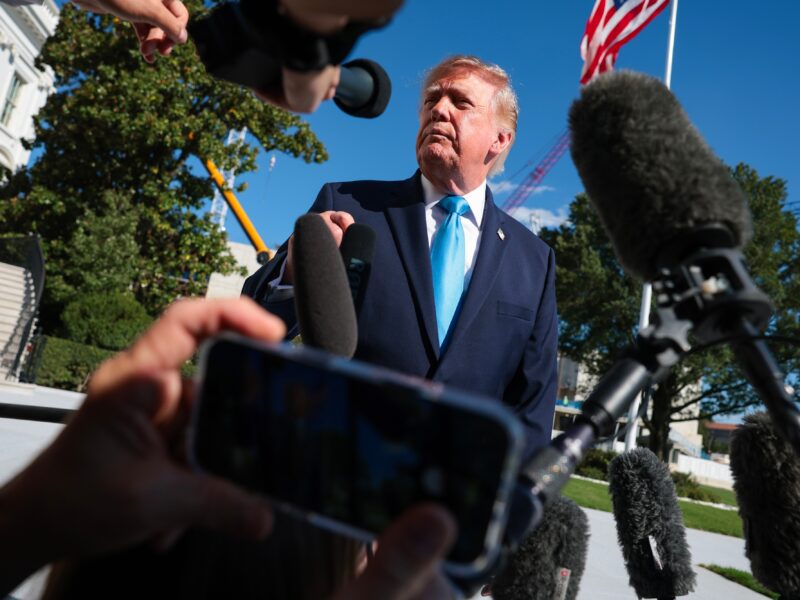
Lewis George, a 38-year-old former juvenile prosecutor who has been one of the most liberal local lawmakers, ran an affordability-focused campaign with a grassroots army powered by unions and the DSA. She attended her first DSA meeting in 2018 and continues to appear at them, often referring to herself and others as “comrade.” President Donald Trump last week threatened to take over the city if she becomes mayor, energizing voters who saw her as a leader to fight the president.
She finished ahead of former council member Kenyan R. McDuffie in broad swaths of the city across racial and income lines, except for some of the wealthiest neighborhoods, and is performing especially well in younger precincts. Aparna Raj, a former chair of the local DSA chapter, appears likely to win a council seat, and liberal candidates are ahead in other key races in a show of the D.C. left’s power.
Philadelphia and New York’s local governments also have significant DSA representation. Several congressional primaries next week in New York will test the organization’s influence on a federal level as a pair of DSA-backed challengers try to unseat one incumbent Democrat and another’s chosen successor. Los Angeles Mayor Karen Bass (D) faces a left-wing challenge this November by Nithya Raman, the first L.A. City Council member elected with the endorsement of the DSA.
Some Democrats fear that the rise of democratic socialism that is appealing in heavily liberal urban areas could harm the Democratic brand elsewhere. Matt Bennett, executive vice president of public affairs with Third Way, a center-left think tank, said he worried that democratic socialists and other leftist candidates could advance through primaries this year and lose “very winnable” races in the swing states of Michigan and Wisconsin.
“We, the center left, have got to be louder,” Bennett said. “We’ve got to make clear how dangerous this is substantively and politically.”
DSA activists counter that traditional Democrats are failing to inspire voters. A February Washington Post-ABC-Ipsos poll found more than 6 in 10 Americans saying that both Trump and the Democratic Party are out of touch with most people’s concerns
Imara Crooms, a Metro D.C. DSA member and DSA-endorsed candidate for Prince George’s County Council in Maryland, said he has seen membership spike since Trump returned to the White House as people feeling helpless seek an “antidote.”
“We’ve seen a big swell in people who, a few years ago, would’ve been a ‘Pod Save America’ type,” said Crooms, referring to a popular mainstream liberal podcast. “These big-brained centrists with their fancy political theory have just given up on the idea that continuing to do the same s— can actually give us a different result.”
Faith in capitalism is slipping, and socialism does not carry the same toxic brand among young voters that it does with older Americans who grew up during the Cold War. An August 2025 Gallup poll found that 49 percent of Americans ages 18 to 34 had positive views of socialism, compared with 30 percent of Americans 55 and older. The survey found that Americans on balance prefer capitalism to socialism, but the favorability of capitalism dropped from 60 percent in 2021 to 54 percent.
Read more Commanders rookie Sonny Styles has the green dot and the green light
Joseph Geevarghese, the executive director of Our Revolution, said socialism may be attracting voters looking for something “radically different.”
“They see that their standard of living is falling, and the political system isn’t delivering for them, isn’t working for them,” said Geevarghese, whose organization was founded by Sanders.
While candidates across the political spectrum have seized on affordability as a central campaign issue, democratic socialists have offered some of the most sweeping policies to address the cost of living, which their detractors often describe as unrealistic or too expensive.
Mamdani called for free buses and publicly owned grocery stores during his campaign. Lewis George campaigned on universal affordable child care and significant new housing development, which her voters frequently cited in interviews at polling places.

Nisa Harper, a single mother of four children who voted for Lewis George in a part of Southeast Washington known for concentrated poverty, said she has been drawn to democratic socialist policies, including heavily subsidized child care. Harper said she left the workforce to care for her children but has had difficulties returning “between appointments, school, [and] who’s going to be there when there’s a sickness.”
Adherents of democratic socialism often graduated from college and entered a world where the system feels broken, said Zachary Tashman, Metro D.C. DSA’s labor working group co-chair.
“Many of these people have parents and they live the American Dream, so they know what it should be, and they’re not getting it,” Tashman said.
Bill Lightfoot, who chaired the mayoral campaigns of outgoing centrist Mayor Muriel E. Bowser (D), said ideology doesn’t fully explain the success of democratic socialist candidates in D.C. He said many voters “turned off” by the city’s leaders stayed home, and those who did cast ballots craved the “most aggressive” opposition to the White House.
Lewis George benefited as crime, which is often a losing issue for leftist candidates, faded as a concern in the District, according to Washington Post-Schar School polling. In the weeks before the election, 42 percent of D.C. voters said crime was an extremely or very serious problem in the city, compared with 65 percent in April 2024. One in 5 voters named crime as the top problem heading into this year’s mayoral race (and those voters favored McDuffie by a wide margin), compared with 36 percent before the 2022 mayoral election.
Lightfoot also said Lewis George’s union support gave her the best ground game to reach voters. Democratic socialists in D.C. and beyond have also benefited from an energized base willing to canvass voters, which is especially useful in high-density, walkable cities.
Lewis George on Thursday called the DSA an “integral part” of her campaign’s ground game, reaching thousands of voters where they live. “They know how to knock doors,” she said.
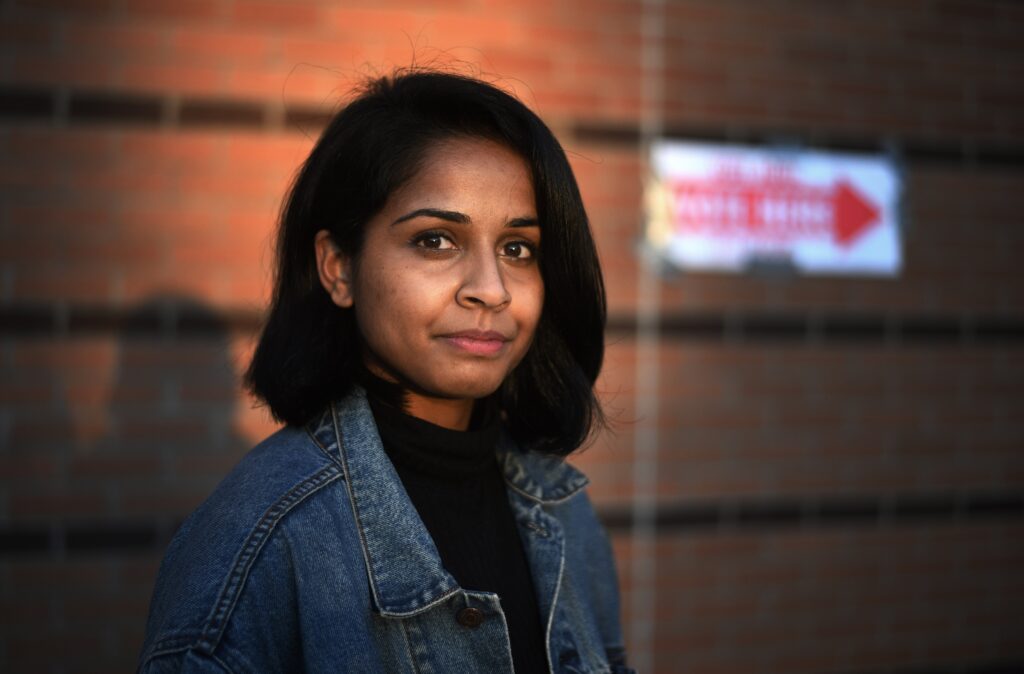
Raj, the DSA activist turned D.C. Council candidate, said volunteers knocked on doors in her ward more than 90,000 times. Supporters were “tired” of the Trump administration and a Democratic establishment they view as complicit, making them eager to mobilize for democratic socialism, she said.
“This is the moment where I think you have two visions,” said Raj. “Either you have fascism or you have democratic socialism — and the idea that everyone should have dignity and have a dignified life.”
Read more These American women are making history as referees at the men’s World Cup
Patrick Marley and Scott Clement contributed to this report.