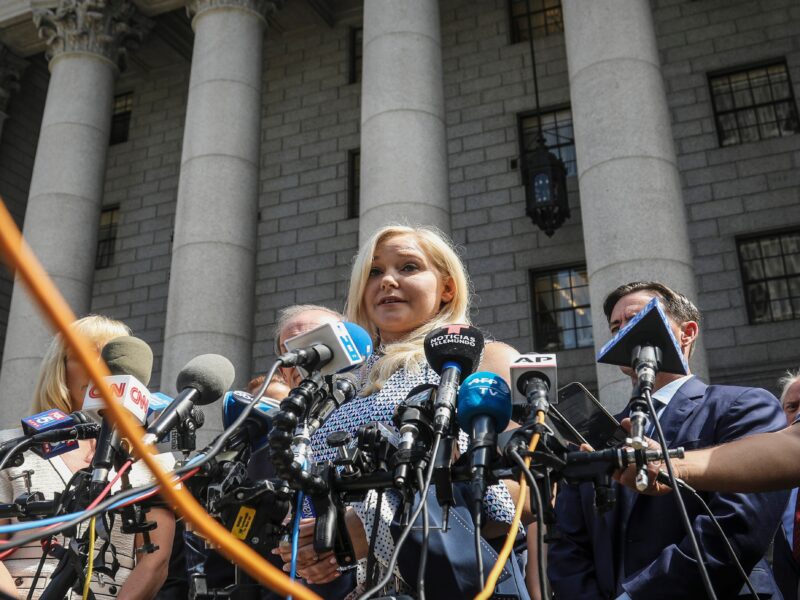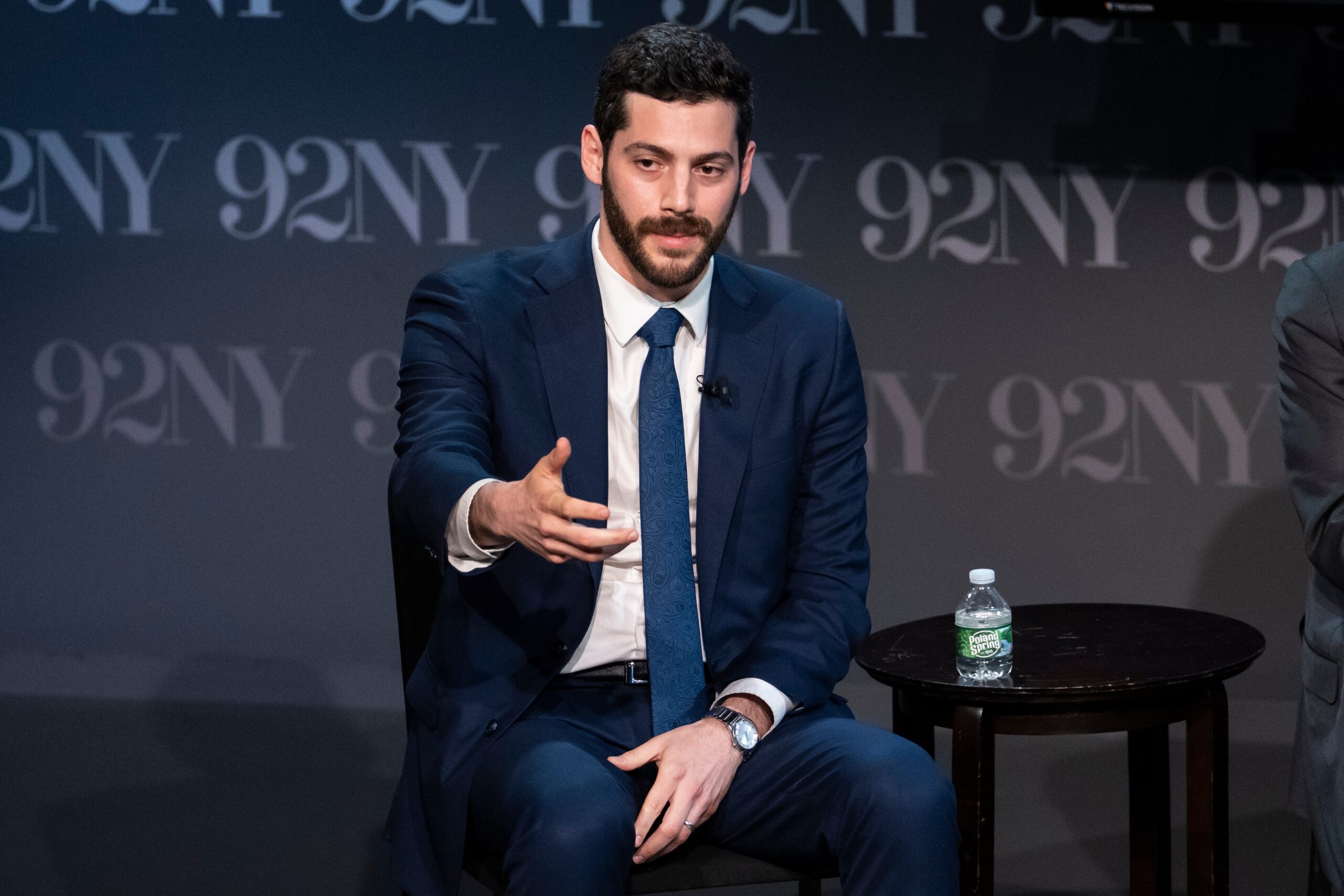
New York’s 12th Congressional District primary is a crowded, star-studded contest to succeed Rep. Jerrold Nadler.
Read more Kyle Bradish dominates for 8 innings as Orioles roll to 6-1 victory over Angels
A Democratic primary in an affluent Manhattan House district has drawn national attention for its bold-faced candidates. But the impact of the race is likely more far-reaching on the future of AI, as the contest has become a proxy battle in a much larger war between big-spending tech giants.
Democratic state assemblymen Micah Lasher, 44, and Alex Bores, 35, lead a crowded primary race Tuesday to succeed Rep. Jerry Nadler, a 17-term Democratic congressman and top antagonist to President Donald Trump during his first term.
The Democratic field drew early national attention for attracting Jack Schlossberg, the grandson of President John F. Kennedy, and George Conway, a former Republican lawyer who had previously been married to Trump adviser Kellyanne Conway.
But it has evolved into a spendathon — one of the most expensive House primaries in state history — between super PACs with ties to rival AI firms, OpenAI and Anthropic, as well as billionaire backers each supporting Lasher and Bores. Schlossberg and Conway fell in polling as campaigns and allies spent at least $26 million on television ads that put AI at the center of the race.
Bores became a target of groups funded by investors behind OpenAI after shepherding a high-profile AI regulatory bill through the state assembly last year. His RAISE Act created new safety standards for AI developers including multimillion dollar penalties in New York state. Gov. Kathy Hochul (D) signed the bill into law in December, and Bores vowed to advance similar legislation federally if elected to Congress.
“Congress is completely missing the boat,” Bores said in an interview. “This is an issue that surveys show Americans trust neither party in right now, and they see it affecting their daily lives.”
The ads attacked Bores for his past donations from Sam Bankman-Fried, the convicted founder of failed cryptocurrency exchange FTX, and his past employment with data-analytics firm Palantir, whose reputation has soured among Democrats for its work on immigration enforcement. Bores said in an interview that he left Palantir over the firm’s decision to sell its technology to help U.S. Immigration and Customs Enforcement track migrants.
But the attacks on Bores wound up working in his favor, raising his profile and drawing attention to his work regulating AI. Bores was able to build an unusual coalition of organized labor, progressives and pro-Israel moderates — supporters who have found themselves on opposing sides in other primaries — to rally around AI regulation.
“It became the proof point for how much Alex scared them in the district,” Jesse Ferguson, a senior strategist supporting the Bores campaign, said of the anti-Bores AI super PACs spending in the race. “They weren’t the empire crushing the rebellion. They were the Death Star that proved the rebellion was worth joining.”
Bores has also had deep-pocketed super PACs in his corner, including AI interests — something the OpenAI allies gleefully point out. A super PAC funded heavily by Anthropic, Open AI’s most prominent rival, has spent more than $4 million in television ads supporting Bores, according to AdImpact. Total spending from Anthropic’s allies for Bores exceeds $10 million. Crypto tycoon Chris Larsen also committed more than $3 million to support Bores.
Anthropic and OpenAI have engaged in a bitter rivalry that has included competing political funding throughout the midterms. OpenAI has supported federal regulations for AI, while Anthropic has backed state-level legislation akin to Bores’s.
Read more Machado homers and King pitches 7 strong innings as Padres beat NL East-leading Braves 1-0
Anthony Rivera-Rodriguez, a spokesperson for a super PAC supported by Anthropic, cast the group as on the side of regulation and “candidates who champion AI guardrails shouldn’t have to stand alone against Big Tech.”
Leading the Future, the group backed by OpenAI investors, said in a statement that “any claim that we oppose regulation is flat wrong.”
“The public record clearly shows that support for Alex Bores from Anthropic and its allies began well before Leading the Future entered the race,” the group said. “Leading the Future is proud to stand against that unprecedented effort and for a transparent, national AI framework that serves workers, families, and the country.”
Manhattan Borough President Brad Hoylman-Sigal, who supports Lasher, said the spending from Anthropic’s side showed that the primary was not about opposing Bores over AI regulation but the longstanding competition between the two AI firms and controlling market share. Lasher and Bores are largely aligned on regulating AI, he said.
The primary has differed from others in the city, which have become test cases of Mayor Zohran Mamdani’s political influence with large divisions over Israel. Mamdani, who is a constituent of the 12th district, has declined to endorse in the race, and Bores and Lasher hold similarly supportive views of Israel.
Bores is nonetheless coopting some of Mamdani’s anti-establishment fervor, casting Lasher as an establishment pick. Lasher, a close confidant of Nadler, has the endorsement of much of the state’s Democratic political class, including Hochul, former mayor Mike Bloomberg, Rep. Nydia M. Velázquez, Hoylman-Sigal and Nadler himself. He has spent decades organizing for major Democratic figures in the city going back to high school, including for Nadler and Hoylman-Sigal. Bloomberg, whom Lasher worked for as director of state legislative affairs, is one of the biggest spenders in the race, pouring in more than $8 million in TV ads for Lasher.
Nadler said part of the reason he was stepping down from Congress was “because I knew that I had a very good successor in Micah.”
Lasher’s backers sneer at the idea that he is an establishment candidate. Hoylman-Sigal said it was a common attack from rivals who don‘t get the backing of an incumbent.
“There is no establishment,” Nadler declared.
Nadler, whom Hoylman-Sigal described as the “OG of Manhattan politics,” remains popular in the district, which includes some of the richest and most conservative (by Manhattan standards) parts of the island. Large swaths of the district on the city’s Upper East and Upper West sides voted for former governor Andrew M. Cuomo in last year’s mayoral election.
Lasher, who supported Bores’s AI bill in the state legislature, contends that he would be the true advocate for AI regulation in Congress.
“If my biggest endorsement is Jerry Nadler and [Bores’s] biggest endorsement is Anthropic and the crypto billionaire Chris Larsen, I think the voters are going to trust Jerry Nadler,” Lasher said.
Read more Colombia’s last training session before World Cup match against Congo suspended because of storm