The Republican Senate candidate’s campaign says he never met or communicated with Jeffrey Epstein or Boris Nikolic, but now acknowledges he attended the Doha event referenced in their emails.
Read more 5 things we learned on the first day of Blanche’s confirmation hearing
In today’s edition … Water politics are heating up at a fever pitch out West … We ask you how much you care about the Epstein files … but first …
One of the greatest divisions inside the Democratic Party is over support for Israel, and Wednesday’s vote on whether to cut off aid to the nation for the next fiscal year highlighted just how deep that chasm has grown.
Yes, the amendment failed to be added to an appropriations package. But a stunning 103 Democrats voted to cut off military aid to Israel, underscoring how sharp Democrats’ shift on Israel has become in recent years.
“The status quo is not tenable,” said Katherine Clark (Massachusetts), the second-highest-ranking Democrat in the House. “We should not provide a blank check for military aid to any country that does not comply with U.S. law, interests, and values. The Netanyahu government has failed to meet that standard.”
You can read more on this from the great Matthew Choi.
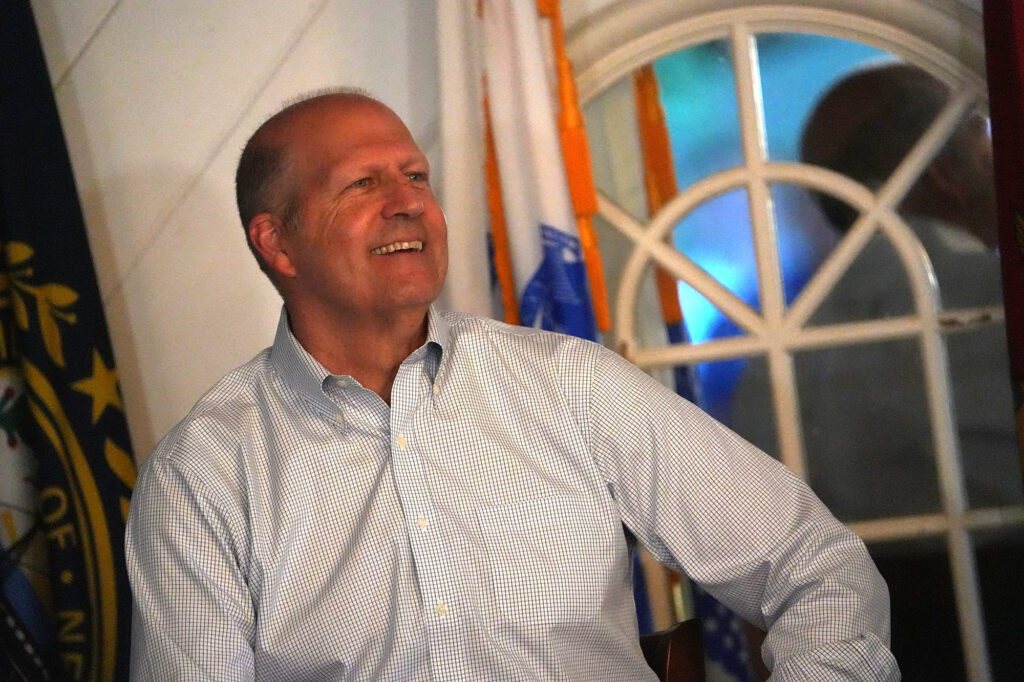
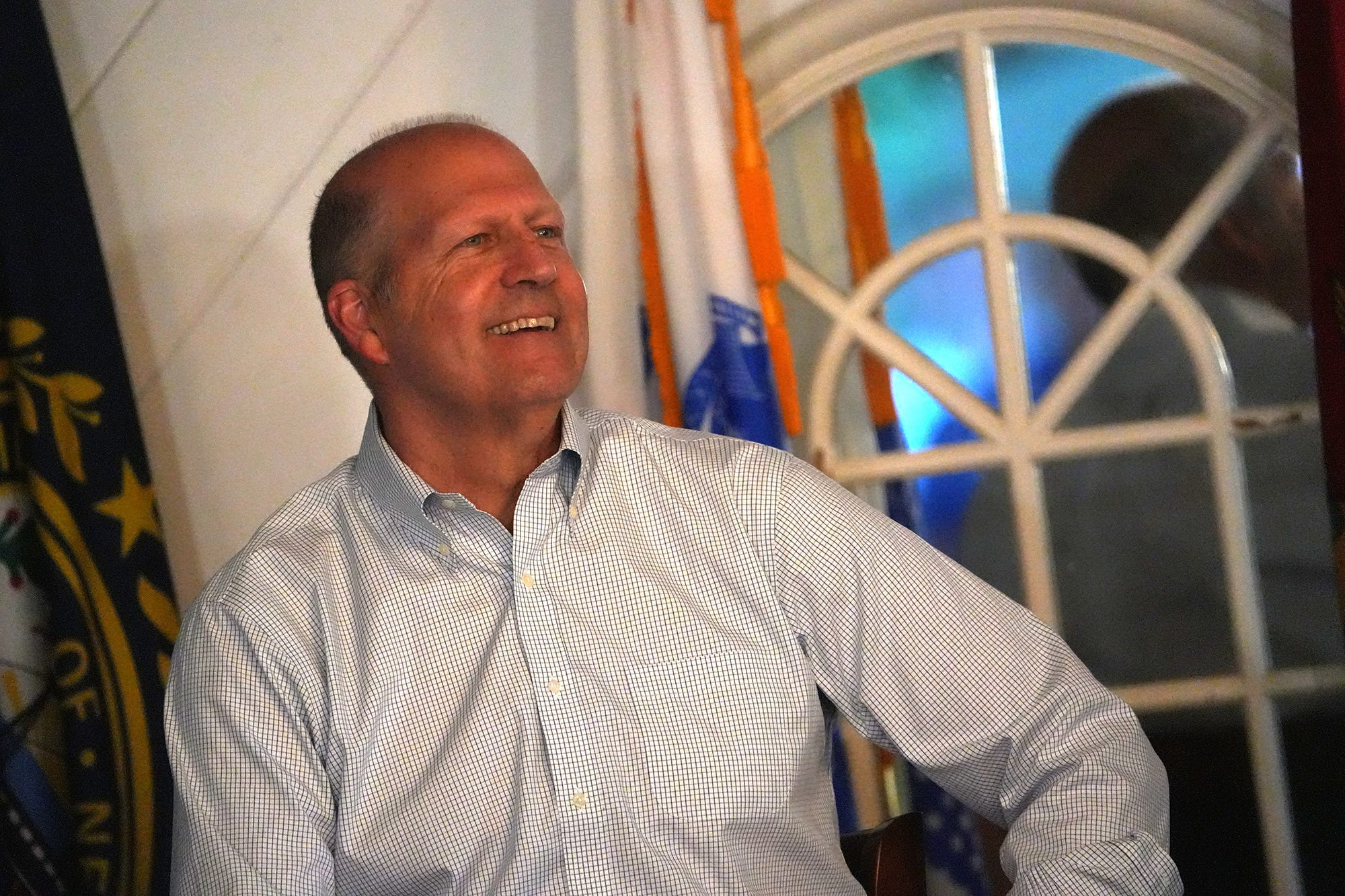
Back in March — as questions in New Hampshire circulated about whether the Republican Senate candidate John Sununu had any connections to the disgraced financier Jeffrey Epstein and his associate Boris Nikolic — Sununu was asked a question.
“Have you ever been to Doha, Qatar?” asked a person, camera in hand.
“No,” Sununu said, shaking his head.
His campaign now tells us that answer was not true.
Sununu traveled to Doha in 2001 and participated in a public World Economic Forum event there in 2010 — the same event referenced in emails between Epstein and Nikolic.
Those emails included one ambiguous mention of “John Sununu,” without making clear whether Epstein was referring to the Senate candidate or his father, and without showing that either Sununu met or communicated with Epstein or Nikolic.
The emails were among correspondence released by the Justice Department earlier this year. In May 2010, Nikolic sent Epstein a list of attendees for a World Economic Forum event in Qatar. The 2010 WEF Global Redesign Summit in Doha was scheduled to begin days later. Nikolic asked Epstein for advice on whom he should meet a day before the event, and the late sex offender wrote, “John Sununu, has good stories,” providing no additional details about which Sununu — father or son — he was referring to.
You can read the emails yourself here.
The exchange spurred a controversy in New Hampshire as Sununu, the son of former New Hampshire governor John H. Sununu, mounted a Senate campaign to replace retiring Sen. Jeanne Shaheen (D). The Republicans’ campaign has forcefully denied any allegation, stating plainly that neither Sununu nor his father “ever met or communicated in any way with Boris Nikolic or Jeffrey Epstein” and calling Epstein “a despicable human being.”
But that conversation is why Sununu was approached with the question in March.
“John was simply brushing off a tracker who was accosting his wife,” said Mike Schrimpf, a Sununu campaign spokesman. “The fact that he has traveled to Qatar is a matter of public record,” noting that Sununu, as a House member in 2001, visited Doha as part of a bipartisan congressional delegation.
“He also participated in a workshop on strengthening banking regulation at a public forum event in 2010,” Schrimpf said, referring to the World Economic Forum, confirming that Sununu’s answer on camera was inaccurate.
A photo of Sununu was also featured in a report that the World Economic Forum produced after the event. You can see his photo on Page 10.
So why does this matter?
Scott Brown, a former Massachusetts senator who has relocated to New Hampshire and is now running against Sununu in the September primary, has attempted to make the Epstein email an issue, arguing the emails “have raised serious questions” and using it to cast Sununu as an “insider” who connected “to a D.C. machine or elite social circles.”
“Voters shouldn’t have to guess who, or which one of their representatives were associated, or what “stories” are being referenced in federal documents,” Brown wrote on X in February.
This all may not matter in the primary. Public polls this year have shown a large lead for Sununu — whose name is synonymous with Republican politics in the Granite State — over Brown in the primary. It could, however, become an issue in the general election, where Sununu is expected to face Rep. Chris Pappas, the leading Democrat for his party’s Senate nomination.
Epstein-related material has also touched prominent New Hampshire figures outside the GOP primary, including Dean Kamen, the Segway inventor and major New Hampshire businessman. New Hampshire Public Radio reported that newly released materials included a photo of Kamen with Epstein and business magnate Richard Branson, though Kamen has not been accused of wrongdoing. Kamen has bipartisan political ties in New Hampshire.
And all of this underscores the deep political toxicity of even the most scant connection to Epstein.
President Donald Trump has been dogged by his well-documented ties to the disgraced financier, and the issue has proved to be one of the few areas where the president’s often loyal base has been willing to break with him. Democrats have latched on to this and are starting to use the term “Epstein class” to attack billionaires and the well-connected.
“We need to say, loudly: ‘You gave him a shot as an outsider, but he cut your community’s health care, took his eye off the ball on prices and focused on tax cuts for billionaires — while he tried to shut up everyone, including his own supporters, who wanted to talk about elite billionaire sexual predators,’” wrote Pat Dennis, the president of American Bridge 21st Century, a liberal outside group.
Read more Schmidt’s final Wallabies test brings hometown start for Carlo Tizzano vs Italy
The Epstein issue was also front and center Wednesday when acting attorney general Todd Blanche testified before the Senate as he vies to become Trump’s permanent pick for the job. Blanche acknowledged in his testimony that “mistakes were made” in how the administration handled the so-called Epstein files, but that he wanted to “make sure that the American people know that this administration, when it comes to Jeffrey Epstein, has been more transparent than any administration.”
The Sununu campaign denies any such involvement with Epstein, and the released emails do not show that Sununu met or communicated with Epstein or Nikolic. But the episode shows how politically radioactive even an ambiguous Epstein-file mention has become.
Asked about this reporting on Wednesday, New Hampshire Democratic Party Chair Ray Buckley said Sununu had been “caught in his egregious lie” and needed to explain “the extent of John Sununu’s involvement with Jeffrey Epstein.”
Something many of you likely don’t know about me is that I was born and raised in Las Vegas — and I remain deeply proud of my family’s Nevada roots.
That is one of the reasons this fascinating report by Sarah Kaplan on the state and future of the Colorado River stood out to me. Water politics are ingrained in every aspect of life across the Southwest, and Sarah’s report on how the federal government is “poised to announce a major decision about the fate of the shrinking Colorado River” punctuated how the snaking body of water makes living in this part of the country even possible.
The Colorado River supplies water to 40 million Americans in seven states, but “the worst drought in at least a millennium” has left the land parched and the reservoirs it fills notably low. The nearly two-decade-old regulations for managing shortages in the Colorado River Basin expire at the end of 2026, and the states that pull from the basin have been unable to strike an agreement. Enter the Bureau of Reclamation, which Sarah aptly describes as a “little-known agency within the Interior Department,” now tasked with finding a way to avoid the collapse of the river basin.
A whopping 75 percent of the water from the Colorado River basin — which begins in Wyoming, snakes through Colorado, Utah and Arizona, skirts Nevada and California before heading into Mexico — goes to agriculture. And the belief is that a federal decision could dramatically affect how water is drawn from the river for this activity.
On a personal level, I remember boating on Lake Mead as a kid. And I recently watched some old family videos of my mother’s side of the family spending a day out water skiing on a lake that is now at less than 30 percent capacity, exposing the massive rock walls that were filled in when the Hoover Dam was built. The photos of how far the lake has shrunk are remarkable.
So why should you care about this? Well, if you live in one of these states, you probably know how scarce water is and how critical the basin is to basic life in the desert. But even if you live far outside the affected area, you may not be the first people impacted by these decisions, but they could come to an area near you in our increasingly warming world.
Atlanta Journal Constitution: Georgia Democrats are preparing, again, this week to be the focus of election-interference accusations, as Trump is set to deliver what is expected to be a speech on Thursday night about interference in the 2020 election.
Verite News (Louisiana): Gov. Jeff Landry (R) argued this week that “New Orleans is no longer as important to Louisiana’s economic success as it has been in the past,” highlighting a trend in deep red states where Republicans are seeking to either demonize their largest cities or diminish their power.
The Minnesota Star Tribune: A lot has been written about how congressional primaries have highlighted the Democratic divide between candidates with experience and those who offer change. But that is also happening at the local level: State Sen. Ron Latz (D), who represents a district around St. Paul, is facing a tough primary challenge for the first time in decades.
We asked for your views of the economy — and what informs those views. Some of you said prices, others said the stock market and even more implied vibes.
“It seems there is a significant divide between those with 401(k)s, 403(b)s, and other investments who are exceedingly pleased with the stock market’s performance, and those with smaller paychecks living hand-to-mouth who feel the economy is failing them,” wrote Michelle North, a reader in Virginia.
Mike Tierney pushed to raise taxes on the wealthy, specifically to deal with the national debt.
“Doing nothing to reduce the national debt, in fact growing it at a record pace, is deplorable. Taxes on the wealthy (I am in that category) need to be increased significantly, with the money dedicated to debt reduction. Medicare and Social Security need to be made fiscally sound. Both parties are afraid of these issue,” Tierney wrote. “Democrats need to tell us how they will fix things, not just tell us things are broken.”
And Roberta Jacobs Meadway blamed Trump’s tariff policy for rising prices: “What is within the control of the actors who make political decisions that exacerbate price increases are ill-conceived and badly executed tariffs.”
Not everyone agreed that the U.S. economy is struggling. Robert Coffey, a frequent reader and writer, wrote, “Prices under Trump ARE down, the economy is doing very well and if you have a problem understanding how the US for years was getting screwed with the tariff policies that were in place, then maybe you should take an economics 101 class for a refresher.”
I wrote today about the Epstein files, which seemed to dominate at least part of the Blanche confirmation hearings. Do you still care about the Epstein files? They seemed to dominate the political conversation earlier this year, but the conversation has died down in recent months. Do you think Epstein should be a major topic of conversation ahead of the 2026 midterms? Why or why not? Let us and your fellow Early Brief readers know at [email protected].
Read more UK urges FIFA to investigate Argentina over Falklands banner at World Cup
Thanks for reading. You can follow Dan on X at @merica.