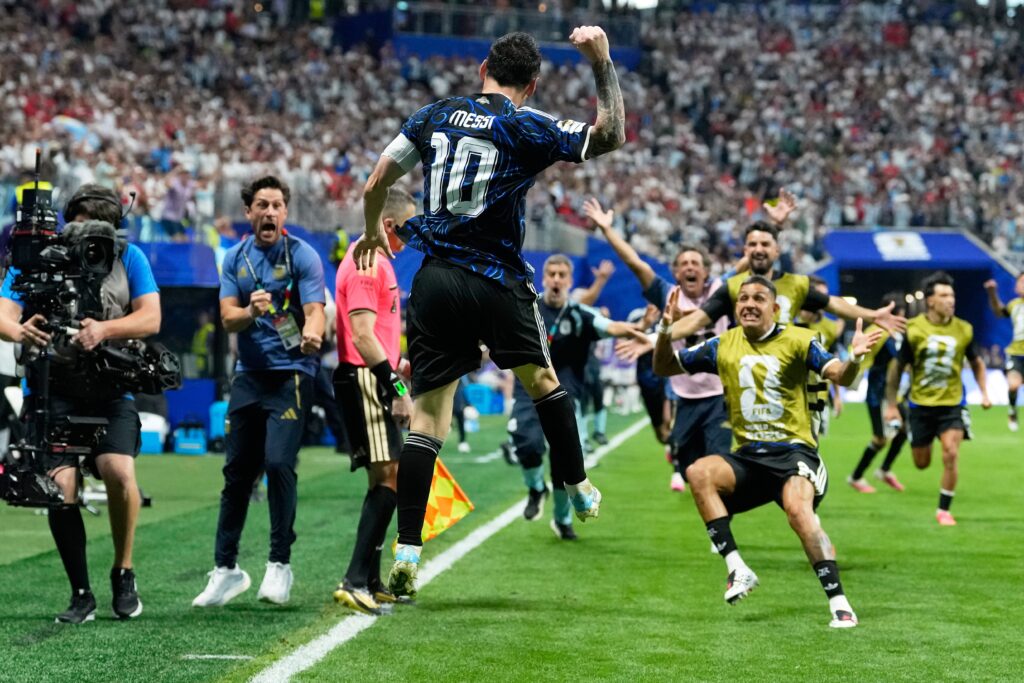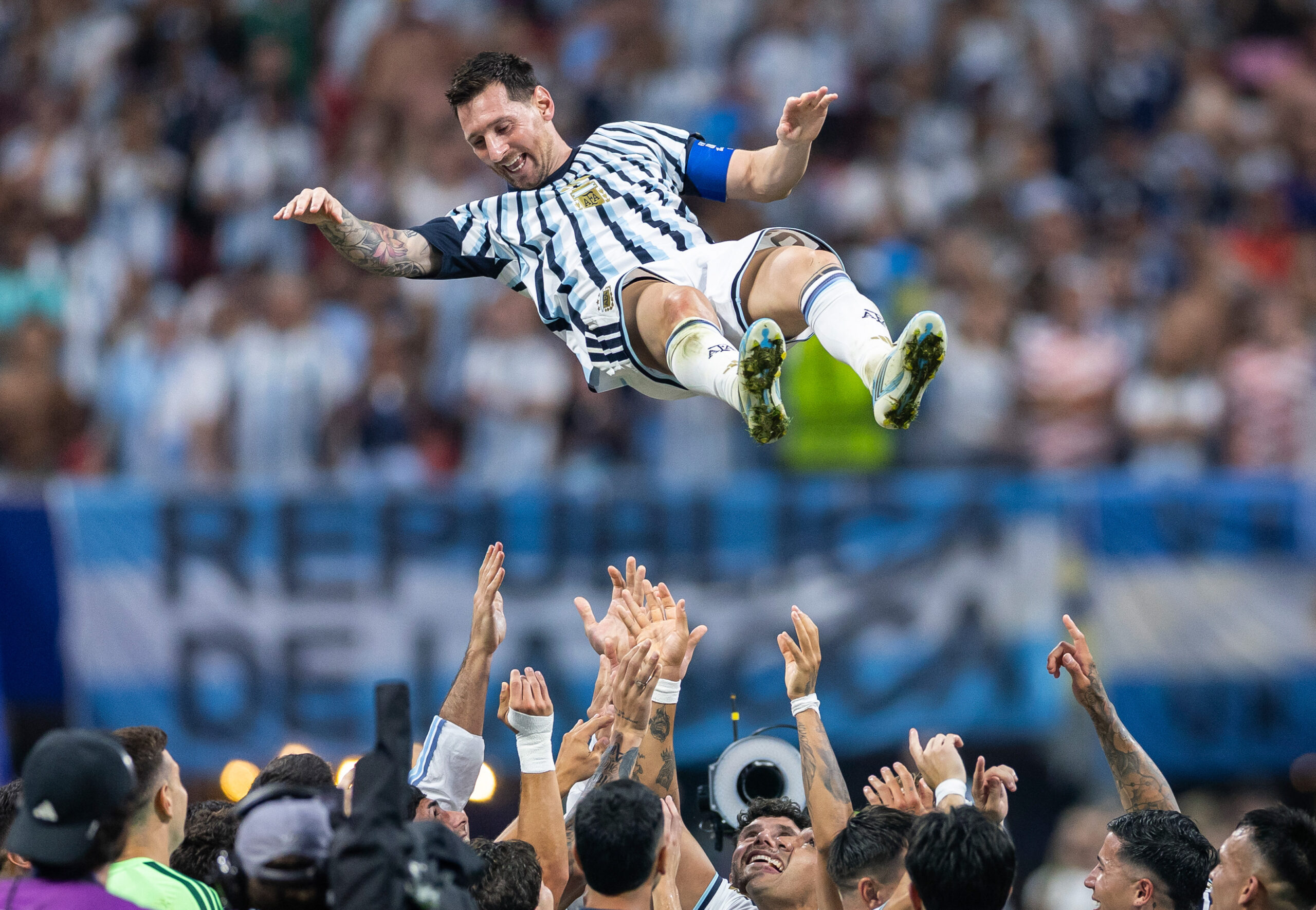
The soccer world thought his career peaked in 2022. Now he’s back in the biggest game on the planet, not as a ceremonial figure but as the tournament’s central force.
Read more For $50,000, they watched the whole World Cup in Times Square. Was it worth it?
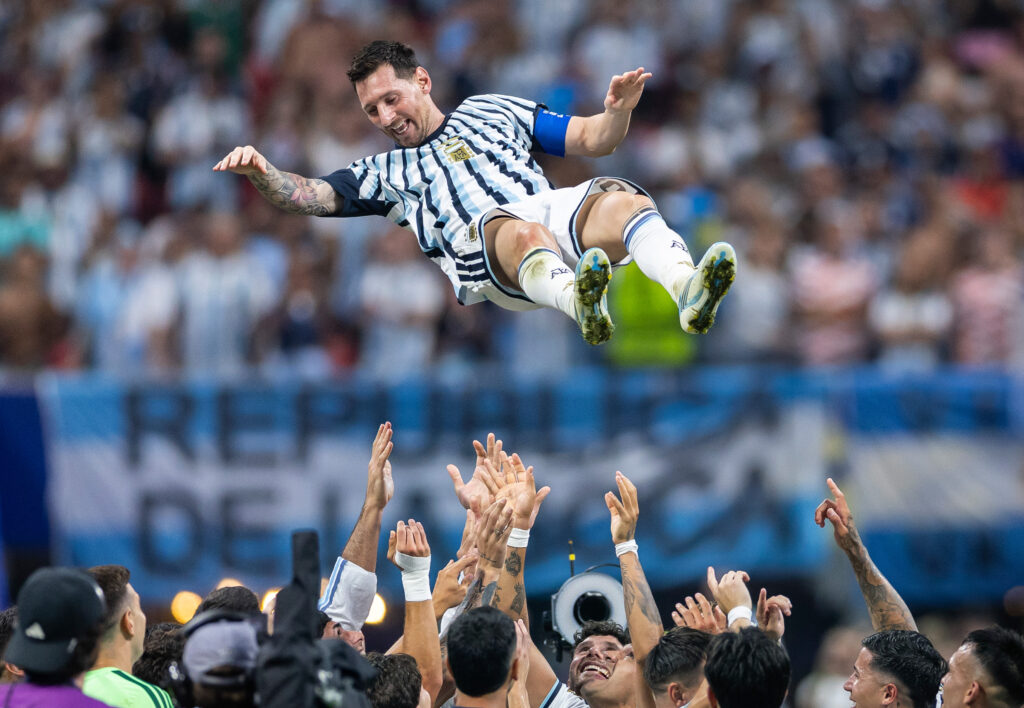
NEW YORK — The giant is listed at 5 feet 7, 159 pounds, which has always seemed like a typo or maybe a clerical error. For two decades, Lionel Messi has played as if the usual dimensions of the sport do not apply to him — shrinking fields, bending angles, reducing defenders to witnesses and the ball to an obedient prop cast under his spell.
He is an athlete, yes, but Messi is also a dancer, illusionist, chess master, visionary and creator. He has made soccer’s most impossible acts look intimate and casual, like secrets shared only between his left foot and the grass. He has spent his career defying physics.
Now, in the most improbable of final acts, the Argentine forward is defying time.
Four years ago, Messi seemed to have reached the ending every great career seeks. He lifted the World Cup trophy in Qatar, quieted the last argument and delivered Argentina the title that had eluded him. His trophy cases already needed trophy cases, and now he had the one piece that seemed to complete his collection.
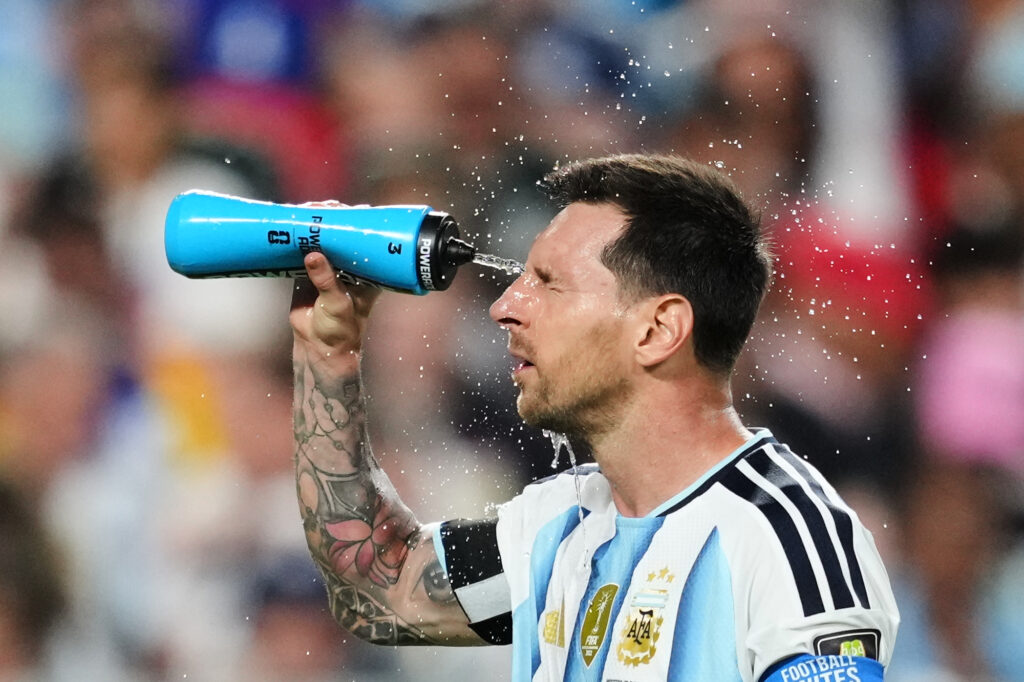
But on Sunday, Messi will lead Argentina into another World Cup final, against Spain, with a chance to make his the first country in 64 years to repeat as champion. The soccer world thought his career had peaked in 2022. Somehow, four years later, the most recognizable athlete on the planet is back in the biggest, most-watched game on the planet, not as a ceremonial figure but as the tournament’s central force.
Over the course of five weeks this summer, 39-year-old Messi has looked nothing like a 39-year-old and every bit like Messi. Only France’s Kylian Mbappé has scored more than his eight goals. His four assists are the second most in the tournament. His bursts are still explosive. His top speed still belongs near an Olympic track. He conserves more, plays smarter and takes better angles, which hardly seemed possible for a player who already saw the game before everyone else did.
“Messi’s an extraterrestrial. He’s an alien,” John Strong, the Fox broadcaster, said of the team captain. “He does something that is not possible for humans to replicate.”
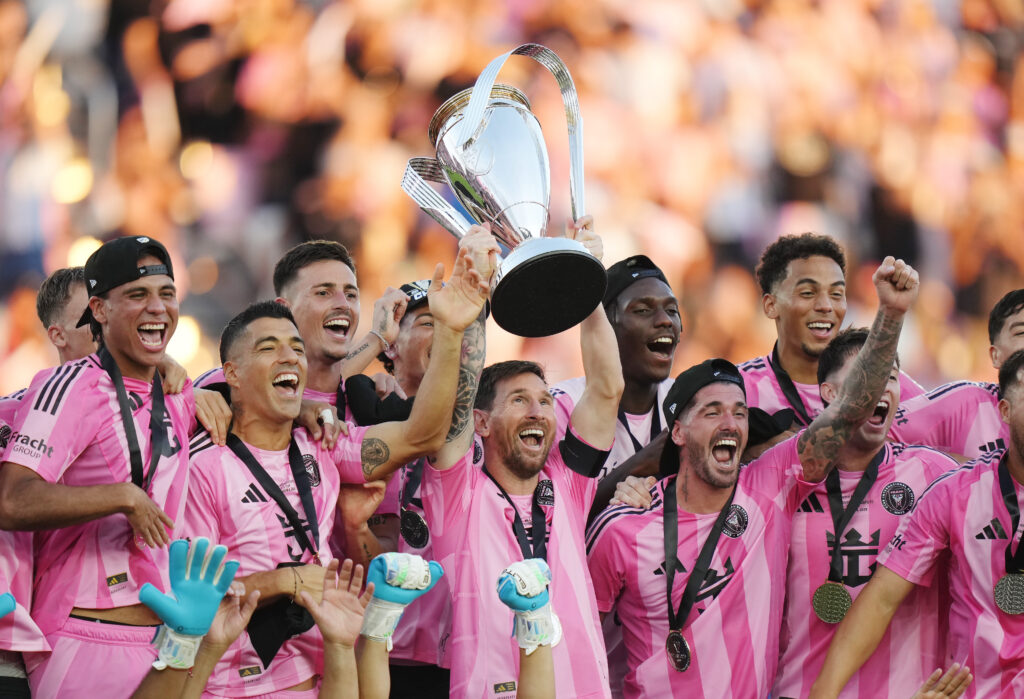
What came after Qatar had looked, from the outside, like an epilogue. Seven months after winning the World Cup, Messi joined Inter Miami, then the worst team in Major League Soccer, wearing a shade of pink that seemed to announce a softer final chapter. The assumptions were familiar: America as a landing place, MLS as the game’s retirement porch, sunshine and salary and one last tour before the sunset.
The league had seen aging stars arrive before — Thierry Henry, Wayne Rooney, Zlatan Ibrahimovic and, most consequentially, David Beckham, whose 2007 move to the Los Angeles Galaxy helped transform MLS’s ambitions and eventually gave him the ownership stake that led to Inter Miami. The Beckham experiment laid the foundation for the Messi masterpiece, but even that history seemed to frame Miami as the place where soccer royalty went after the central drama of their careers had already passed.
But if the soccer world was wondering what Messi’s final chapter would look like — whether he would still burn with the same drive after Qatar, whether Miami would dull the edge, whether the most decorated player of his era could still find something left to chase — he never seemed to share the concern.
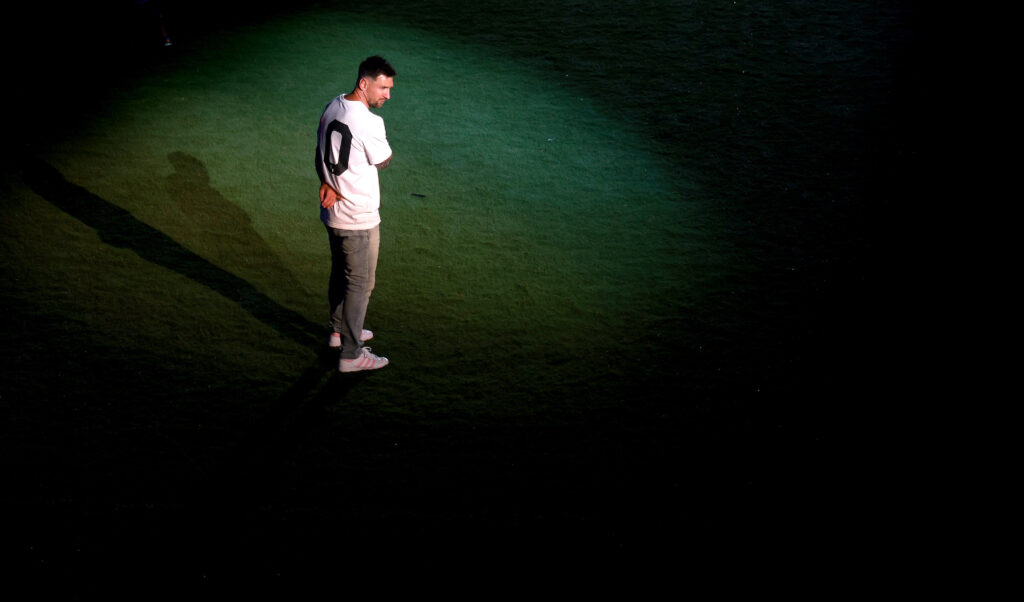
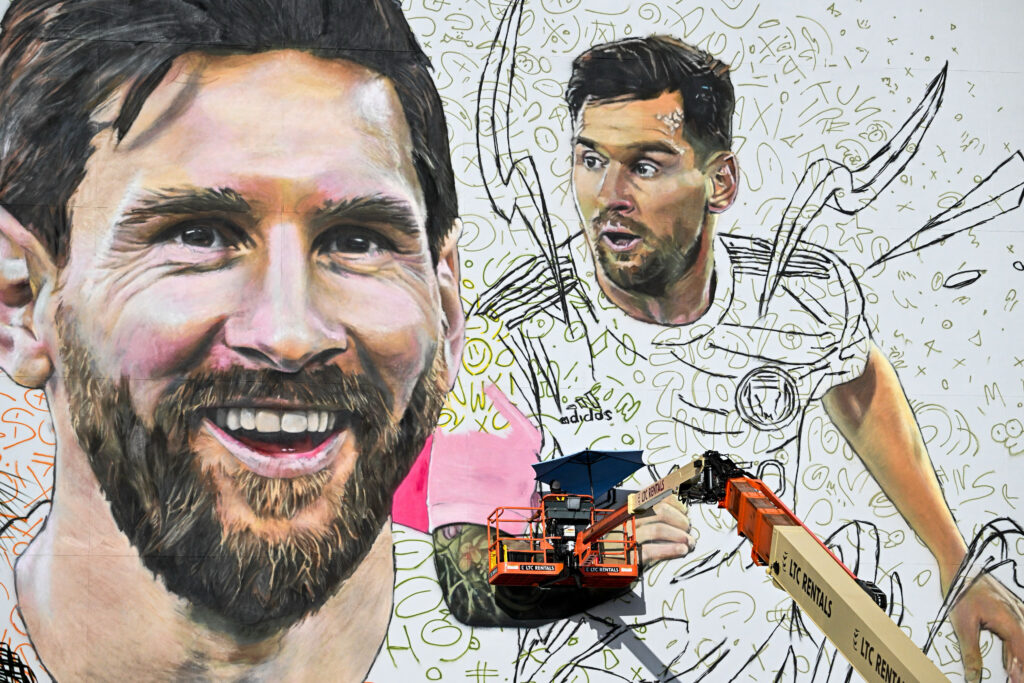
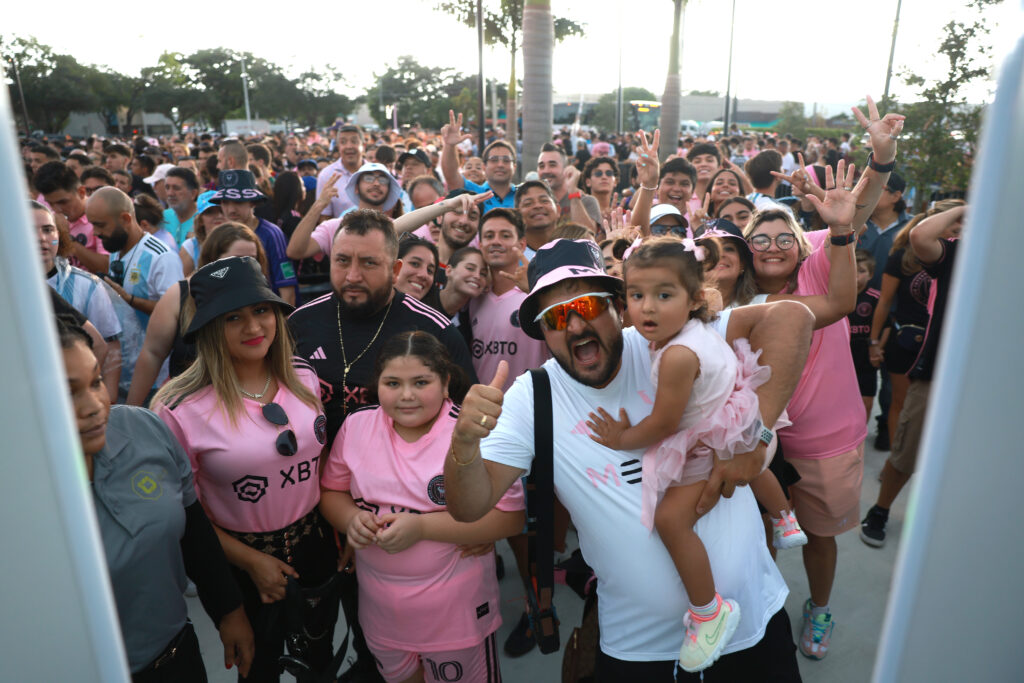

Three days after he was formally presented as an Inter Miami player, Messi walked into a meeting with club officials wearing a light blue suit and pink tie. The ink on his contracts was dry. Beckham and Jorge Mas, the club co-owner, were there, along with Chris Henderson, the club’s sporting director.
Messi had one question, as recounted in Paul Tenorio’s book “The Messi Effect.”
“Tell me all of the competitions and trophies I can win,” he said.
That is the part of Messi’s American chapter that has become easier to miss beneath the commercial spectacle. The sold-out stadiums, pink jerseys, streaming numbers, sponsorship records and road crowds told one story. Messi’s question told another. He had not come merely to be celebrated. He had come to run up the score.
“Father Time has called the house, sent him a text, sent him an email,” said Taylor Twellman, the former U.S. national team forward and longtime soccer analyst. “It’s just that he’s not answering the call.”
Miami transformed almost immediately from a last-place team into a global attraction. As MLS and Inter Miami set records across attendance, sponsorship, merchandise and digital growth, Messi turned the club into the league’s measuring stick on the field, too: Miami posted the best regular season record in 2024 and won the MLS Cup in 2025, and Messi became the first player in league history to win back-to-back MVP awards in those years. He also reached 100 goals faster than any player in MLS history.
Even the league’s biggest dreamers did not imagine this version of the Messi effect: that the player who arrived in Miami after Qatar would still be competing and performing at the highest of levels. MLS Commissioner Don Garber called him “a gift that keeps on giving.”
“Who expected Leo to be the leading scorer in the World Cup?” Garber said. “The fact that he’s playing in Major League Soccer is a dream come true.”
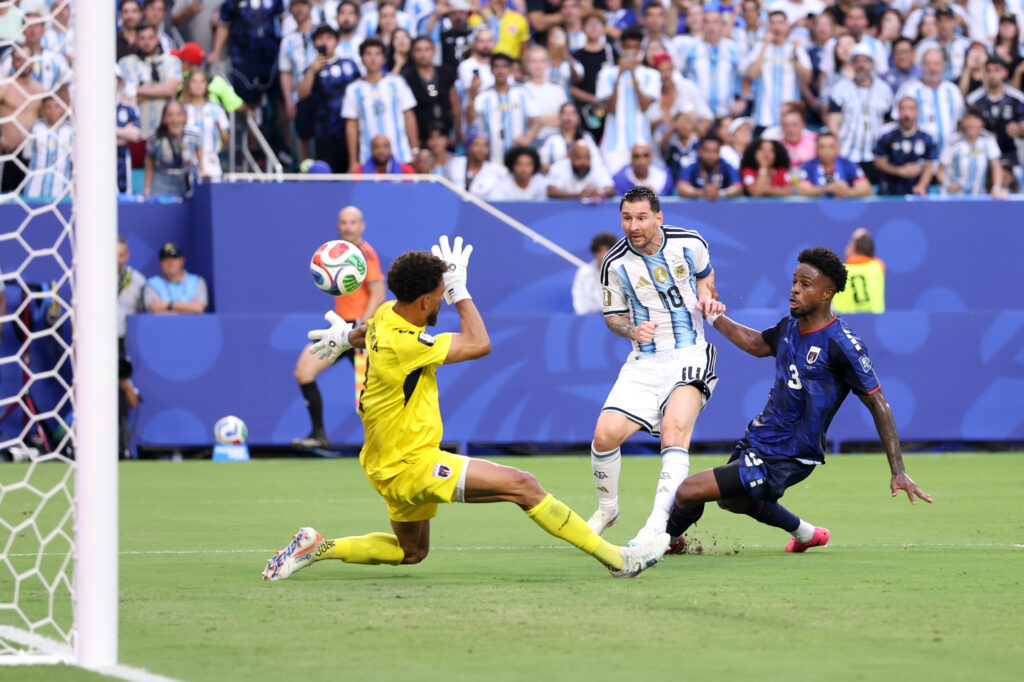
But the World Cup is not MLS. Its later stages gather the sport’s fastest, strongest and most ruthless players, many of them young enough to have grown up studying Messi highlights on YouTube. That is what has made his summer feel so improbable: Age is supposed to make players smaller — to steal their speed, narrow their influence, push them further from the center of the game. Messi, who celebrated his 39th birthday two weeks into this tournament, still casts a supersized shadow over the entire pitch.
“I don’t know what argument you would build that Messi is not the best ever,” said Strong, the broadcaster. “The fact that he’s come back four years later, when we all thought he would ride into the sunset in Qatar, and at the age that he is, playing in MLS, playing as the best in the world plays in our country — I don’t think we can say that enough and marvel at that enough. And they still can’t stop him.”
Read more Voters are struggling to keep up with Iran war’s twists and turns
The harder question is how much of this is alien and how much is adaptation.
Messi is not the same player who once spent full matches buzzing across Barcelona’s front line. He does not run with the same constant high-intensity volume. According to FIFA tracking data from this tournament, roughly 64 percent of the distance Messi covers in games comes at a walking pace, and his average of about five miles per match is the lowest of any outfield player to log at least 90 minutes. Players in similar positions are averaging closer to 6.6 miles per match, with more running than walking.
He does not need to press every ball, occupy every channel or overwhelm every game physically. His genius now is more selective. He saves energy, reads the field, waits for defenders to lean the wrong way, then still has enough burst to create the half-step that has defined him for two decades.
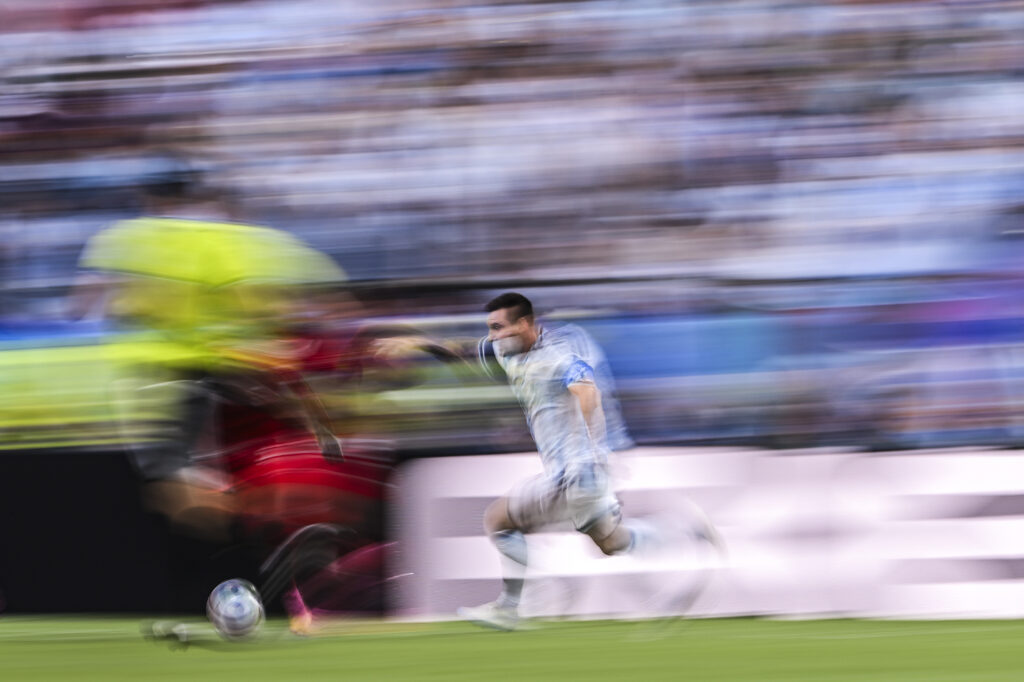
“He still hasn’t lost his fastball,” said Twellman, the MLS analyst for Apple. “And the fastball is his ability to make defenders miss and just look for that little bit of a half a yard or that half a step where he gains an advantage.”
That, Twellman said, is where Messi’s mind has become as important as his legs.
“When you are operating between the ears at the level that he is, you can lose a step,” Twellman said, “where you don’t have to be 90 minutes buzzing around.”
The walking, scanning version of Messi can make him appear detached from the physical demands of a game. Twellman points to the stats, though: Messi ran 5.8 miles in Argentina’s semifinal victory over England and averaged roughly six miles per game in the knockout stage. That came after he averaged about 3½ miles in the group stage.
“So obviously,” Twellman said, “he picked it up enough.”
For Miami and MLS, that dream has been tangible and quantifiable. For Argentina, the dream has been more delicate. It has been about extending the Messi era without pretending it can last forever.
Messi never announced Qatar as goodbye. He also never promised that 2026 would come. In the years after winning the World Cup, his future with Argentina became a question that followed the team everywhere — not because anyone wanted to rush him out, but because everyone understood that the most glorious chapter in the country’s soccer history was living on borrowed time.
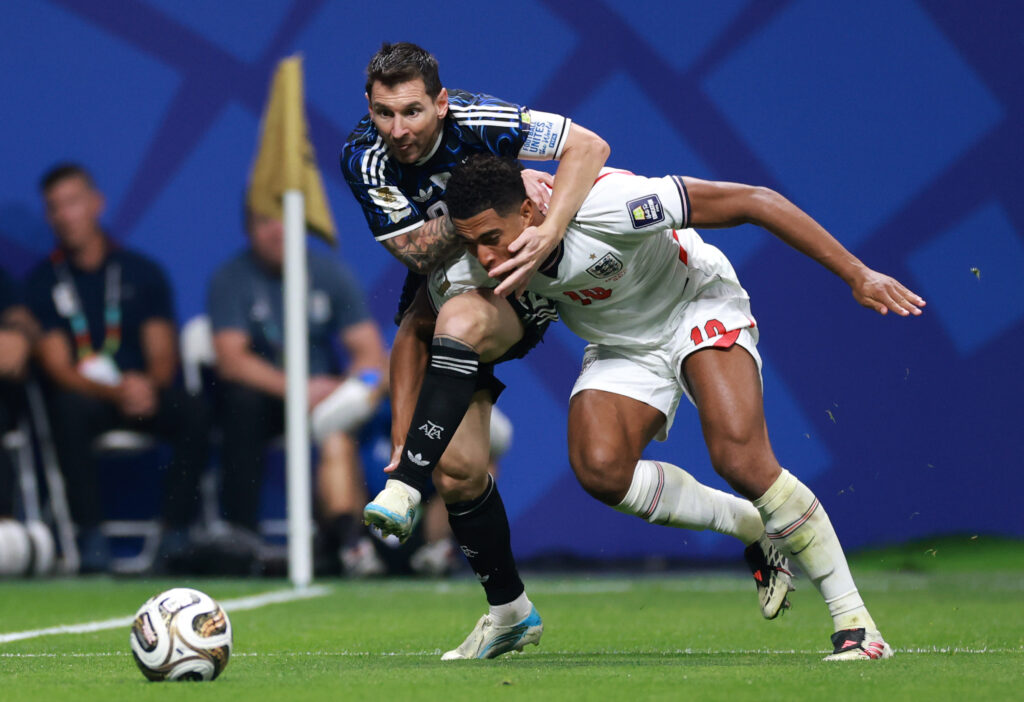
The 2024 Copa América seemed, for a moment, to show Argentina what the other side might look like. Messi nursed a muscle injury early in that tournament. Others scored. Others stepped up. In the final, Messi left in the second half with the game scoreless and watched from the bench, emotional and helpless, as Argentina prevailed on Lautaro Martínez’s goal in the 112th minute. They had won without the center of their universe on the field, and the image felt like a preview. The torch had not been snatched from Messi, but perhaps it had finally been shared.
But Argentina has not treated his age as a reason to move on. It has treated it as a problem to solve. Coach Lionel Scaloni built a team that complements Messi in his late 30s rather than asking him to carry every inch of the field. Alexis Mac Allister, Enzo Fernández and Rodrigo De Paul provide the running, pressing and protection. Julián Alvarez and Lautaro Martínez supply the legs and aggression up front. Messi remains the brain, the gravitational force, the one player around whom every defensive plan still seems to warp.
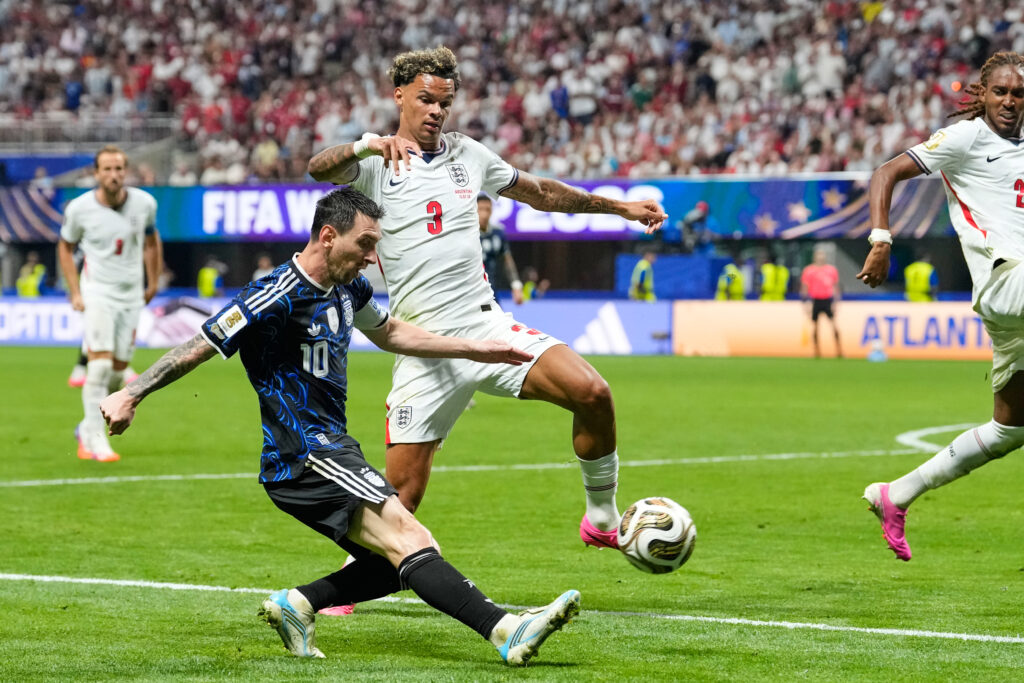
Stu Holden, the Fox analyst and former U.S. national team midfielder, said Messi’s brilliance lies partly in his willingness to take “what the game gives him.” Against England, Holden said, Messi drifted wide, pulled defenders with him and became provider rather than finisher.
“He knew he wasn’t going to be the goal scorer the other night, but he was quite happy to be the assist guy,” Holden said. “That speaks to his brilliance as much as anything. It’s never just about Messi. It’s about how much he also enhances and makes the team better, too.”
He didn’t score against England; he didn’t need to. He instead set up both Argentine goals that punched the ticket to Sunday’s final, showing once again that there is no surefire game plan.
Spain Coach Luis de la Fuente can remember one of the first failed plans. On May 15, 2004, de la Fuente was coaching Sevilla’s youth team in the Spanish King’s Cup when he saw the Barcelona academy prodigy with hair nearly to his shoulders. Messi was 16. Sevilla assigned a defender to follow him everywhere.
For 70 minutes, it worked. The match was scoreless. Then the player marking Messi picked up a yellow card and had to be replaced.
“Within 15 minutes, he scored four goals,” de la Fuente said, holding up four fingers.
Two decades later, Spain, of all opponents, understands the mythology it is facing. It is the country where Messi became Messi, where he arrived as a boy from Rosario and grew into Barcelona’s defining genius. Now Spain stands between him and the most extravagant ending soccer has ever offered.
Except this is not really an ending, either. Qatar was supposed to complete him. Miami was supposed to soften him. Age was supposed to narrow the possibilities. Instead, the player who came to the United States for a calmer day-to-day has found his way back to the sport’s loudest stage.
Four years ago, Messi reached the top of the mountain, with no higher peaks in sight. But because he is Messi, gravity has never really applied. He kept looking skyward, flying toward heights only he seemed to know existed.
Read more DOGE was supposed to be dead. Its remnants are everywhere.