Charges in Virginia against the prominent Trump critics were thrown out last year after a court ruled the U.S. attorney overseeing them had been appointed illegally.
Read more Republican lawmaker moves to force vote on impeaching Hegseth
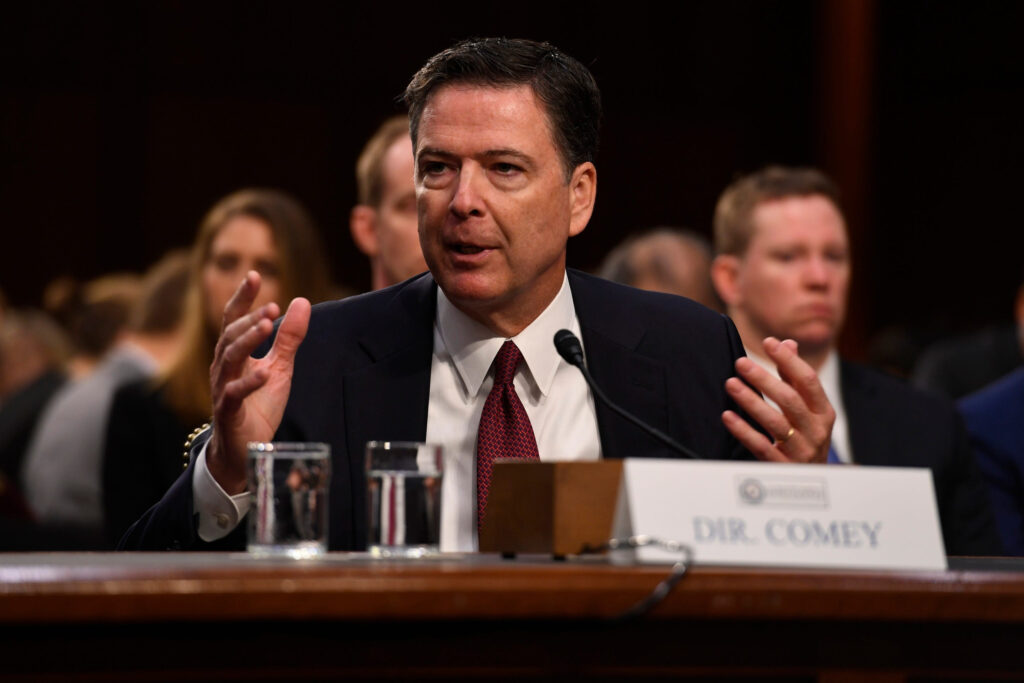
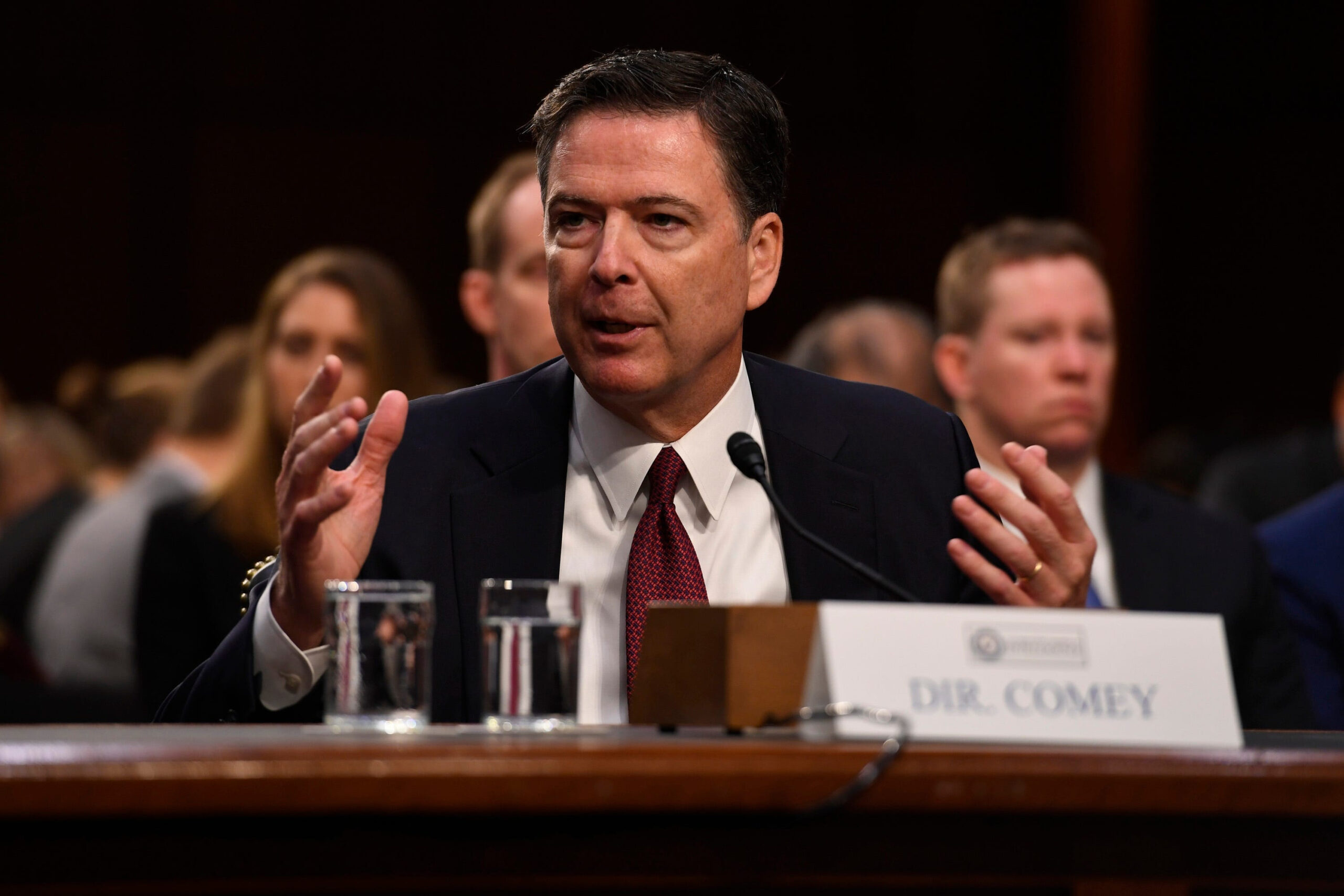
A federal appellate panel expressed skepticism Tuesday about the Justice Department’s bid to revive prosecutions in Virginia of former FBI director James B. Comey and New York Attorney General Letitia James, following a court ruling last year that the prosecutor overseeing them had been illegally appointed.
The three-judge panel of the U.S. Court of Appeals for the 4th Circuit appeared poised to uphold that earlier decision, which dismissed both cases after concluding Trump loyalist Lindsey Halligan had been unlawfully serving as interim U.S. attorney in the Eastern District of Virginia when she secured indictments against the prominent Trump critics.
The panel’s ruling — expected in the coming months — could carry significant implications for the Trump administration’s broader fight over the president’s authority to handpick prosecutors overseeing the Justice Department’s most consequential cases.
For months, administration officials have been locked in a battle with courts across the country over the president’s power to install allies in key prosecutorial posts while bypassing the Senate confirmation process — a dispute probably bound for the Supreme Court.
On Tuesday, two of the 4th Circuit panel members — Judges Albert Diaz and Henry F. Floyd, both appointees of President Barack Obama — questioned the government’s assertions that presidents could appoint an unending series of temporary U.S. attorneys without ever having to seek Senate approval.
“Under your reading of the statute, a nefarious, ne’er-do-well executive could do exactly that,” said Diaz.
The third member of the panel, Trump appointee Julius N. Richardson, appeared far more receptive to the Justice Department’s view that the disqualification of Halligan was improper and should never have resulted in the cases’ dismissals.
“Two grand juries in this case found probable cause that these defendants committed federal crimes,” department lawyer Henry C. Whitaker said of Comey and James. “I would respectfully submit … that the grand juries’ decisions in these cases should be respected.”
Comey and James, both of whom have denied any wrongdoing, were among the earliest targets of President Donald Trump’s push to deploy the Justice Department as a tool of retribution in his second term.
Comey has since been charged in a separate indictment with threatening Trump by posting to social media a photo of seashells spelling out “86 47” — a purported reference to Trump, the 47th president. Prosecutors say “86” is mob slang for “kill.” The former FBI director has denied those allegations and vowed to fight them at trial.
But the cases before the 4th Circuit on Tuesday involved indictments Halligan obtained last year against Comey, for allegedly lying to Congress about whether he had ever authorized leaks to the media, and James, for a supposed mortgage fraud scheme involving alleged misrepresentations of her use of a Virginia home.
The charges against both came over objections from career prosecutors — including Erik S. Siebert, the former Trump-appointed U.S. attorney for the Eastern District of Virginia — over the strength of the evidence in the cases.
When Siebert declined to move forward last fall, Trump forced him out of his job and installed Halligan, a former White House aide and one of the president’s former personal lawyers, in his place.
Within weeks, Halligan, who had no previous prosecutorial experience, secured the indictments, appearing alone before the grand juries that returned them.
“U.S. attorneys wield tremendous power over individuals’ life and liberty,” Ephraim McDowell, an attorney representing Comey, said Tuesday. “That’s why, since the founding of our nation, U.S. attorneys have been confirmed by the Senate. … Those protections help ensure that the president cannot simply install his political allies as the chief prosecutors throughout the nation.”
Read more This blue state is the midterms’ surprising new Senate battleground
Last fall, U.S. District Judge Cameron McGowan Currie dismissed both cases after hearing similar arguments, ruling that Halligan’s appointment had violated federal law.
Typically, the Senate must confirm a president’s U.S. attorney picks. But the law empowers the attorney general to temporarily fill vacancies by making an interim appointment for a period of 120 days.
Because Siebert, before his ouster, had already served a full four-month stint as the temporary U.S. attorney, the administration could not legally place Halligan in the role for another interim term, Currie ruled.
And because Halligan was not lawfully serving in her position at the time she single-handedly appeared before the grand juries that indicted Comey and James, both indictments carried no legal weight, the judge ruled.
At the time, Currie’s ruling was the highest-profile decision on an issue that has bedeviled the Trump administration in courts across the country.
Judges have similarly disqualified those leading U.S. attorney’s offices in New Jersey, Nevada, Los Angeles, New Mexico, and Albany, New York, on similar grounds. Three of those rulings have been upheld by federal appellate courts.
In each instance, the Justice Department had adopted an expansive view of its authority to temporarily fill U.S. attorney vacancies with the president’s candidate of choice, despite efforts by Congress to limit the circumstances under which appointees can fill those roles without first receiving Senate approval.
Last week, the Justice Department urged the Supreme Court to weigh in on the matter, appealing a decision on the disqualification of Sigal Chattah, who had been leading the U.S. attorney’s office in Nevada.
Department lawyers said that if those rulings against the administration’s view are allowed to stand, the leadership of 14 of the country’s 93 U.S. attorney’s offices — currently led by temporary picks who have served beyond the 120-deadline — could suddenly be thrown into doubt.
Whitaker, on Tuesday, called the Justice Department’s authority to make such appointments “unambiguous.”
Should the 4th Circuit side with him, it is still unlikely that Halligan would return to her old job. She resigned earlier this year under pressure from the judges of the Eastern District of Virginia after refusing to leave office for months following Currie’s ruling disqualifying her.
The U.S. attorney’s office is now led by First Assistant U.S. Attorney Theo Stamos, a career prosecutor the Trump administration appointed in July.
It is also uncertain that a ruling in the Justice Department’s favor would mean that Comey and James would ever stand trial in Virginia.
In dismissing the Comey case last year, Currie concluded that the case against him could not be recharged because the statute of limitations had by that point expired — a point the Justice Department disputes.
Both Comey and James also had several unresolved motions seeking the dismissal of their cases on other legal grounds at the time Currie threw out their indictments.
Read more Democrats help turn back Trump impeachment resolution