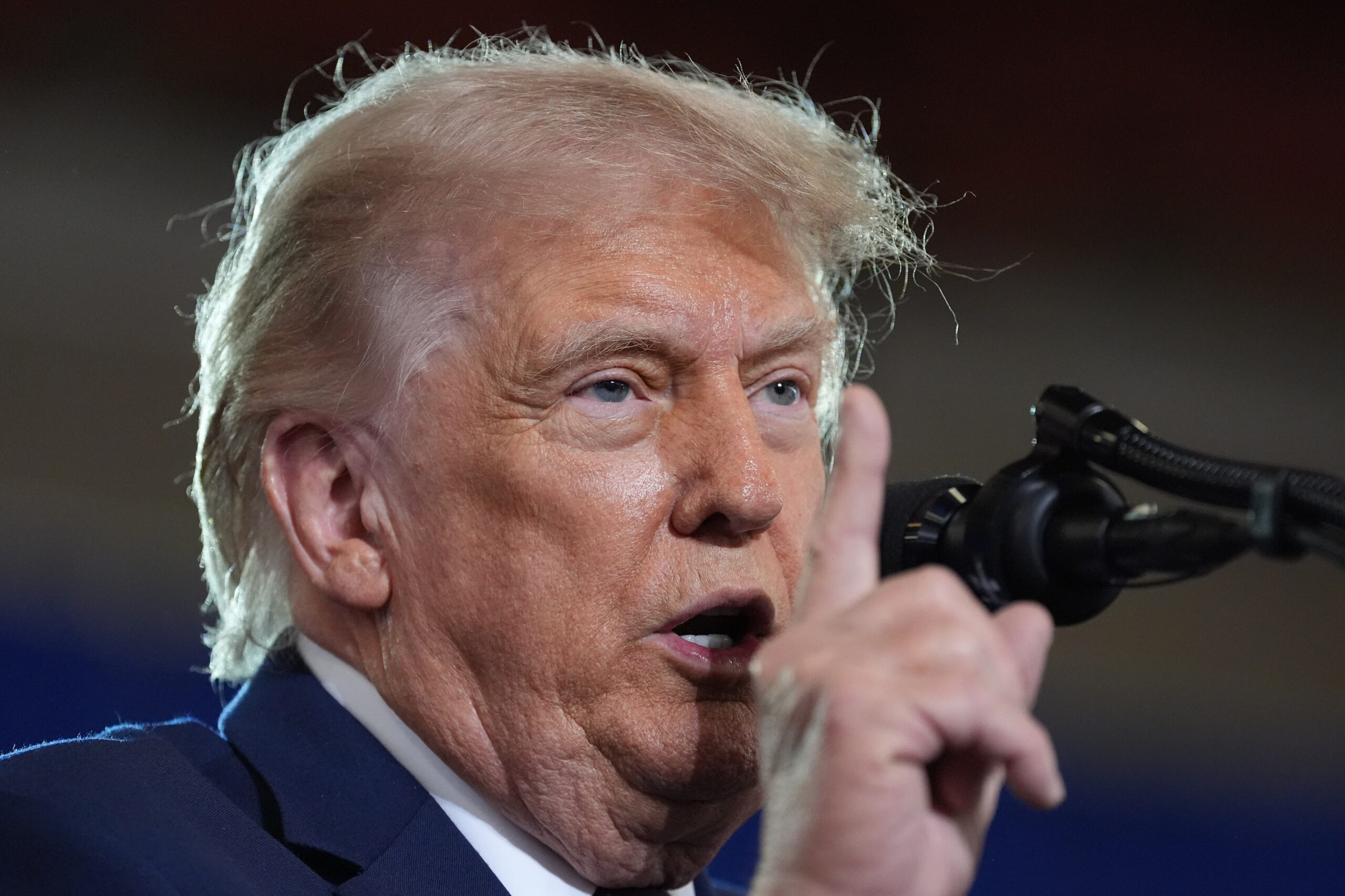
For years, President Donald Trump has relied on insults, menace and combative political language as central features of his public persona — portraying opponents as enemies, critics as threats and political fights as existential battles for the country’s survival.
Read more Chicoutimi beats host Kelowna 3-2 in OT to improve to 1-1 in the Memorial Cup
After multiple assassination attempts against Trump and amid a broader rise in threats against public officials, scholars of political violence are debating whether incendiary rhetoric from political leaders makes real-world violence more likely.
The debate gained new urgency after a man armed with a handgun was shot and killed by Secret Service officers Saturday night near a White House security checkpoint. A bystander was also injured in the volley of bullets but is expected to survive.
Investigators identified the shooter as 21-year-old Nasire Best. Best, whose potential motives remain unclear, had prior encounters with law enforcement and appeared to be emotionally disturbed, investigators have said.
The incident came less than a month after another armed man allegedly tried to push through a security checkpoint during the White House Correspondents’ Association dinner intending to target the president and members of his Cabinet — at least the third time in two years that a gunman has targeted Trump.
Presidents and the White House have long been the focus of people driven by political grievances, personal instability or emotional volatility. But scholars who study political rhetoric and extremism say the country’s increasingly aggressive political language can make that more likely, even in cases where the perpetrator lacks an ideological motive.
“The tone from the top models expected behavior, “said Helio Fred Garcia, a professor of leadership at New York University and Columbia University who has written a book on Trump’s political rhetoric. “If you create conditions where hate and violence become more acceptable, people are going to act on that. Sometimes it will be supporters. Sometimes it will be opponents.”
Garcia said America’s political discourse has become increasingly combustible and that Trump continues “injecting this tone into public discourse.”
Trump’s defenders says Democrats and the media unfairly pin the blame for political violence on the president and overlook the corrosive rhetoric of his political opponents.
In a statement, a White House spokesperson accused Democrats of smearing their opponents as Nazis and fascists and the media of blaming Trump “for acts of violence he had nothing to do with.”
“As the survivor of multiple assassination attempts — and watching his dear friend Charlie [Kirk] be assassinated last year — no one understands the dangers of political violence more than President Trump,“ White House spokeswoman Abigail Jackson said in the statement. ”That’s why the entire Administration has repeatedly condemned political violence, including the Vice President just last week.”
During the 2024 campaign, Democrats routinely portrayed Trump not simply as a political opponent but as an existential threat to American democracy and a man with authoritarian aims. The party warned that a second Trump term could erode constitutional norms, weaponize federal power and undermine future elections.
“This hateful and constant and violent rhetoric directed at President Trump day after day after day for 11 years has helped to legitimize this violence and bring us to this dark moment,” White House press secretary Karoline Leavitt said after the White House correspondents’ dinner shooting.
Trump’s critics point to the president’s own record of harsh and aggressive speech. His no-holds-barred approach has been central to Trump’s political identity since he first entered national politics, and it has intensified during his second term. A Washington Post analysis found that Trump’s use of vulgar language, personal insults and self-aggrandizing rhetoric has increased markedly since his first term. The analysis also found that the number of vulgar or insulting social media posts published during a comparable period roughly tripled.
Read more Tennis Australia hires NRL CEO Andrew Abdo to replace Craig Tiley
Critics have pointed to the Jan. 6, 2021, attack on the Capitol as the clearest example of incendiary political rhetoric with violent, real-world consequences. Trump painted his Democratic opponents as illegitimate usurpers and urged supporters to come to Washington on Jan. 6 for a gathering that “will be wild.”
Before the mob stormed the Capitol, Trump encouraged his supporters to “fight like hell” to stop the certification of Joe Biden’s victory.
Earlier, during campaign rallies, Trump urged supporters to “knock the crap out of” protesters and once offered to pay supporters’ legal fees if they assaulted demonstrators.
On Friday, at a rally in Suffern, New York, Trump mocked a man as he was escorted out by police in front of a jeering crowd.
“Don’t hurt him, don’t hurt him, don’t hurt him,” the president said. “I do that for legal reasons. That’s a great thing to say: ‘Do not hurt him under any circumstances.’ And now I can say ‘I’m innocent.’”
Trump allies argue that the repeated threats and assassination attempts against the president have made Trump, himself, the biggest target of the country’s harsh political climate.
In July 2024, a gunman opened fire during a rally near Butler, Pennsylvania, grazing Trump’s ear, killing one attendee and critically injuring two others before Secret Service snipers shot the attacker dead.
That September, a man set up a sniper’s nest outside Trump’s golf course in West Palm Beach, Florida, and was spotted by Secret Service agents; in February, the man was sentenced to life in prison.
Trump has folded the assassination attempts into the mythology of his political rise — presenting them not simply as violent acts, but as evidence of the extraordinary stakes, and significance, of his presidency.
Immediately after the shooting at the correspondents’ dinner, he linked the violence to what he sees as his role in history.
“When you’re impactful, they go after you. When you’re not impactful, they leave you alone,” he said.
In speeches and interviews, Trump has likened his survival to defining moments in presidential history, invoking leaders such as Abraham Lincoln, John F. Kennedy and Ronald Reagan — who survived a 1981 assassination attempt outside the same Washington Hilton hotel where an armed man allegedly sought to target Trump last month.
Shortly after returning to office, Trump ordered a portrait of Barack Obama removed from a prominent spot in the White House Grand Foyer. In its place now hangs an image from Butler, Pennsylvania: Trump, face streaked with blood after the shooting, pumping his fist defiantly into the air.
Read more Cruz Azul rallies past Pumas 2-1 to win the Clausura title on a stoppage-time goal