Six things to know about the source of the funding and how it would be distributed.
Read more Repeated violence puts spotlight on divisive political speech
The Trump administration’s plan to use nearly $1.8 billion to pay people who say they were wrongly investigated or prosecuted would constitute an unprecedented use of public funds, raising questions about how the new fund would work and where the money would come from.
The fund is facing rare bipartisan blowback in Congress and at least three federal lawsuits seeking to abolish it. Democrats have pledged to investigate the taxpayer-funded payouts if they retake the House next year, and some Republicans have raised concerns that the Justice Department could be handing checks to Jan. 6 rioters who were convicted of violent crimes.
In an unusual move, President Donald Trump agreed to drop a $10 billion lawsuit he had filed against the IRS over the 2019 leak of his confidential tax records, and in exchange, his administration agreed to establish a $1.776 billion fund to pay applicants who show they were improperly investigated or prosecuted.
Here’s an overview of how the “Anti-Weaponization Fund” would work, based on the documents and statements that have been released so far by the administration. No funds have yet been disbursed.
A new, five-member commission would set the criteria for the awards and distribute them to eligible applicants, according to a memo from acting attorney general Todd Blanche and a related agreement between Trump and the U.S. government that ended the president’s lawsuit against the IRS.
Blanche would appoint all five members of the commission, one of them in consultation with congressional leaders. Trump would have the power to fire commissioners “without cause,” and the attorney general could select replacements.
The commission would have to consider the “totality of the circumstances” for each applicant, weighing evidence, “actual damages” and “reasonable” attorneys’ fees, any time spent in custody and whether an applicant “has already obtained any form of relief.”
Payments could be authorized by as few as two members of the commission, because the quorum for the group is three members. The Justice Department documents say “entities” may apply for payments as well as individuals.
Each payment would be final, not subject to appeals or judicial review. Eligible applicants would have to forgo pursuing similar claims in court once they receive compensation from the “Anti-Weaponization Fund.”
The fund would expire near the end of the president’s term, in December 2028, at which point Trump would redirect any unspent money to a federal agency of his choosing.
In congressional testimony, Blanche said that anyone may apply for a payment regardless of political persuasion — and that he could not rule out payments for Jan. 6 rioters who were convicted of violent offenses.
Trump, in a social media post, said the payments would bring justice for those “who were so badly abused by an evil, corrupt, and weaponized Biden Administration.”
The written agreement that ended Trump’s lawsuit against the IRS criticizes “the sustained use of the levers of government power by Democrat elected officials, political and career federal employees, contractors, and agents in order to target individuals, groups, and entities for improper and unlawful political, personal, and/or ideological reasons.”
It does not mention actions taken by Republican elected officials. The three examples of alleged “weaponization” that appear in the agreement came during Democratic presidential administrations.
First, the agreement criticizes the Justice Department under President Joe Biden for prosecuting people who were convicted of blocking access to abortion clinics under a 1994 federal law known as the FACE Act, which criminalizes such conduct. (Trump last year pardoned 23 people who were convicted of those offenses, fulfilling a campaign promise.)
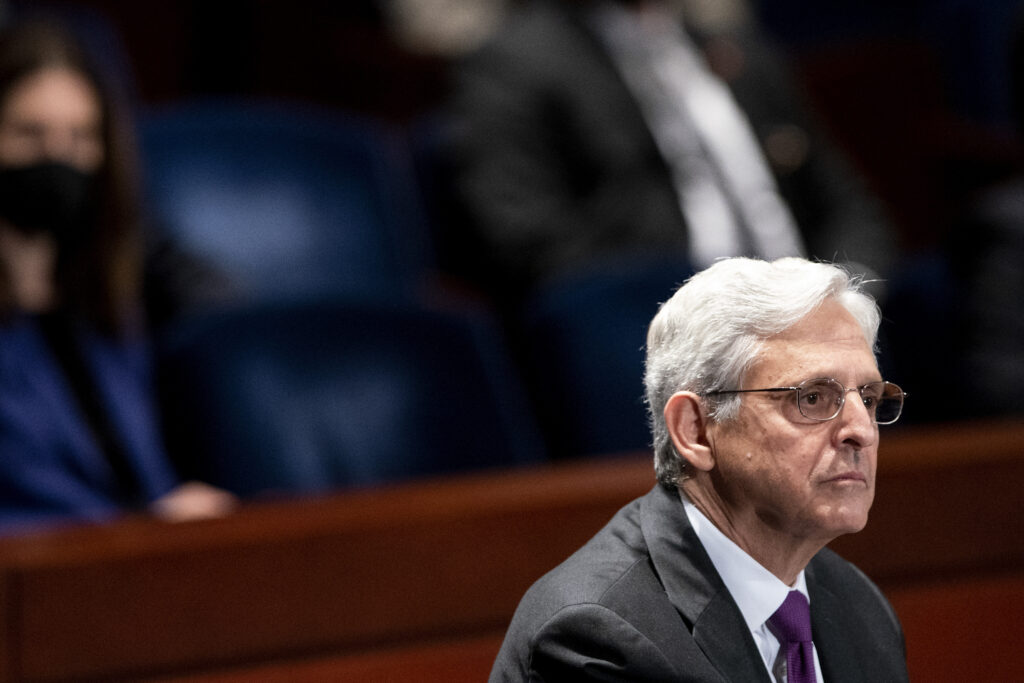
Second, the agreement falsely claims that the Biden administration engaged in “wrongful labeling of certain parents as domestic terrorists,” because then-Attorney General Merrick Garland issued a one-page memo calling for law enforcement resources to address a rise in violent threats at local school-board meetings during the coronavirus pandemic.
Third, the agreement mentions “the IRS’s targeting of groups based on improper ideological criteria,” a reference to allegations that the agency improperly investigated conservative groups claiming tax-exempt status during President Barack Obama’s administration. The IRS issued a formal apology during Trump’s first term, and the administration agreed to settle claims from more than 400 conservative groups for $3.5 million in 2018.
After Blanche faced pushback on the new fund from Republican senators, the Justice Department issued a one-page memo adding that “Senators whose records were secretly subpoenaed” also may apply for payments.
An FBI document released last year says agents obtained phone records for eight senators and one House member, all Republicans, during an investigation into Trump associates’ efforts to overturn the electoral college results that gave Biden a winning margin in the 2020 presidential election.
Trump, his family and businesses would not be eligible for payments from the new fund.
In short, taxpayers.
The longer answer involves an obscure yet enormous fund that Congress created in 1956 to save itself from reviewing every case in which a plaintiff successfully sued the federal government for monetary damages or reached a financial settlement that staved off such a lawsuit.
According to Blanche’s memo, the $1.776 billion would be drawn as a lump sum by July 17 from the Judgment Fund, a permanent and uncapped congressional appropriation that is typically used to cover the cost of legal settlements or court judgments involving the U.S. government.
Initially, awards from the Judgment Fund were capped at $100,000, which lawmakers estimated at the time would cover 98 percent of payments owed. Congress lifted the cap in 1978.
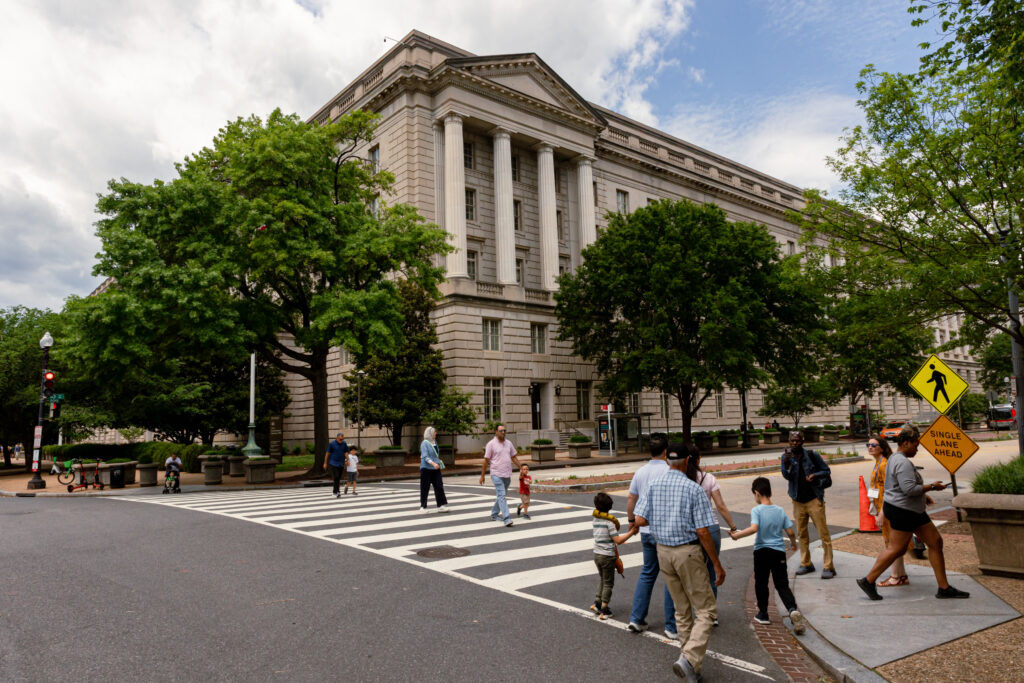
The Judgment Fund, which now pays out billions of dollars every year, was originally designed as a savings mechanism for the U.S. government.
Read more Chicoutimi beats host Kelowna 3-2 in OT to improve to 1-1 in the Memorial Cup
“Congress aimed to reduce the time lapse between judgments entered against the United States and actual payment, so that agencies would pay less post-judgment interest on awards,” according to a report by the nonpartisan Congressional Research Service.
The fund operates under strict controls outlined in federal statutes. Payments are authorized by law when a court orders one, or when a lawsuit could lead to a monetary judgment, and the amounts are typically calculated based on a detailed analysis of the financial harm a plaintiff suffered.
Blanche’s memo and the written agreement in the IRS case both say the $1.776 billion for the new fund “does not represent the value of any current claim by Plaintiffs, but rather is based on the projected valuation of future claimants’ claims.”
It’s unclear whether a detailed financial analysis led officials to the $1.776 billion valuation. The number mirrors the year of the country’s founding.
Blanche told lawmakers the fund would be transparent. The documents say that the five-member commission “shall have the power to determine its own procedures for submitting, receiving, processing, and granting or denying claims” and that the fund “may make those procedures public in whole or in part, in its discretion.”
Those documents also direct the commission to provide Blanche a confidential report every quarter “that includes the name and address of each claimant who has received any relief and if so, nature of such relief.”
It’s an open question how much of that data would be public. The Privacy Act of 1974 limits the information the government can release about individuals, and it’s unclear whether any of the law’s exceptions would apply to payment recipients.
The Judgment Fund itself itemizes all its disbursements and reports that data publicly. But critics say it is rife with redactions that in many cases obscure who gets paid. Congressional Republicans have tried to institute more controls and transparency measures over the years, without legislative success.
The Judgment Fund is reserved by law for court-approved monetary awards and settlements in cases that could lead to court judgments. But the federal judge who had been overseeing the Trump v. IRS litigation had signaled reservations about proceeding with the case.
The Supreme Court has ruled that litigants must be adversarial to each other as a key constitutional requirement for legal standing. The president sued the IRS, an agency of the executive branch he leads.
U.S. District Judge Kathleen M. Williams, who sits in Florida, had asked Trump’s personal attorneys, administration officials and a group of independent, court-appointed lawyers to file legal briefs on whether Trump’s lawsuit was sufficiently adversarial. The Justice Department’s brief was due last Wednesday, but Trump dropped the lawsuit and the case was dismissed two days before that deadline.
The written agreement that ended the IRS litigation was signed by the president’s personal attorneys and two Trump appointees, Associate Attorney General Stanley Woodward and IRS chief executive Frank Bisignano.
Although the agreement says it is a legal settlement, Williams noted that the document was not filed or referenced in court and that therefore “there is no settlement of record.”
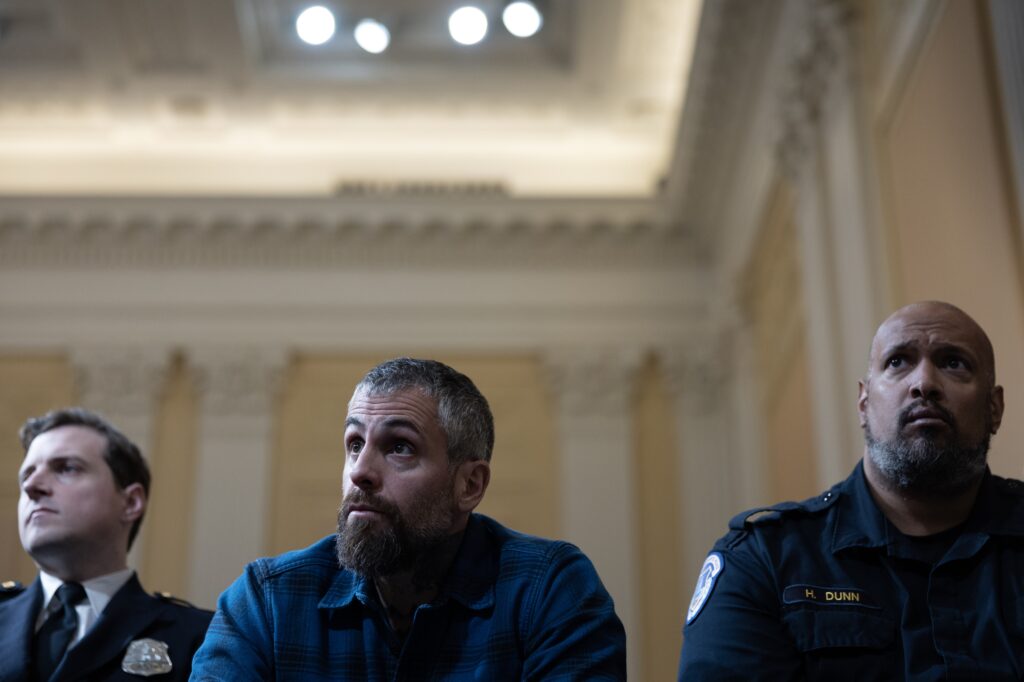
A federal lawsuit from retired Capitol Police officer Harry Dunn and D.C. police officer Daniel Hodges, both of whom defended the U.S. Capitol during the Jan. 6, 2021, riot, alleges that the Justice Department fund violates several federal statutes as well as the 14th Amendment, which prohibits the government from covering the debts and obligations of rebels and insurrectionists.
Federal law prohibits using the Judgment Fund for “sham” cases that would not lead to a court-approved monetary judgment, the attorneys for Dunn and Hodges argued in the complaint, filed in D.C. federal court.
Dunn and Hodges, who gave prominent testimony to the House committee that investigated the Jan. 6 riot, allege that the fund’s existence and any payments to rioters could escalate the vigilante threats they already face.
Another lawsuit filed in D.C. federal court, by the group Citizens for Responsibility and Ethics in Washington, similarly contends that the new fund “plainly lacks statutory authorization.”
A lawsuit filed in Virginia by a former D.C. federal prosecutor who was fired last year after working on Jan. 6 cases; a man who was arrested in California at a protest of an immigration raid; the city of New Haven, Connecticut; the National Abortion Federation; and the liberal advocacy group Common Cause alleges that the “weaponization” fund also violates the separation of powers, First Amendment and equal-protection clause of the Constitution.
The Supreme Court also has ruled that plaintiffs must show an “injury in fact” to have standing to sue, and it’s too early to know whether judges will agree that the lawsuits challenging the “Anti-Weaponization Fund” clear that bar.
The new fund is also in tension with Justice Department policy.
Then-Attorney General Pam Bondi issued a memo last year that says “settlements should not be used to require payments to non-governmental, third-party organizations that were neither victims nor parties to the lawsuits.” Bondi’s memo has not been rescinded.
The Judgment Fund has never been used this way.
Blanche’s documentation says: “Previous cases have been settled on similar terms. For example, in the Keepseagle litigation, the plaintiffs alleged improper behavior by the Department of Agriculture over a period of years, and the Obama Administration settled the case by establishing an administrative claims process funded by $680,000,000 paid from the Judgment Fund, which was deposited into a bank account to fund the claims received.”
The government’s costs in that case were actually $760 million because the plaintiffs also were forgiven $80 million in farm loan debt. The total settlement was less than half of $1.776 billion. A federal judge oversaw the settlement after years of litigation in a class-action lawsuit.
The $680 million in payments did not stem from a lawsuit Obama had filed against one of the federal agencies in his government. The funds were given to Native Americans who were part of the class-action lawsuit and to nonprofits serving Native American farmers and ranchers.
Read more Tennis Australia hires NRL CEO Andrew Abdo to replace Craig Tiley