There’s been win after win for the nation’s most ardent gun rights groups, but backers of tighter limits say the push could endanger the public.
Read more How AI is changing political advertising

When the Justice Department unveiled its long-promised rollback of gun regulations this spring, senior officials declared that, if implemented, the nearly three dozen proposals would cut through unnecessary government bureaucracy without risking public safety.
The 34 proposals hit on regulations around buying, selling and owning firearms, including changing rules about safety notices, reducing the paperwork needed to buy guns and making it easier to access some firearm accessories.
But tucked inside a government analysis of one proposal — which would relax restrictions that prevent people from possessing firearms if they are deemed mentally unfit to manage certain government benefits — is a startling admission about the potentially deadly impact.
“This risk may be minimal, or may be considerably greater (up to and including potential mass casualty events), based upon the strength of state and federal processes regarding guardianship and involuntary commitment,” reads the warning on the rule, which was published April 29.
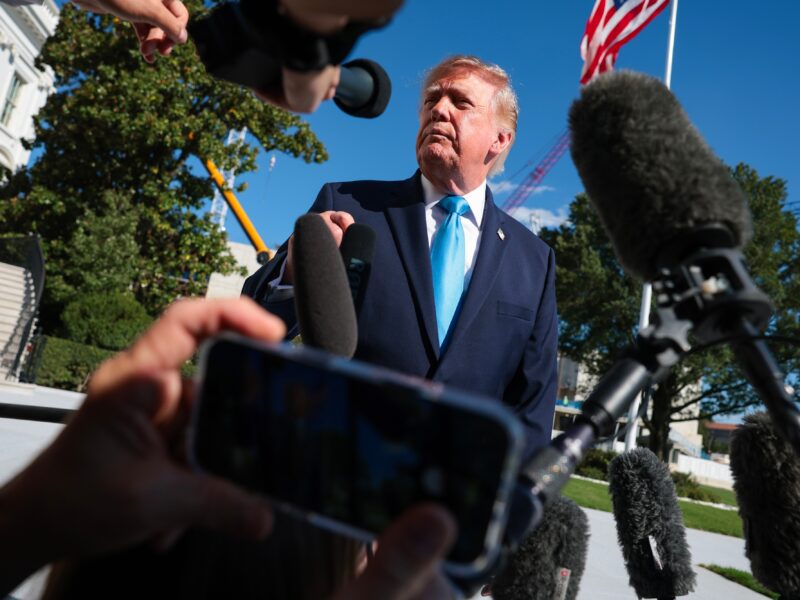
That disclaimer highlights the vast range of possible impacts coming from the Trump administration‘s rapid efforts to reshape American gun policies, often with little congressional or public scrutiny.
In the last 17 months, the Trump administration has delivered win after win for the nation’s most ardent gun-rights advocacy groups, chipping away at dozens of federal regulations. While many of these efforts target regulations from the Bureau of Alcohol, Tobacco, Firearms and Explosives — the law enforcement agency within the Justice Department tasked with regulating the nation’s millions of firearms — the administration’s work stretches across the executive branch.
Supporters of tighter gun restrictions have pilloried the Trump administration, saying officials are acting recklessly and could endanger the public with a wholesale rollback of regulations. But gun rights advocates who portrayed the Biden administration as trampling on the Second Amendment have praised the current administration’s actions as a needed corrective.
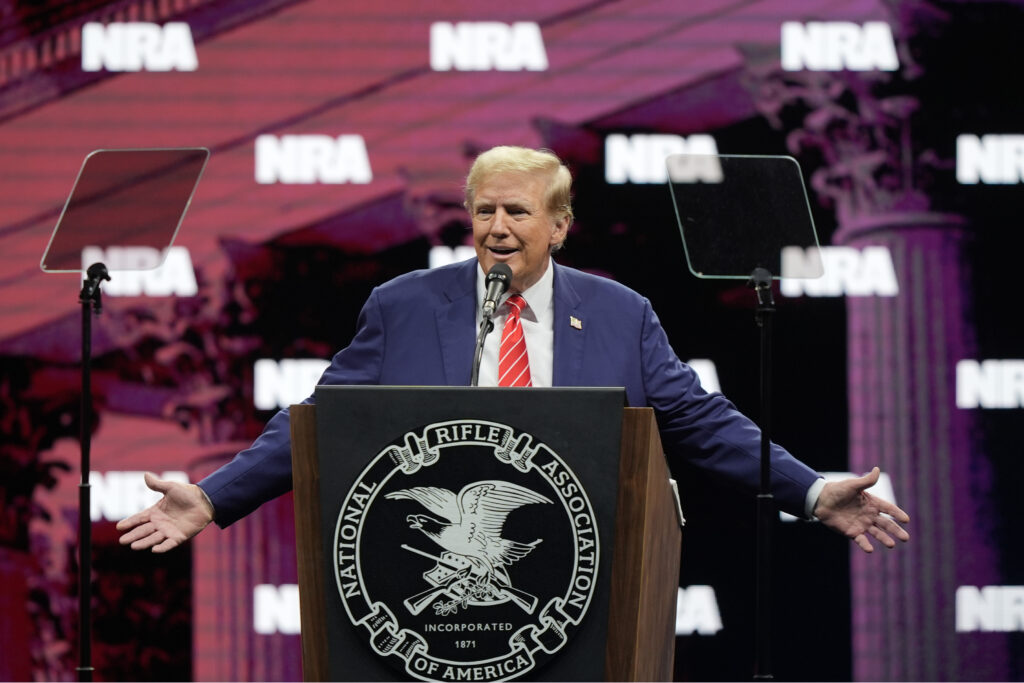
Trump vowed on the campaign trail to be a pro-Second Amendment president and pledged that, under his leadership, “no one will lay a finger on your firearms.” He said he would roll back Biden-era ATF regulations and received the backing of the big gun rights groups.
Critics, however, have said that the Trump’s administration’s push to unwind gun regulations contradicts the president’s tough-on-crime political agenda. And, they say, the efforts could make it easier for potentially dangerous people to access firearms.
One example they cite was the Justice Department‘s move in the early months of Trump’s second term to rescind a Biden-era zero tolerance policy that pulled licenses from firearm dealers if they intentionally falsified records or sold weapons without running a background check. Gun rights advocates argued that the policy punished law-abiding gun sellers who made innocent clerical mistakes, while the Biden administration said it was an effective way to crack down on gun traffickers.
Groups that push for stronger restrictions on guns have lambasted the most recent ATF proposals, arguing that they were recklessly crafted with little regard to public safety.
Experts and gun control advocates interviewed for this article highlighted the admission about potential “mass casualty events” as an example of how the administration’s desired changes seem to favor gun access over public safety.
The “mass casualty” warning was included in a proposal to lift restrictions that currently prohibit people from possessing guns if they have been deemed not mentally fit to handle their Social Security or veterans’ benefits.
The ATF proposal would allow people to buy guns even if they have been deemed unfit to handle those benefits, with officials saying that someone being deemed incompetent to handle their finances does not mean that they cannot responsibly handle firearms.
The proposal would also clarify that people who are involuntarily committed to a mental health institution would be barred from owning firearms, people who voluntarily went to such facilities would not be.
“ATF’s admission that these policy changes could result in mass casualties is a slap in the face to every American who checks for the exits every time they walk into a movie theater, mall or house of worship,” John Feinblatt, president of Everytown for Gun Safety, a gun control advocacy group, said in a statement.
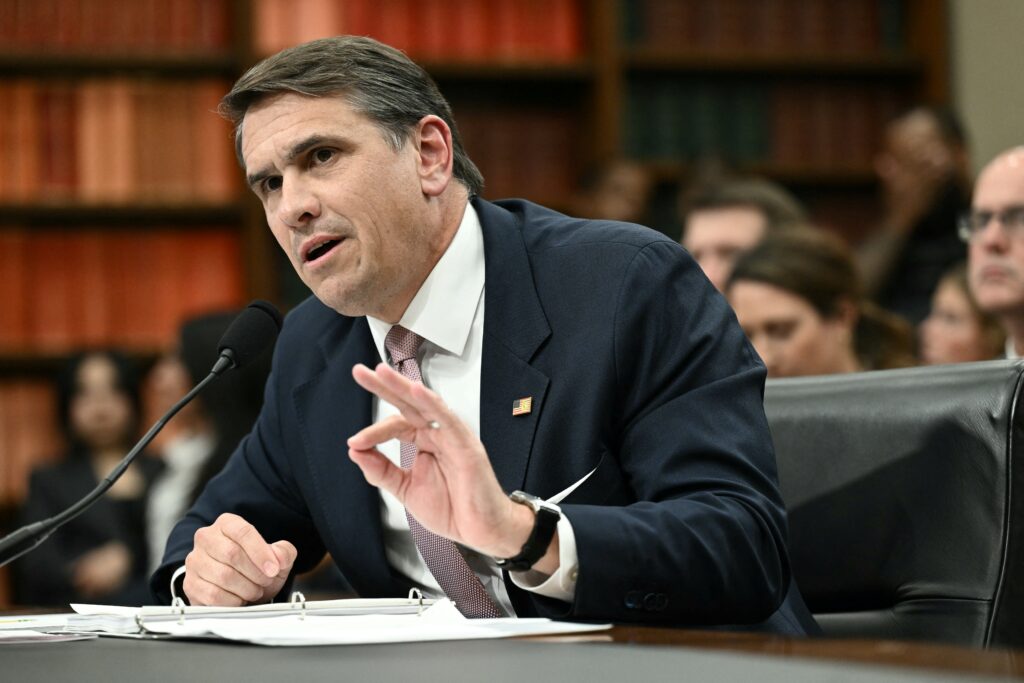
Administration officials have pushed back on criticism, saying they were making necessary changes to regulations and describing the “mass casualty events” language as an effort to summarize a wide range of possibilities.
At a House Appropriations Committee hearing this month, acting attorney general Todd Blanche was asked about the “mass casualty event” warning and said officials are working to make it easier for law enforcement to ensure that “only people who can have guns, have guns.”
“The analysis you are talking about is not true. When we talk about potentials with the new regulations, that includes a variety of possibilities,” Blanche said in response to a question from a Democratic lawmaker. “The regulations that we are changing are outdated, and the system is not up-to-date.”
Robert Leider, ATF’s general counsel, is credited with crafting many of the regulations and said authorities must lay out every possible risk scenario in its proposals — even unlikely outcomes. The public then has 90 days to weigh in on whether they think the regulations should be enacted.
The purpose of the legally mandated comment period, according to Leider, is to determine whether the potentially dangerous drawbacks to these regulations exist. Once the comment period is over, agency officials can decide whether to move forward and enact the original proposal or modify it before it goes into effect.
A proposed regulation that would shorten the time gun dealers have to keep sale records — reducing it from indefinitely to either 20 or 30 years, depending on the circumstance — warns that the change could make it harder for law enforcement to trace certain firearms used in crimes.
“We are required to weigh the risks, so that is what we are asking: Is it minimal, moderate or high?” Leider said.
Still, for the most far-right gun rights activists — many of whom called for Congress and the Trump administration to abolish ATF altogether — the regulations do not go far enough. The country does not have a federal database of gun owners, but groups including Gun Owners of America, for example, believe that forcing firearm sellers to retain sale records is akin to a registry. The group generally does not support proposals that amend or loosen the recordkeeping process, calling instead for an end to it.
“If a rule protects gun owners and respects the Constitution, that is a step in the right direction,” said Erich Pratt, senior vice president for Gun Owners of America. “But if ATF continues pushing rules that infringe on the Second Amendment or threaten the privacy of law-abiding gun owners, we will see them in court.”
In the United States, Congress is responsible for passing the nation’s gun laws. But ATF and other federal agencies are able to set regulations based on their interpretations of laws set by Congress.
Read more At G-7, allies plan for a world less reliant on the U.S.
Democratic administrations traditionally take stricter interpretations, while Republicans generally take approaches that would loosen gun control laws.
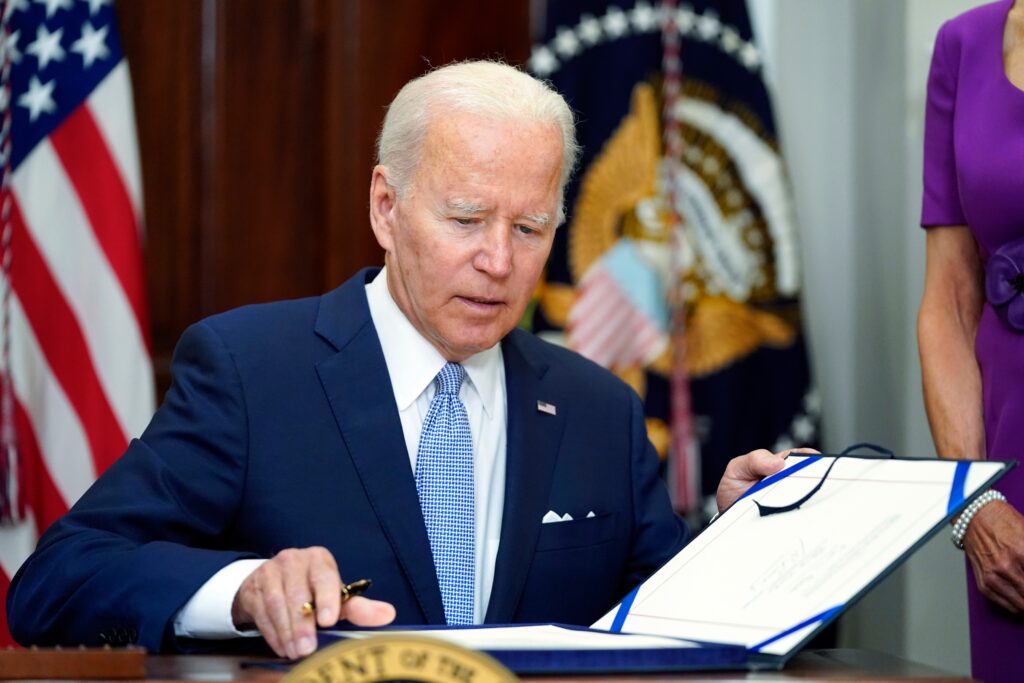
In 2022, Congress passed the Bipartisan Safer Communities Act, which was the most significant piece of gun control legislation passed in decades. ATF under Biden was tasked with crafting regulations around the newly passed laws.
Among the major regulations Biden officials implemented as part of the legislation: trying to close a loophole that allowed people to sell firearms online, at gun shows and at other informal venues without conducting background checks on those who purchase them.
Trump campaigned on aggressively expanding access to firearms, and advocacy groups had been clamoring for rapid and significant changes. In this latest rollback, ATF has proposed eliminating or softening some of the regulations implemented during Biden‘s term, including by easing the rule that attempted to close a loophole that allowed people to sell firearms at gun shows and other informal locations without conducting background checks.
At the White House, Trump signed a broad executive order in February 2025 to “protect Second Amendment Rights” that called on the attorney general to review Biden-era policies.
Trump’s political appointees responded.
Within the Justice Department, a newly formed Second Amendment group is tasked with filing lawsuits against states that Trump administration officials argue have unlawfully enacted strict gun laws. While there have been no big victories in court so far, federal lawyers in that section have sued multiple jurisdictions, including Colorado and D.C., for gun restrictions they argue go beyond federal law.
At the U.S. Postal Service, the Trump administration has proposed lifting a century-old rule limiting who can mail firearms within states. The Department of Veterans Affairs has also moved to restore gun access to some veterans.
Officials with ATF have been working since the first months of the Trump administration to slash regulations. As attorney general, Pam Bondi fired the longtime career general counsel at ATF and installed Leider, a former law school professor and pro-gun rights attorney who has long advocated for less burdensome firearms regulations, in the position.
The regulations proposed by Trump’s administration range in their scope and implications.
One would lift a rule that requires gun-store owners to post a sign and provide written notice to buyers reminding them that it is illegal to sell or transfer firearms to juveniles. The proposal says that the public is now well aware of this law and, in 2026, can easily look the law up online.
Another would change a rule that requires people who own machine guns and short-barrel rifles to inform ATF if they travel between states with the firearms and be approved. Under the new rules, owners would only have to inform ATF if they move for more than a year.
The administration has also proposed rescinding a Biden-era regulation that applied more security checks on gun owners and sellers who use unregulated stabilizing braces to effectively transform pistols into more deadly rifles.
Under the proposals, ATF would also shorten and streamline the federal form required to purchase a firearm, reducing it to four pages from seven — a change that gun rights advocacy groups have long pushed. Another regulation says that, on these forms, officials would clarify that potential buyers must mark their biological sex assigned at birth.
The proposed regulations would also make it easier for gun sellers to verify a potential buyer’s identity online, instead of in-person, in certain instances.
“A lot of this is going to make it more likely that more dangerous people can get their hands on firearms,” said Laura Cutilletta, vice president of Giffords, a gun control advocacy group.
Leider has been working on the regulations for more than a year. The plan had been to announce them July 4, 2025, at an Independence Day celebration, The Post previously reported.
But Blanche has said the proposed changes took longer than expected to complete because lawyers had to scrupulously review them to ensure they passed legal muster. Justice Department officials expect them to face court challenges.
Because the Trump administration is making these changes through the regulatory process — and not by legislation passed in Congress and signed into law — the next administration could reinstate the scrapped rules. The goal, Justice Department officials said, is to ensure that the regulations do not run afoul of laws so that they can remain intact.
“We were very careful on how we did the rules,” Leider said. “Congress has decided that certain people cannot be trusted with firearms. ATF has to enforce those congressional judgments. It is not the agency’s job to amend Congress’s criteria in an effort to predict who will become violent.”
The public has until around Aug. 6 to comment on the proposals before they go into effect.
As a top Justice Department official, Blanche has sought to ingratiate himself with the nation’s most influential gun rights activists — a loyal part of the president’s base.
He has appeared at the nation’s biggest firearm conventions and meetings. Blanche has talked to popular gun rights podcasters and frequently mentions this his wife’s family is the longtime owner of a company that manufacturers firearm magazines.
“The way this country works is regulations are put in place and it takes time to unwind them. That’s a bad fact, but it’s true.” Blanche said on the popular podcast “Gun Talks” while he attended the National Rifle Association annual meeting in April.
That same month, Blanche and Leider, along with newly confirmed ATF Director Rob Cekada, appeared at Justice Department headquarters together for an event announcing the rollback of gun regulations. They were flanked by leaders of the top gun rights groups, including the National Shooting Sports Foundation, National Association for Guns Rights, NRA and Gun Owners of America.
“This is more than turning the page on the weaponization of government against a lawful industry that provides the means for citizens to exercise their Second Amendment rights,” Lawrence G. Keane, who attended the announcement and is senior vice president and general counsel of the National Shooting Sports Foundation said in a statement. “This is the dawning of a new era.”
Read more World Cup racism monitor urges FIFA to remove match official over hand gesture on TV broadcast