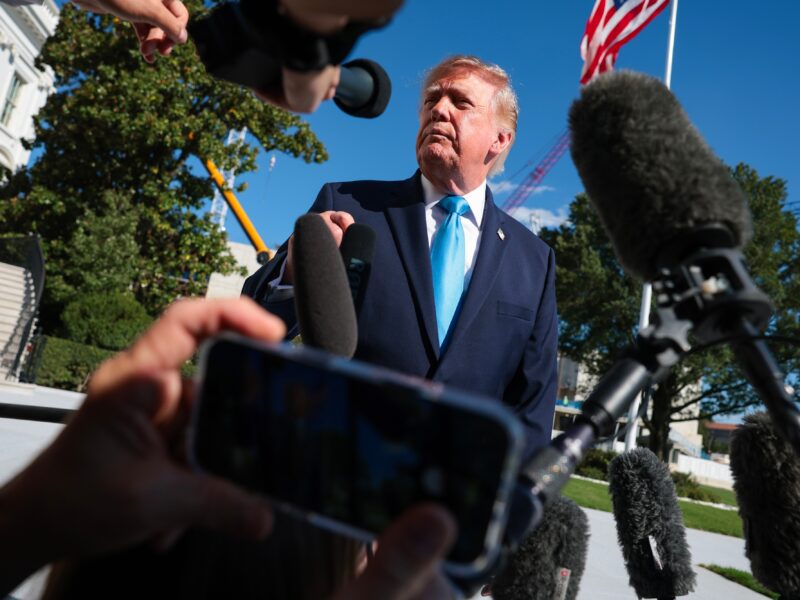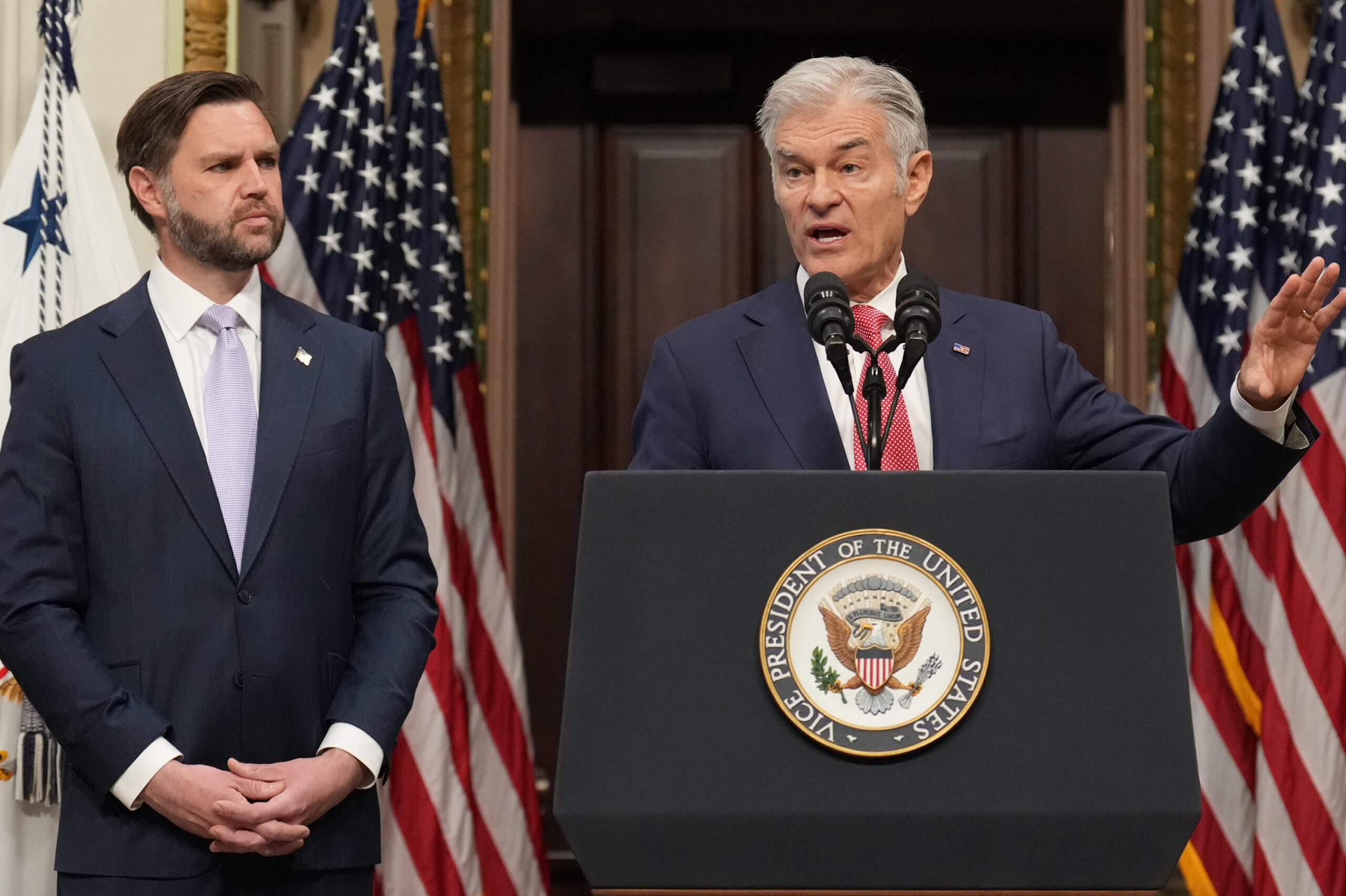
The vice president and other officials have downplayed evidence of collateral damage in their crackdown on fraudulent hospices.
Read more A most American fight night
In April, when the Trump administration began suspending about 800 hospices in the Los Angeles area suspected of fraud, a small local agency started accepting patients from the affected providers. The owner never thought he would be next.
He and his wife, a nurse, served a couple dozen patients at a time, providing the direct personal attention some families seek rather than deal with larger, faceless organizations. He obtained the most rigorous and expensive accreditation and never had a formal complaint in five years in business, according to the owner, his lawyer and documentation reviewed by The Washington Post. So he was shocked when the Centers for Medicare and Medicaid Services sent him a letter accusing his company of fraud and cutting off his reimbursements.
“I’m all for fighting fraud and getting these bad actors or just these straight-out criminals out, but the good got mixed in with the bad,” said the business owner, who spoke on the condition of anonymity because he has another business that relies on Medicare. After weeks of his paying out of pocket to continue caring for patients, CMS denied his 700-page appeal, and he started transferring patients to other providers and shutting down the agency.
“It’s no longer you’re innocent until proven guilty, it became that you’re guilty and now you have to prove your innocence,” he said.
In the first Trump administration, CMS relaxed the procedures for opening new hospice practices during the coronavirus pandemic. Since then, an explosion of scammers has taken advantage of government hospice benefits.
Now, the second Trump administration is cracking down on the stealing from federal health care and other programs as part of a White House task force led by Vice President JD Vance and spurred by a right-wing YouTuber’s viral video alleging fraud in Minnesota day cares. A Post review of the task force’s announcements showed many of the actions resulted from investigations that predated the task force or the Trump administration.
Vance and other officials have also downplayed warnings from the industry that innocent operations are being harmed along with the nefarious ones.
“The Trump administration is taking a pretty aggressive tactic here, but the downside is you’re often going to catch up legitimate actors because you’re not really taking the time to do your due diligence,” said Hillary Loeffler, vice president of policy and regulatory affairs for the National Alliance for Care at Home, an industry group, who worked on hospice issues at CMS until 2025.
CMS Administrator Mehmet Oz has said almost no aboveboard providers were affected. The Post identified at least 43 legitimate hospice agencies that were suspended and are trying to get their funding restored. The law firm Husch Blackwell has submitted more than 40 appeals, none of which CMS reviewed within the 15 days required by law, according to attorney Andrew Brenton. Four of the agencies have succeeded in restoring their funding.
Oz, who declined through spokespeople to be interviewed for this article, defended the approach at a news conference on June 8. “If we have two dozen hospices that we need to turn back on again, and we’ve shut down 900, that’s a fairly good hit rate,” he said.
The task force has emphasized making contrasts between the records of Democratic- and Republican-run state governments in responding to fraud, fueling a line of attack for President Donald Trump and the GOP in this year’s midterm-elections campaigns.
Vance, who through spokespeople also declined to be interviewed, criticized New York state’s Medicaid fraud unit for bringing only nine indictments last year, fewer than smaller states. In fact, the state’s unit had 26 convictions that year, and the Department of Health and Human Services’ inspector general named New York as one of four states responsible for half of all funds recovered from civil investigations.
Vance also attacked Hawaii’s investigators for having zero convictions or indictments for Medicaid fraud. The state’s attorney general, a Democrat, responded that its unit had 25 cases since 2021, including a $208,000 settlement earlier this year. On June 4, the task force cut off federal funding for the unit, prompting Hawaii Gov. Josh Green (D) to open another anti-fraud unit in a different department.
Vance’s task force also announced that the HHS inspector general would conduct a nationwide audit of all 50 state Medicaid fraud units. By law, the office already reviews and recertifies the units annually.
A White House news release highlighted charges on May 20 against a Minneapolis day care owner featured in the viral video from YouTuber Nick Shirley that sparked a conservative media fire about fraud.
“It should not have taken a brave kid with a cellphone camera to point the American people at this issue,” Andrew Ferguson, chairman of the Federal Trade Commission and vice chairman of the White House fraud task force, said at a news conference.
The investigation of the alleged scheme involving that day care began in at least 2022, with multiple earlier rounds of indictments against 78 people in connection with it, according to court records. State officials cited the day care for 121 license violations between 2022 and 2025, according to state records.
“Fraud is real, as are the task force’s results, and this administration is dedicated to stopping fraudsters and fixing our broken safety net,” Vance spokeswoman Taylor Van Kirk said.
Allegations of fraud in federal contracts, loans or aid typically take years to investigate, according to the Government Accountability Office, so it is not surprising that charges announced since the task force began in March resulted from older investigations. At a task force news conference in Ohio on June 4, Oz said he visited a facility run by a convicted Medicaid fraudster, without mentioning that she was convicted in 2024.
The senior White House official said not all fraud cases take years to prosecute, even if that was typical under previous administrations, and when the cases started “means nothing” if there weren’t indictments.
In April, acting attorney general Todd Blanche said the Justice Department had 8,000 active fraud cases, without saying how that compared with previous years. In 2025, the HHS inspector general’s Medicaid fraud unit said it had 6,500 open investigations.
“The Department of Justice has prosecuted fraud cases for decades, this isn’t a new thing we’re doing,” Blanche said at the June 4 news conference. He acknowledged that some legitimate operations could be affected “every once in a while” but urged the people who rely on them not to worry.
Read more Inside the Trump administration’s rapid rollback of gun regulations
“If you are a parent or somebody who works at or runs a center that’s doing the right thing, you ought not worry, because what we’re doing is actually protecting you,” he said. “We’re not targeting people that are doing it right, we’re targeting criminals that are doing it wrong.”
As part of the task force, the Small Business Administration in April said it flagged 562,000 suspected fraudulent loans to the Treasury Department for collection. SBA Administrator Kelly Loeffler blamed the Biden administration for failing to address the loans earlier.
A Biden SBA official said the previous administration treated fraudulent loans as a law enforcement matter and referred them to the inspector general or the Justice Department rather than ask Treasury to try to collect from entities that do not exist or stole others’ identities.
In April, the General Services Administration said it flagged 392 suspicious government contractors, giving them 30 days to prove their legitimacy. A spokesperson said the agency is still reviewing the responses and declined to say how many were verified as fraudulent.
At the Education Department, the White House said that a new screening tool caught $60 million in suspected student loan fraud. Education Secretary Linda McMahon blamed the Biden administration for easing verification procedures during the pandemic.
Kamau Marshall, an adviser to the department under President Joe Biden, said the decision to ease the process was a deliberate effort to prioritize access to aid during an emergency.
When the pandemic was declared during the first Trump administration, federal agencies decided to accept higher fraud risk than usual in the interest of quickly distributing aid throughout the paralyzed economy, according to Rebecca Shea, director of the GAO’s Forensic Audits and Investigative Service. Under such emergency circumstances, losses from fraud total about $521 billion a year, compared with $233 billion in a more typical year, she found in a 2024 analysis.
The typical losses come to less than 15 percent of the current federal deficit of $1.8 trillion. Trump has repeatedly said the task force will find enough fraud to balance the budget.
“I don’t think that math quite adds up,” Shea said.
Hospice care was another government benefit that had its requirements loosened during the pandemic. Officials allowed new providers to enroll over the phone instead of in person and reduced site inspections. The number of new hospices in Los Angeles County exploded, to the point that it had more agencies than most entire states by 2021. Companies and industry groups started alerting government officials to suspicious outfits clustered implausibly in run-down office buildings.
“We’ve been on a rampage about it, frankly,” said Tom Koutsoumpas, CEO of the National Partnership for Healthcare and Hospice Innovation, which represents nonprofit providers.
California imposed a moratorium on new hospice licenses in 2022. The Biden administration started increasing surprise inspections, requiring more owner disclosures, designating hospices a “high-risk” type of provider, and running ads to warn seniors about fraud, a former CMS official said.
“They were wanting to work with law enforcement and were very cautious of going to the extreme in the other way of getting good actors caught up,” said Loeffler of the National Alliance for Care at Home.
A CMS spokesperson acknowledged that the heightened scrutiny of hospices began during the last administration, pointing to more than 700 revocations of Medicare billing privileges since July 2023. In May, the agency imposed a six-month moratorium on all new hospice enrollments.
According to the letters notifying hospices of their suspensions, CMS identified agencies with above-average rates of patients leaving care other than by dying. While that could be a sign of fraud, it also happens for a variety of legitimate reasons such as patients moving away, changing their minds about wanting treatment or needing emergency care for a fall.
“Sometimes the tendency in a crisis is to come in hot and maybe overreact, which is what they’re doing,” said an executive at a large agency that previously advocated for the government to take more action against fraud in the industry and now has had three providers affected. “It’s good they’re taking action, but they’re using blunt instruments,” added the executive, who, like others, spoke on the condition of anonymity for fear of retaliation.
Since larger companies are better equipped to absorb legal costs or survive an interruption in payments, they have been receiving more patients from smaller businesses that CMS suspended. One of the officials advising Oz on the policy, Stacey Smith, lobbied for one of the largest home health and hospice companies, AccentCare, until joining CMS in May. She circulated a research paper throughout the industry last June that recommended CMS “act decisively” with steps such as “suspend payments without advance notice.”
Oz’s deputy, Kimberly Brandt, said last month that the agency is working to quickly reverse the suspensions and asked on LinkedIn for specific examples to look into. Brenton, the attorney, said Medicare payment suspensions are also starting for hospices in Texas and Georgia.
Some agencies that appealed their suspensions have received short denials with little explanation, according to lawyers and one of the CMS responses reviewed by The Post. Other inspections and accreditations don’t affect the agency’s finding, the response said.
“We have no information about why or what was missing, nor will they tell us what we need to provide in order to change their minds,” said Edo Banach, an attorney at Foley Hoag representing suspended hospices. “This kind of stuff should not happen in America.”
A CMS spokesperson said the agency was acting within its authority and declined to elaborate on its methods. The spokesperson said the agency determined there were enough other hospices to absorb the patients from the suspended ones.
But the suspensions have led some patients to lose their care without finding another provider, according to another L.A.-area agency that was offered more than 20 patients and accepted four. This agency was also suspended, despite previously passing two surveys and multiple documentation reviews, the co-owners said. The agency received a 9 out of 10 quality score from CMS, with the only deduction being a higher rate of exiting patients, which the owners said happened because they work with people who struggle with homelessness, mental illness and substance abuse.
“I’m operating under the understanding the good guys and gals will prevail despite the blunderbuss approach they’re taking to the entire sector and throwing the baby out with the bath water,” one of the owners said. “At some point we’d have to say we really tried to do something right. How far do we have to go to prove we deserve to be here?”
Read more How AI is changing political advertising
Natalie Allison, Dan Diamond and Aaron Schaffer contributed to this report.