In today’s edition … Trump’s beautification efforts in Washington hit a drag … You share your thoughts on foreign investment in Iran … but first …
Read more Trump fixates on a new competition with Obama: Their libraries
After days of keeping it under wraps, a senior U.S. official yesterday read out the draft text of the memorandum of understanding with Iran to cease hostilities. You can read it for yourself here.
Some highlights:
So what was this all for?
That question is already dividing some Republicans and foreign policy hawks. The memorandum ends the fighting, reopens the Strait of Hormuz and gives Trump a chance to claim he prevented a broader economic crisis. But many of its core terms appear to return the U.S. and Iran to roughly where they were before the conflict: with Iran’s government still in power and its long-term nuclear commitments still unresolved.
Before the war, the Strait of Hormuz saw the free flow of shipping, including roughly a fifth of the world’s oil traffic. Reopening the water way essentially restores the status quo.
Iran and the U.S. had also already engaged in negotiations — albeit brokenly — on a framework over Iran’s nuclear program in exchange for lifting U.S. sanctions. The negotiations were in pursuit of a deal to replace the 2015 Iran nuclear deal negotiated under President Barack Obama, which Trump vehemently criticized and left during his first term.
The terms of the MOU diverge substantially from Trump’s initial threats to obliterate Iran unless it agreed to “UNCONDITIONAL SURRENDER” back in March. And it diverged from long-standing conservative criticisms of Obama’s deal that lifted sanctions on Iran.
To be sure, the roughly four-month conflict did substantial damage to the Iranian military, including critical harm to its navy and air force. Much of Iran’s top brass was killed in the war, including the country’s aging supreme leader Ali Khamenei.
But several Republican Iran hawks were still furious at the terms of this week’s MOU for ending hostilities without first securing future substantive gains aside from further negotiations. Iran hawks doubt the Iranians will negotiate in good faith and could stretch out the talks while rebuilding their military capabilities.
“It’s a shell game, and my favorite part of this is the parallel language that’s being used by JD Vance and his allies to the language that was used to promote the JCPOA,” Danielle Pletka, a senior fellow at the American Enterprise Institute, told our colleagues Natalie Allison, Michael Birnbaum and Theodoric Meyer.
Sen. Bill Cassidy (R-Louisiana) said all the conflict did was prove to Iran that shutting down the Strait of Hormuz was a successful tool to coerce the U.S.
“Before the war, the strait was open, Iran was being crushed by sanctions, and 13 service members were still alive. Now, 13 Americans are dead, families have paid billions at the pump, sanctions will be lifted, and the bombing has stopped,” Cassidy wrote on X. “This is the worst foreign policy blunder in decades.”
Susan Rice, who served as national security adviser to Obama, called the MOU a “jaw-dropping, horrific surrender document complete with hundreds of billions in reparations.”
Trump and his backers defended the agreement as necessary to stave off economic catastrophe from a prolonged conflict. And he denied the U.S. had given up its cards. Eliminating any possibility of Iran obtaining nuclear weapons remains a top priority, and he hasn’t ruled out resuming hostilities.
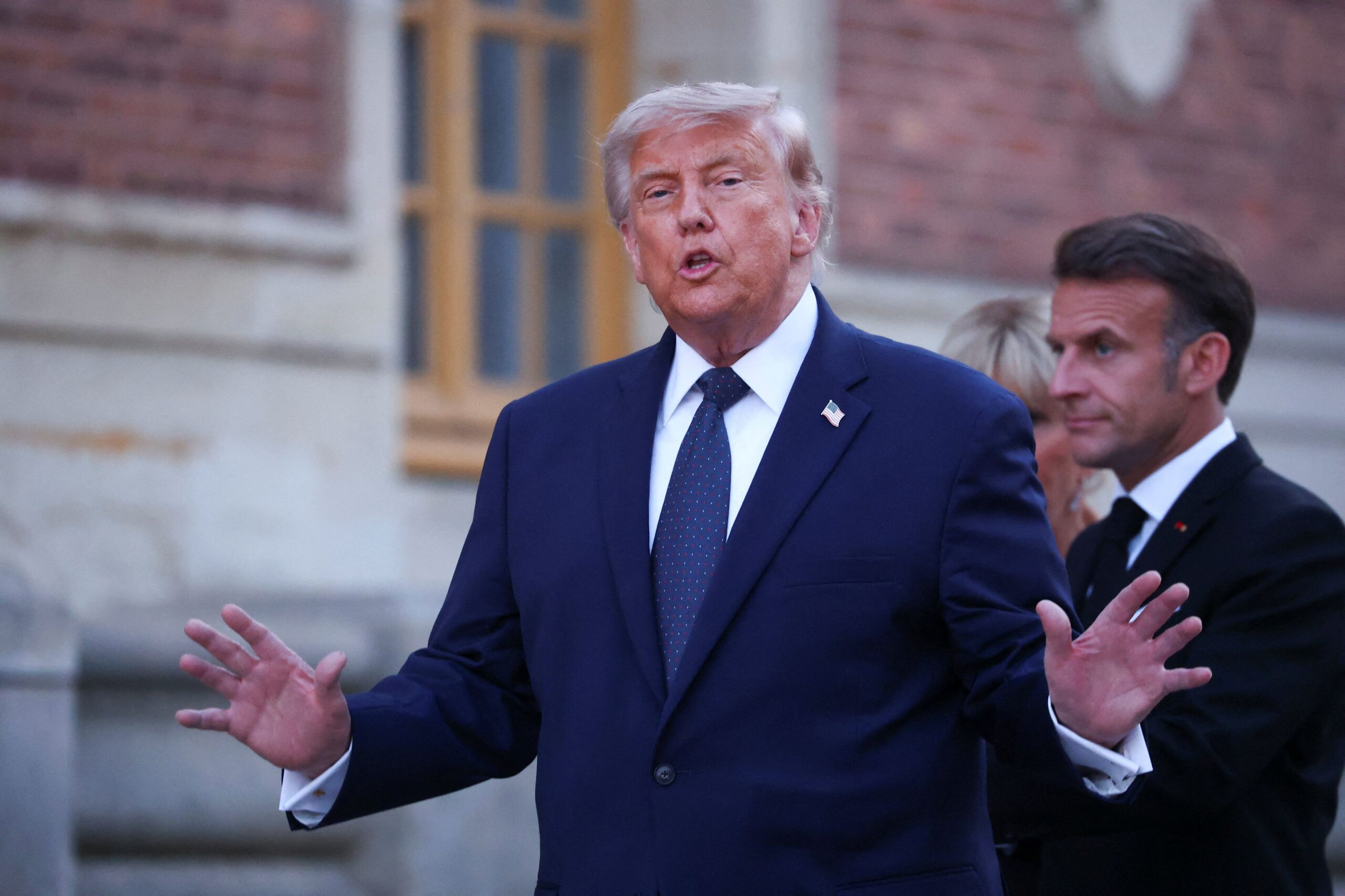
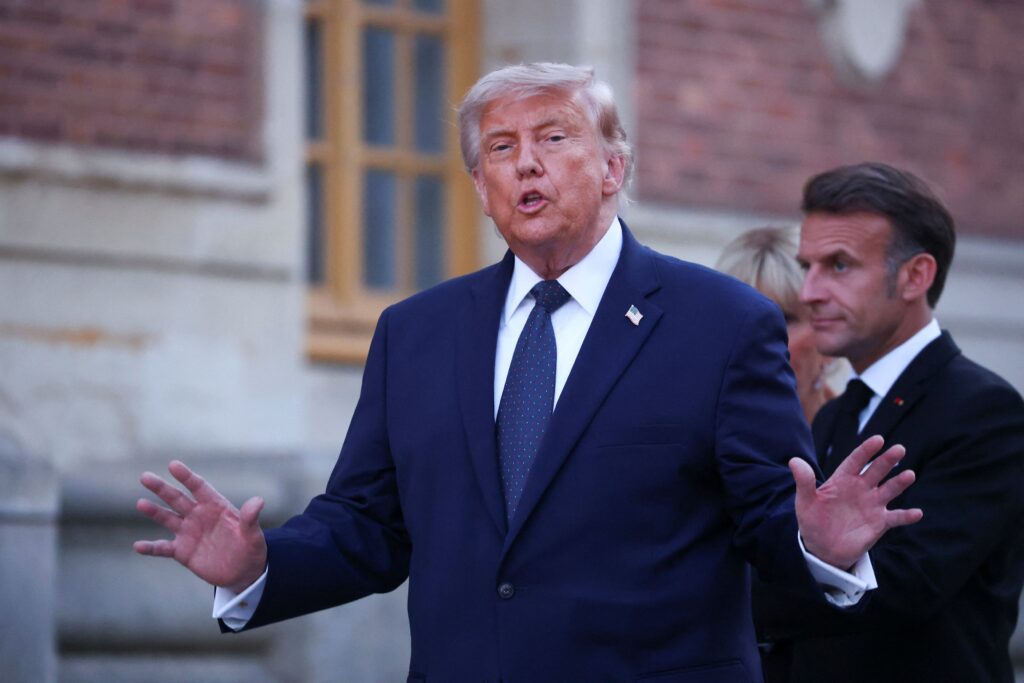
“If I don’t like it, if they don’t behave, we’ll go right back to dropping bombs right smack in the middle of their heads,” Trump said from the G-7 summit in France.
Vance was a major proponent of the MOU, Natalie, Michael and Theodoric report, despite some more hawkish members of the administration questioning a pause in hostilities, such as Secretary of State Marco Rubio. Vance has long expressed skepticism about getting involved in foreign conflicts, dating back to his time as a marine serving in Iraq.
Vance will attend a signing ceremony for the MOU tomorrow in Switzerland. Trump said he signed the MOU during a visit to Versailles with French President Emmanuel Macron.
“If it works out, I’m going to take the credit. If it doesn’t work out, I’m blaming JD,” Trump said. “You’d better be careful, JD.”
Read more Trump will host Knicks at White House, owner says
The Reflecting Pool in Washington, D.C., is green.
This wouldn’t often be news. It’s been green with algae, well, forever.
But, oddly, it is news because Trump has spent millions of dollars and taken a considerable interest in rehabilitating the monumental body of water, only for it to return to its chartreuse hue within days.
The Trump administration began repainting the bottom of the Reflecting Pool “American flag blue” in late April, as part of the president’s desire to make the city sparkle ahead of the nation’s 250th anniversary. Once completed, the administration began refilling the body of water, which sits between the World War II and Lincoln memorials in Washington’s monumental core. Within days, the body, as it has in the past, filled with algae, turning what had been a blue bottom into a more verdant appearance.
The president had a clear interest in this project, to the point that he drove his motorcade across the bottom of the drained pool to inspect the work.
There are clear challenges to this project — the pool is larger than 10 Olympic-size pools, the water that feeds it comes from the often unclean Tidal Basin, and, as you would expect with a massive outdoor body of water, it’s a popular spot in the waterfowl community.
So what does this matter? It’s a larger symbol of Trump’s act-fast, evaluate-later approach to remaking the nation’s capital. We have seen this with the Kennedy Center, which no longer bears Trump’s name; the ballroom on the White House grounds, which we recently learned, thanks to Washington Post reporting, will cost upward of $600 million, with more than half coming from taxpayers; and his triumphal arch near Arlington National Cemetery.
The Trump administration is not throwing in the (pool) towel, yet. Earlier this week, workers were seen using chemicals and ozone nanobubbles to combat the algae. Ironically, it is relatively similar to how past administrations have tried to clean the pool before the president renovated it.
See how algae spread across the Reflecting Pool in days here.
Minnesota Star Tribune: Gov. Tim Walz’s approval ratings plummeted over the past year, driven largely by a fraud scandal in his state. Democrats are figuring out if they can run away from the scandal now that he is no longer running for office or if it will continue to plague the party brand.
Houston Chronicle: A tropical storm, named Arthur, has formed in the Gulf of Mexico, threatening a large part of the Gulf Coast from Texas to Louisiana.
Bowling Green Daily News (Ohio): We have highlighted several successful efforts to stop data centers from being built nationwide. But not all attempts are successful. Officials in Bowling Green rejected a six-month moratorium on data centers despite lengthy debate and protests in favor of the moratorium.
We asked whether it was right to stop foreign investment in Iran in the wake of a war that may soon be ending. In past conflicts between the U.S. and foreign adversaries, foreign investment has been seen as a tool to bind nations together, thereby preventing future conflicts.
But the president said days after that the U.S. would not be investing in Iran.
We received some interesting responses.
Those who oppose Trump were blunt: Just “do the opposite of his recommendations,” wrote Edward Lyons.
“If Trump knew what he was doing there would not have been a war with Iran,” wrote Rick Prescott. “You don’t destroy economies and expect nothing bad happens.”
And Don Atwell added: “I do think it would be wise for the US to invest; history tells us that it is a successful strategy.”
Our colleagues Rachel Roubein and Lena H. Sun published a remarkable story on Wednesday about the push to keep Robert F. Kennedy Jr.’s vaccine agenda alive inside the Department of Health and Human Services. “The public effort to revamp U.S. vaccine policy has quieted. Behind the scenes is a different story,” they wrote. So we wanted to ask you: How do you feel about vaccines? Have you had any experience with vaccine denialism among friends and family? And what do you think about how “a small circle of Kennedy’s allies has kept working to reshape the federal apparatus that guides vaccines”? Let us and your fellow Early Brief readers know at [email protected].
Thanks for reading. You can follow Dan and Matthew on X: @merica and @matthewichoi.
Read more Nasim Nuñez keeps on swimming, and the Nationals keep on winning