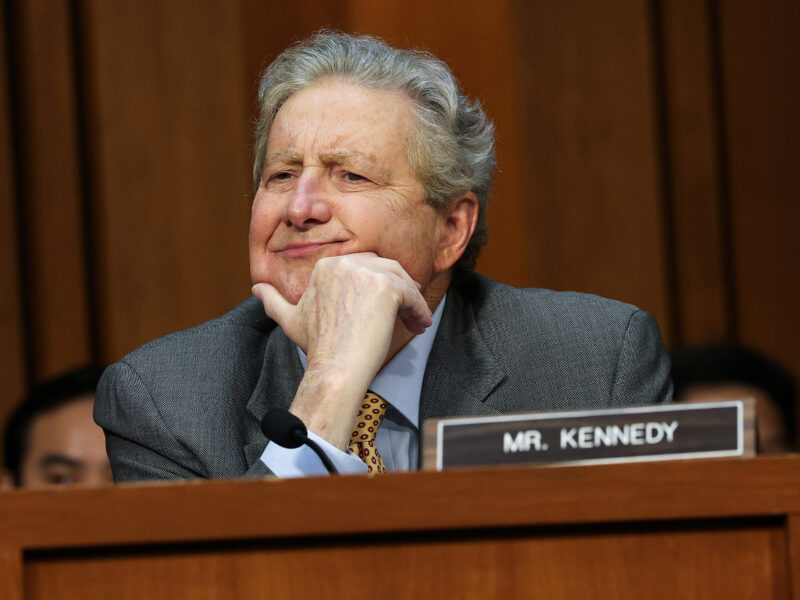
The lunch meeting comes as the president’s relationship with some senators has deteriorated — especially after he helped defeat two of them in GOP primaries.
Read more Capitals complete search for high-end winger with trade for Jordan Kyrou
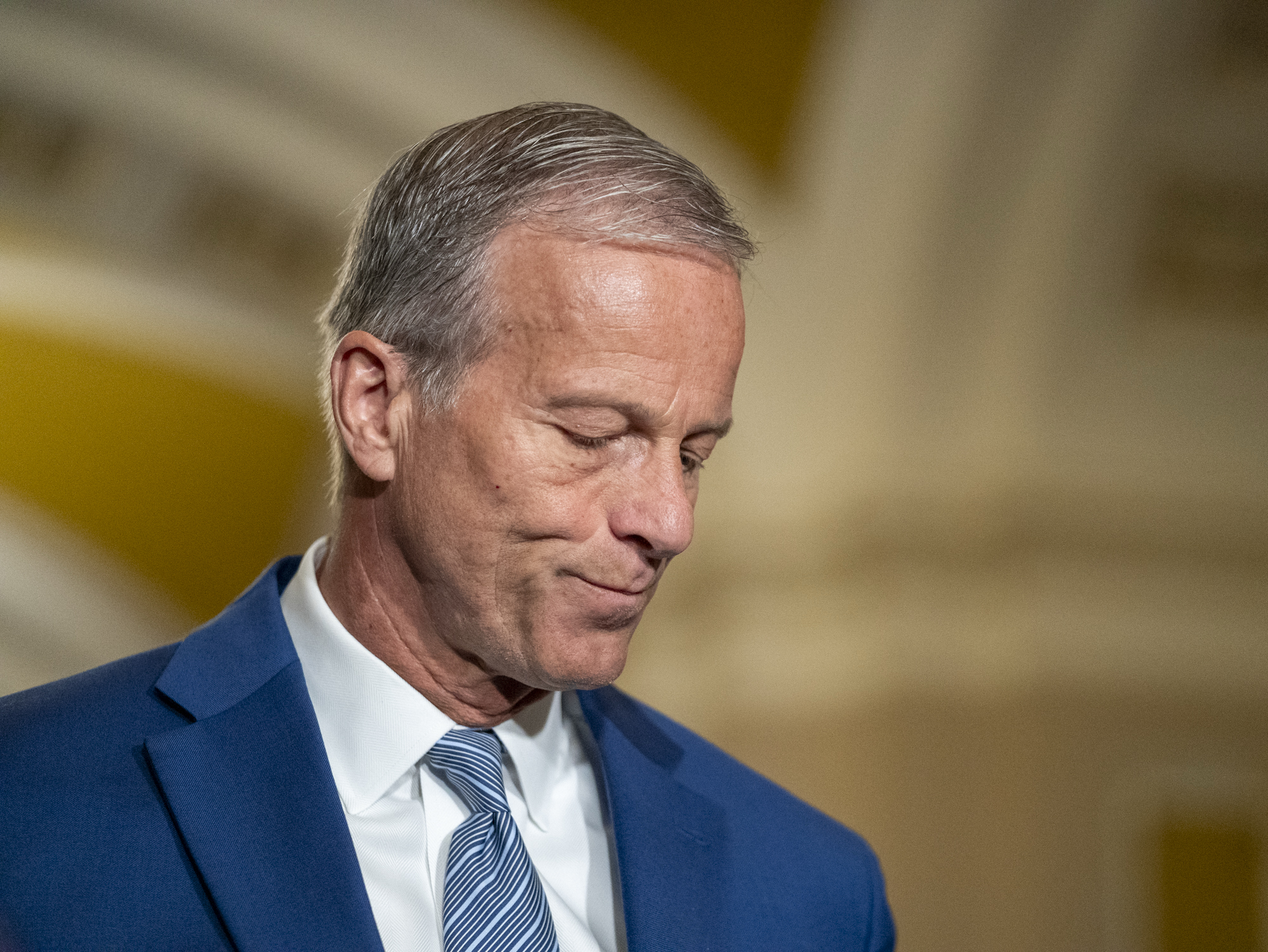
President Donald Trump has clashed with Senate Republicans repeatedly in recent months, demanding they pass legislation that they say doesn’t have enough votes and striking an agreement to end the war with Iran that many of them have criticized.
On Wednesday, they’ll have a chance to work out their differences — or air their grievances — face to face.
Trump is set to join Senate Republicans for lunch in the Capitol, his first meeting with the entire conference since they had breakfast at the White House in November. Trump’s relationship with some Senate Republicans has deteriorated in the intervening months — not least because he helped to defeat two of their own in GOP primaries.
Sens. John Cornyn (R-Texas) and Bill Cassidy (R-Louisiana) both lost their primaries last month after Trump endorsed their opponents. Neither has spoken to the president since he helped end their political careers — but both said they plan to attend Wednesday’s lunch.
Cornyn has lamented what he described as the recent feuding between Trump and Senate Republicans.
“The main question I would like to ask the president is: Do you want to win the midterms?” Cornyn told reporters. “A bunch of infighting among Republicans isn’t conducive to winning. And if we do want to win, I think we’re going to have to change our behavior.”
Trump infuriated Senate Republicans last month by reaching an agreement with the Justice Department to create a $1.8 billion fund to compensate people, including Trump’s political allies, who claim they were wrongly prosecuted during the Biden administration. Some Republican senators said they feared it could reward people convicted in the Jan. 6, 2021, attack on the Capitol.
The administration eventually backed down, but Trump has created more headaches for his party.
Last week, he directed Jay Clayton, his nominee for director of national intelligence, not to appear for his Senate confirmation hearing. That move undercut a Republican plan to renew a major surveillance law.
The agreement that Trump struck with Iran has drawn strong criticism even from some of his allies in the Senate. And Trump has spent months badgering Republicans to pass voting legislation that Senate Majority Leader John Thune (South Dakota) and other Republicans have said repeatedly does not have enough support to move forward.
Abigail Jackson, a White House spokeswoman, said the bill remains a top priority for the president.
Trump told reporters that he plans to push Republicans to find a way to pass it.
“We have to pass it,” he said Tuesday in Pennsylvania. “So we’re going to have to talk about that and many other things.”
The bill, known as the Save America Act, would require Americans to prove their citizenship when they register to vote and to show photo identification when voting. Trump has called for adding other priorities to the bill as well, including barring most mail voting, prohibiting transgender women and girls from playing in women’s sports, and restricting gender transition care for minors.
Republicans have limited options to pass the bill because every Democrat opposes it. They could scrap the Senate’s long-standing filibuster rule, which requires 60 votes to advance most legislation. Or they could try to evade the filibuster by forcing an extended debate on the Senate floor and attempting to exhaust Democrats.
Sen. Mike Lee (Utah) has pushed aggressively for months to go the second route, but other Republicans say the strategy is impractical and doomed to fail — and some of them have expressed frustration with Lee.
“It doesn’t have the votes,” Cassidy told reporters. “And so it’s time to talk about something else.”
Read more Wizards select BYU star AJ Dybantsa with top pick in NBA draft
Sen. Thom Tillis (R-North Carolina) told reporters he thought Lee was motivated by “naiveté or a desire to get more likes on a social media post — maybe both.”
“We’re going down a path that’s unproductive, and every minute we spend on it we’re not spending on something that could get my colleagues reelected,” Tillis said.
Lee has not backed down. After Thune told reporters that his party must confront the “hard realities” that not enough Republicans support scrapping the filibuster to pass the bill, Lee responded that he and his allies “can’t be brushed aside as ‘ignoring the hard realities.’”
Iran is another potential flash point. Several Republicans — including Sen. Tom Cotton (Arkansas), chairman of the Senate Intelligence Committee, and Sen. Roger Wicker (Mississippi), chairman of the Senate Armed Services Committee — have criticized the agreement that the administration reached with Tehran.
“This deal envisions funneling $300 billion to the ayatollah and the Islamic regime in Iran,” Sen. Ted Cruz (R-Texas) said on his podcast, “Verdict With Ted Cruz.” “That would be a very serious mistake. If the ayatollah gets $300 billion, that money will be used to fund terrorism and to murder Americans.”
Trump does not appear open to such feedback.
Asked Tuesday about his message to Cruz and other critics of the agreement, Trump told reporters, “I think anybody that’s been critical of it has to be educated, even if they’re friends of mine.”
Four Republicans — including Cassidy — have gone further, voting with Democrats on Tuesday to block Trump from ordering more strikes on Iran. Their support allowed the war powers resolution to pass the Senate in a bipartisan rebuke of the conflict.
Tillis and Cornyn stuck with their party on the resolution, but they have become increasingly critical of the administration. Tillis decided last year not to run for reelection after Trump attacked him for opposing Republicans’ tax and domestic policy bill, giving him more freedom than some of his colleagues to defy the administration.
Cornyn was deferential to Trump before his May 26 primary runoff, even proposing last month to rename a highway in Trump’s honor. But he has spoken up more since losing to Ken Paxton, the controversial Texas attorney general whom the president endorsed despite Thune’s entreaties for Trump to back Cornyn.
Cornyn said Senate Republicans’ deference to Trump — including his own — does not seem to have done them any good. He said he believed that Trump endorsed Paxton partly to get back at Thune for failing to pass the Save America Act.
“I think he’s been punished for telling the president the truth,” Cornyn said of Thune.
Sen. Rick Scott (R-Florida), who coordinates Senate Republicans’ Wednesday lunches, invited Trump to speak there.
Scott has proposed holding regular votes ahead of the midterms on the Save America Act, or pieces of it such as requiring proof of citizenship to vote. He said he expected the lunchtime discussion to include the party’s accomplishments, the midterms and what the GOP can do in Trump’s final two years in office.
Thune has acknowledged that he does not always agree with Trump but has said their relationship is strong. He said Tuesday that he expects a “direct and honest” conversation at the lunch.
“I am very direct with the president,” Thune told reporters. “I shoot straight with him and vice versa. We at times have differences of opinion, but I think the important thing is the issues that really matter to the future of this country and to the American people, we have been united on.”
Some Republicans have dismissed talk of a rift between Trump and Thune as overblown. The lunch is a way for the party to come together, Wicker said.
Read more Bullpen implosion saddles Nats with a crushing loss to Phillies
“We are a family, and sometimes we have to talk things out,” Wicker said.
Isaac Arnsdorf, Noah Robertson and Matthew Choi contributed to this report.