Mauricio Pochettino says soccer and mystical energy propelled him out of his hometown. Can it lead the U.S. team to World Cup glory?
Read more Mariners have big sixth inning to back Woo in an 8-3 victory over the Angels
MURPHY, Argentina — In some sense, the unorthodox approach taken by the U.S. men’s soccer team ahead of its best World Cup opportunity in recent memory is one that started here, in a tiny town deep into the pampas.
Some 6,000 miles away from the California stadium where that squad enters the knockout stage this week is the hardscrabble patch of grass where Mauricio Pochettino first picked up the game as a boy.
And it’s where, relatives and neighbors here said earlier this year, Pochettino developed the mantra that seems to be guiding him four decades later: Scrutiny doesn’t matter. The results do.
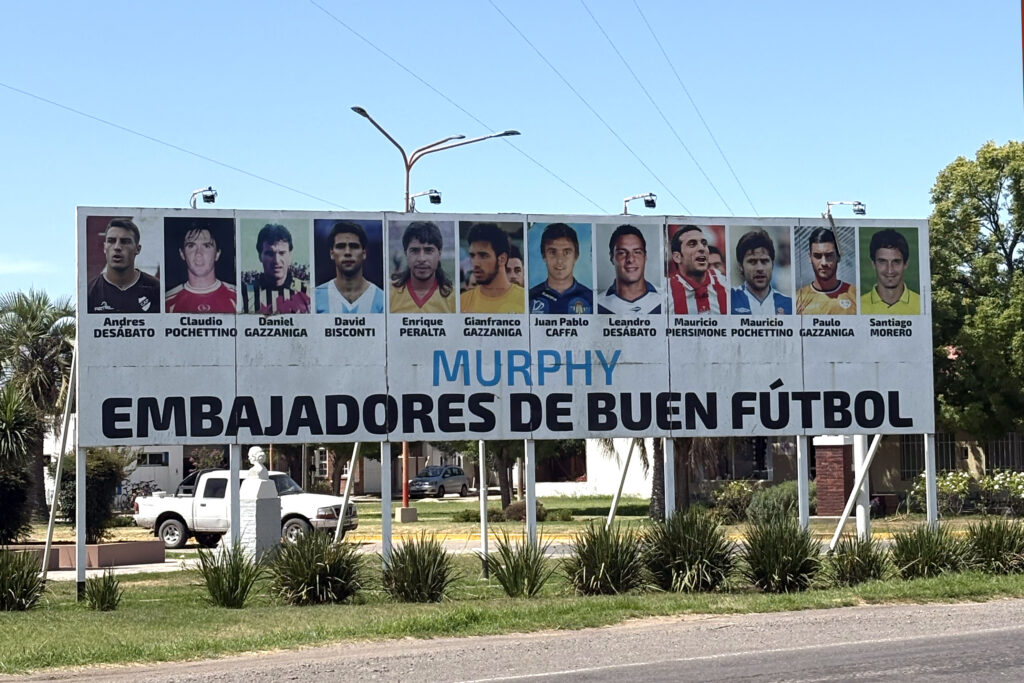
“He was already a man before he really grew up,” said David Bisconti, a former Argentine national player who started playing here alongside Pochettino, sitting inside the town’s single soccer club in January. “That headstrong quality only became more intense when he left.”
“But,” he added, “you could even see it in him as a boy.”
That attitude was developed on a disappointing World Cup run of his own and then stints playing and coaching for clubs in Spain, France and the United Kingdom, where he was known for making players walk on hot coals or keeping lemons in his office to ward off bad auras.
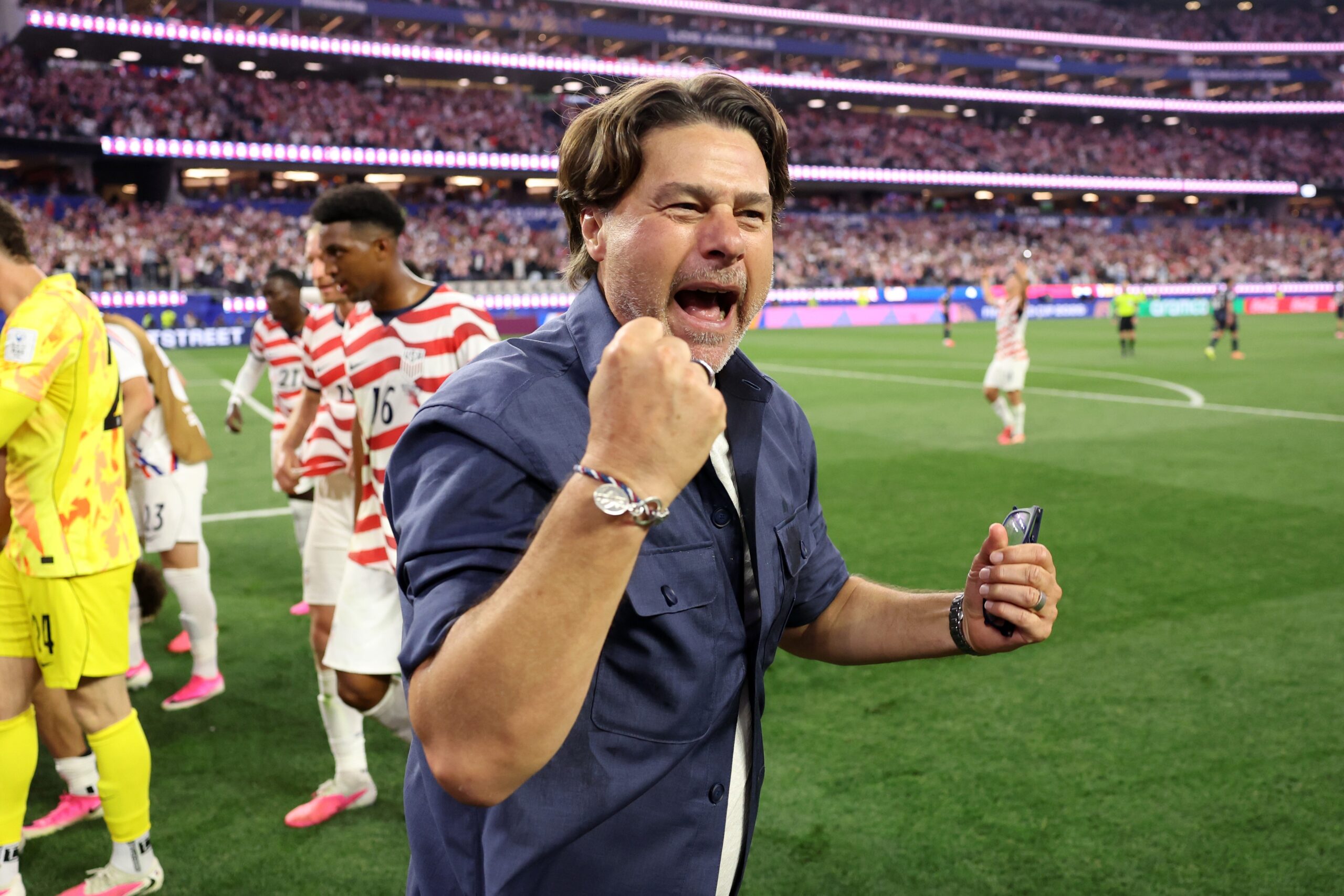
Now the brash, ambitious former pro player — the first South American to helm the U.S. men’s national team — is making waves for an unconventional coaching style that catapulted the team to the top of its group during the World Cup’s initial stage but will face its biggest test yet on Wednesday in Santa Clara.
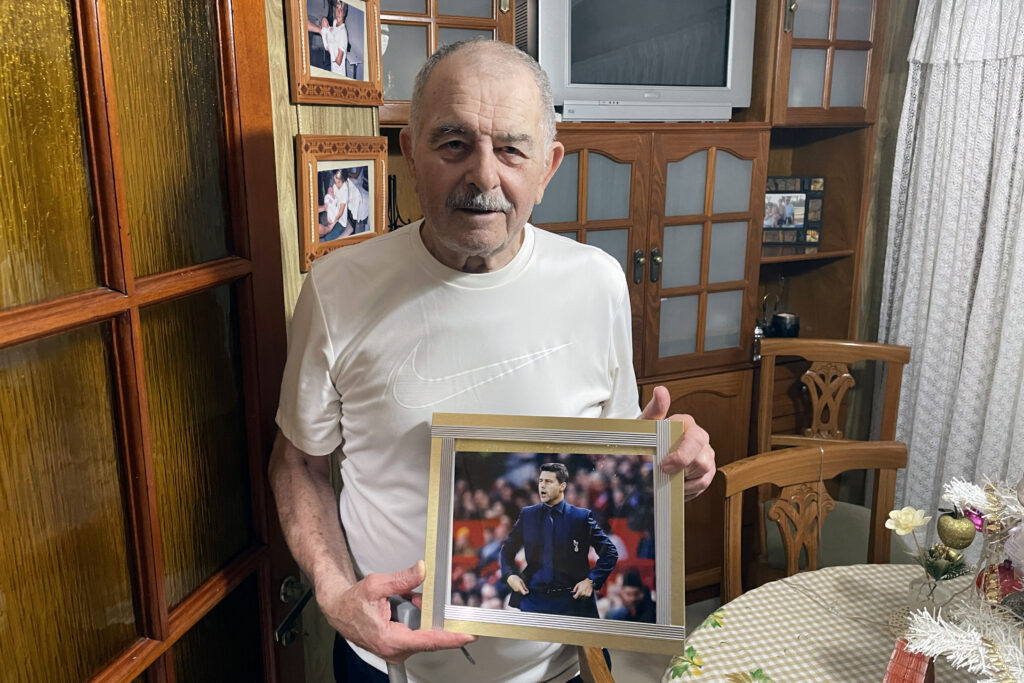
Pochettino dismantled the team’s preexisting hierarchy, eliminating starting spots for the players with even the highest European club pedigrees in favor of unconventional and sometimes confounding lineups.
He delivered official roster cuts for the World Cup by email instead of through explanatory phone calls, casting aside questions over that approach as “bulls—,” yet loosened rules on when players can see their families.
And as he tries to impart his aggressive, high-energy style on to the squad, he is in many ways relying on the kind of soccer he learned on the pitch as a boy in Murphy, a place that calls itself a regional “cradle of football.”
Today, his face is plastered on a billboard here — on the site of the same pitch where he first learned to play — that declares him an “ambassador of good soccer.”
“Being from there, I compare myself with myself. I don’t compare myself with another person,” Pochettino said last month, fresh from a trip back home to Murphy, where he is now one of the town’s largest landowners.
His path, a model he pioneered for a generation of Argentine stars but one unfamiliar to most any American player these days, means that “all that you achieve is massive,” he added. “It’s a big, big, big step.”
But after a long string of disappointing showings by the U.S. men’s team, the pressure is on for the host country to deliver something stirring for American fans. After finishing first in its group, the knockout stage will determine whether Pochettino’s approach translates to the highest-pressure stage soccer can provide.
Stuart Holden, a former U.S. player and Fox’s lead analyst for the World Cup, said Pochettino’s test will come down to whether the squad he assembled is ultimately in sync with that philosophy.
“When I hear his intensity and his passion and his focus, I think he believes he has a group of talented players,” Holden said as the tournament got underway. “I’m not sure if he knows he has a team yet. If he can pull together a team, then this team will do well and Pochettino will have been the right hire.”
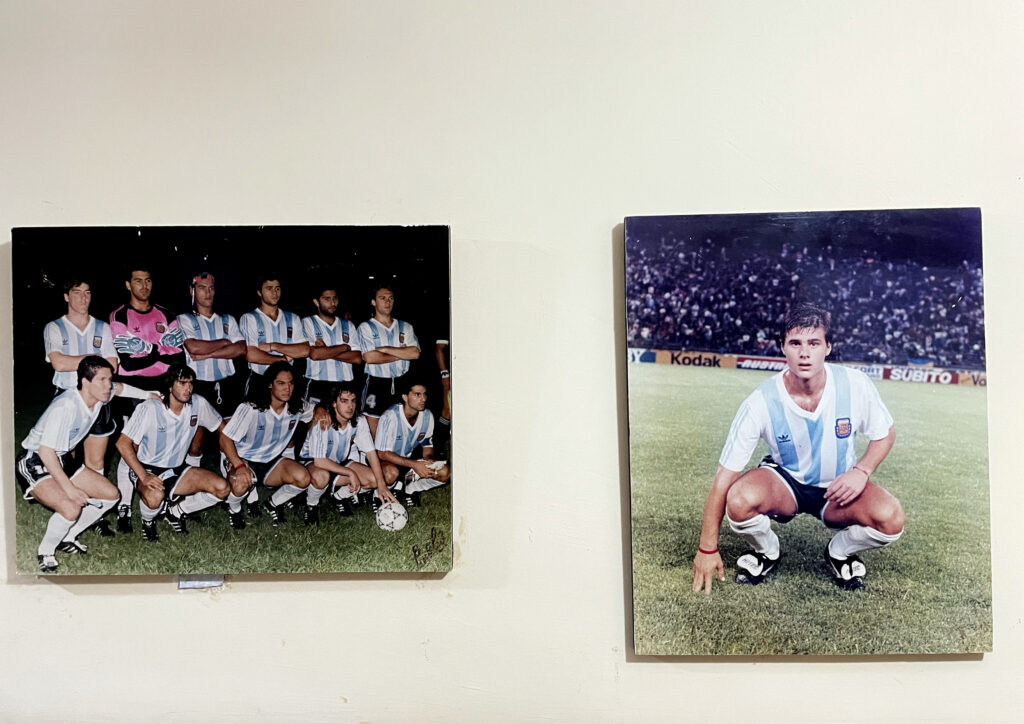
As the story goes, a young Pochettino, barely into his teen years, developed enough of a name for himself on the pitches of Murphy that two youth soccer scouts knocked on his family’s door in the middle of the night asking to see him.
His mother, Amalia, refused to wake up the sleeping teenager. No matter: They just wanted to see him.
She allowed them to peer over him while he was sleeping. Stripping the sheets off him as he slept, she recalled, it took them only one look at his unusually muscular legs to determine a young Pochettino’s fate.
“We want him to play for us,” one of them said.
Few people at the time had left Murphy, a town settled by Italian immigrants who followed railway lines here and set up small farms, where most original settler families — the Pochettinos included — have a street named after them. And no one until then had left at an age so young — for soccer or otherwise.
But if there was someone who might do it, it was Pochettino. Nicknamed “Conejo” on the pitch after the Spanish word for rabbit, the 5-foot-7, 13-year-old held his own in the region’s top division while often playing alongside teammates or against opponents who were more than twice his age.
“He really had the personality of an 18-year-old,” his mother said, repeatedly calling him a “cabeza dura,” which means hardheaded.
And so he headed to the city of Rosario, about two hours away, where his brief but impactful time at the club Newell’s Old Boys, which also gave rise to the legendary Diego Maradona, put him face-to-face with two other legends of Argentine soccer.
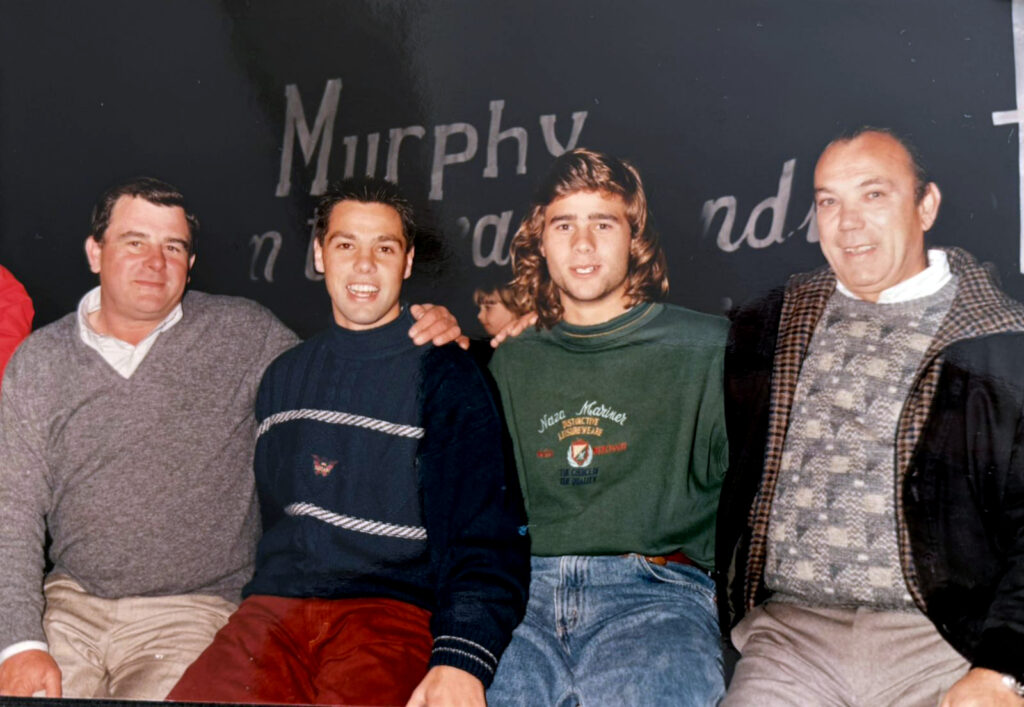
That youth scout who recruited him was Marcelo Bielsa, nicknamed “El Loco” — the Crazy One. Biesla would go on to coach Pochettino at the club level and then for the Argentine national team six World Cups ago. He was coaching the Uruguayan team in this year’s tournament.
Decades later, it’s hard not to see the mark left by Bielsa’s chaotic style, tough love to players, and focus on the otherworldly.
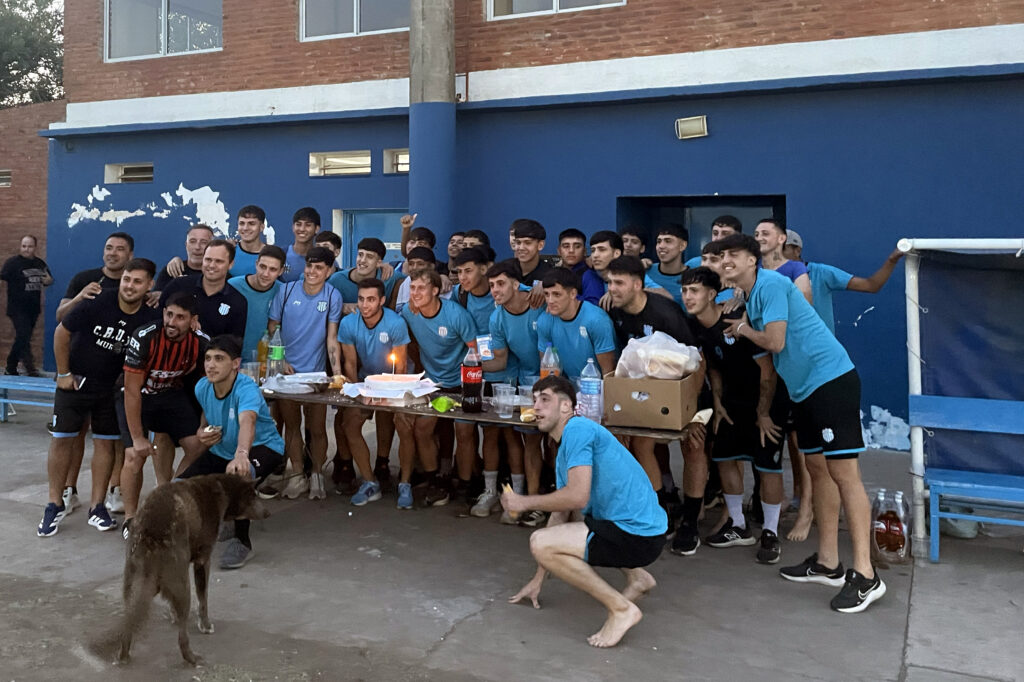
“You feel it or you don’t feel it. It’s hard to put into words,” said Pochettino’s nephew Lucas, whose family still farms in Murphy and who returns to town from school in Rosario to play for the only club in Murphy, Centro Recreativo Union y Cultura (CRUyC) — the same one where his uncle played.
Like soccer itself, “it’s a way of life. It’s not separate.”
Shortly after Pochettino moved to the Spanish club RCD Espanyol, rapidly establishing himself as a club hero, Bielsa arrived.
He asked Pochettino what grade he might give himself out of 10 for the previous year’s effort. Pochettino thought about a nine or a 10 but modesty overcame him. He said eight.
Read more Harvard? Please. This is Matt Freese’s biggest test yet.
Bielsa disagreed.
“You’ve been terrible,” the coach said, “and if you play like that again you’ll never play for me and never play for Argentina.”
Nearly a decade later, Bielsa and Pochettino met again as Argentina sought the 2002 World Cup, a tournament Pochettino has frequently recounted in helping his players prepare for this year’s tournament.
Both long gone from Espanyol, their intense relationship was now forged in South Korea and Japan on a team widely held to be one of that year’s favorites. They had dominated in qualifying matches and friendlies, so hopes were high.
They netted a win against Nigeria and a draw with Sweden, but the hardest-earned lessons for Pochettino came from an infamous matchup against England.
The referee ruled that he had tripped English striker Michael Owen, giving that team a penalty. David Beckham delivered and prevented Argentina from making it into the knockout round.
Pochettino used his 2002 heartbreak to help his players understand the gravity and emotional toll of the tournament.
That experience, he has recounted to his own players two decades later, means that a World Cup run can vanish in an instant. Every single call-up, friendly and training session, he has told them, must be taken with the urgency of a World Cup final.
The key message from him as a coach in recent months, said U.S. midfielder Weston McKennie, is that “everyone knows that day in and day out in training. You have to compete for your spot and nothing is solidified. Nothing is safe.”
In Murphy, family members and long-ago friends of Pochettino said that is simply his way of trying to motivate his team to really feel, to provide the emotional, visceral approach to soccer that is seen as missing in the United States.
“He’ll anger you. He tells it like it is — to his brothers, to us, to his players,” said Pochettino’s father, Héctor. “Even if that means some hard feelings at first, it will be worth it.”
Although no one in Murphy claimed to know exactly where or how he picked up on his more mystical tactics as a coach, they seemed to fall in line with Argentina — and especially Argentine soccer fans’ reliance — on “cábalas,” superstitious rituals employed while watching a favorite team.
In his memoir, Pochettino recounted his reliance on clairvoyance over spreadsheets, and mentioned judging his players by studying their spiritual energy. He claimed to have the ability to physically see a person’s aura, using it to foresee future choices, player career paths, and locker room dynamics.
When he was coaching Tottenham Hotspur F.C. to the 2019 Champions League final, he instructed players to walk on hot coals and snap arrows against their throats, meant to combat psychological barriers of fear.
If it has drawn questions and a fair share of scrutiny and disbelief, locals pointed out, it has also been successful.
One of his lowest points personally and professionally came in 2009, when RCD Espanyol, the team where he had spent years as a player and where he was now the coach, was at risk of being relegated to a lower league just as Pochettino’s mother, Amalia, had been battling an illness.
With things looking bleak, Pochettino went on a 30-mile pilgrimage to the Benedictine Abbey at Montserrat, he recounted in his memoir, where he prayed to the Virgin Mary. Part of it was meant to say thanks for his mother’s recovery from illness, and part of it was to ask for divine intervention.
His prayers worked.
Ahead of Wednesday’s round of 32 match against Bosnia, Pochettino now carries the weight of a host country — and some people outside it, too.
President Donald Trump requested to see him at the World Cup lottery drawing in Washington last year, Pochettino’s parents said. Argentine President Javier Milei, a close Trump ally, had him for a meeting in Buenos Aires soon after.
“Everything he’s been doing is a lot of pressure,” Bisconti said. “Think about it – you have the whole country there. Every game is a home game.”
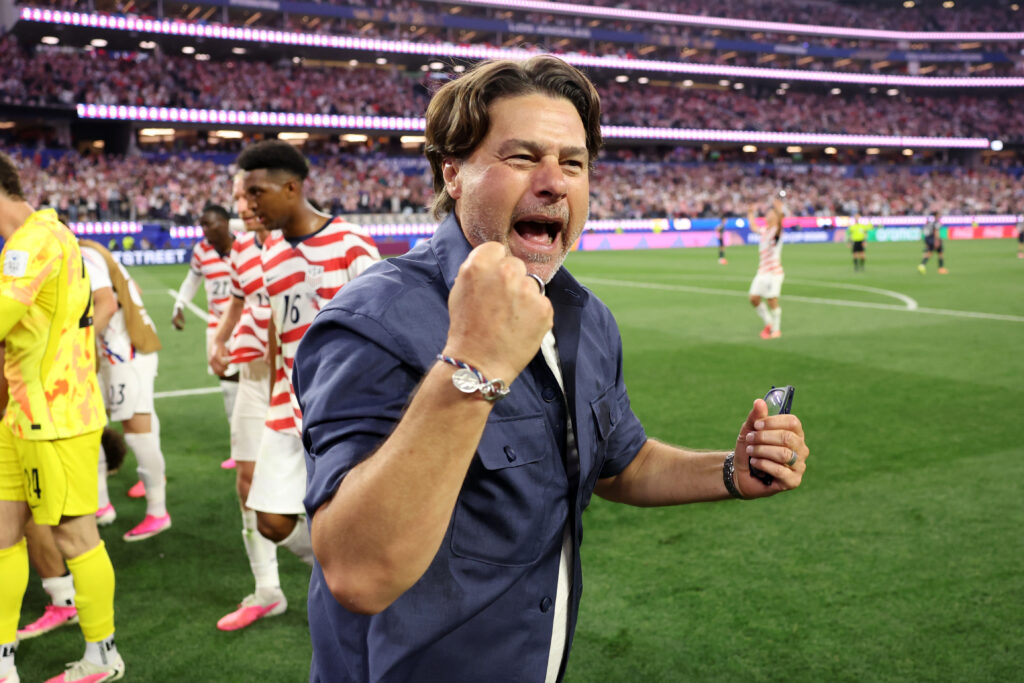
In the group stage, Pochettino wore the same custom Hugo Boss overshirt for all three matches and red string bracelet on his wrist to ward off bad luck.
“Everything he’s been doing is a lot of pressure,” Bisconti said. “Think about it — you have the whole country there. Every game is a home game.”
Back in Murphy — pronounced by locals as “Mur-pee,” no H — he is viewed as something between and a hero and a trailblazer: These days, there’s maybe one player that goes to the big leagues every five to seven years.
Privately, there is a sense among many in town that Pochettino might do more to contribute the vast wealth he has accumulated since then. He is rarely seen in the small town center, often going straight to the hundreds of acres he’s acquired in the countryside, and other homegrown pro players have chipped in with new equipment for CRUyC repeatedly.
But in the meantime, the people of Murphy will be doing something extraordinary for a country that has long had deep skepticism about “yanquis” from the U.S.
As the streets are painted in sky blue and white and a projector set up in the middle of town, they will principally be cheering on Argentina.
If the reigning World Cup champions happen to fall early, the people of Murphy say they will be cheering on the U.S., and the man whose face greets them on the main road into town.
Rick Maese in Fayetteville, Georgia and Thomas Floyd in New York contributed to this report.
Read more ‘Who cares if we lose? I’ve found ranch dressing.’