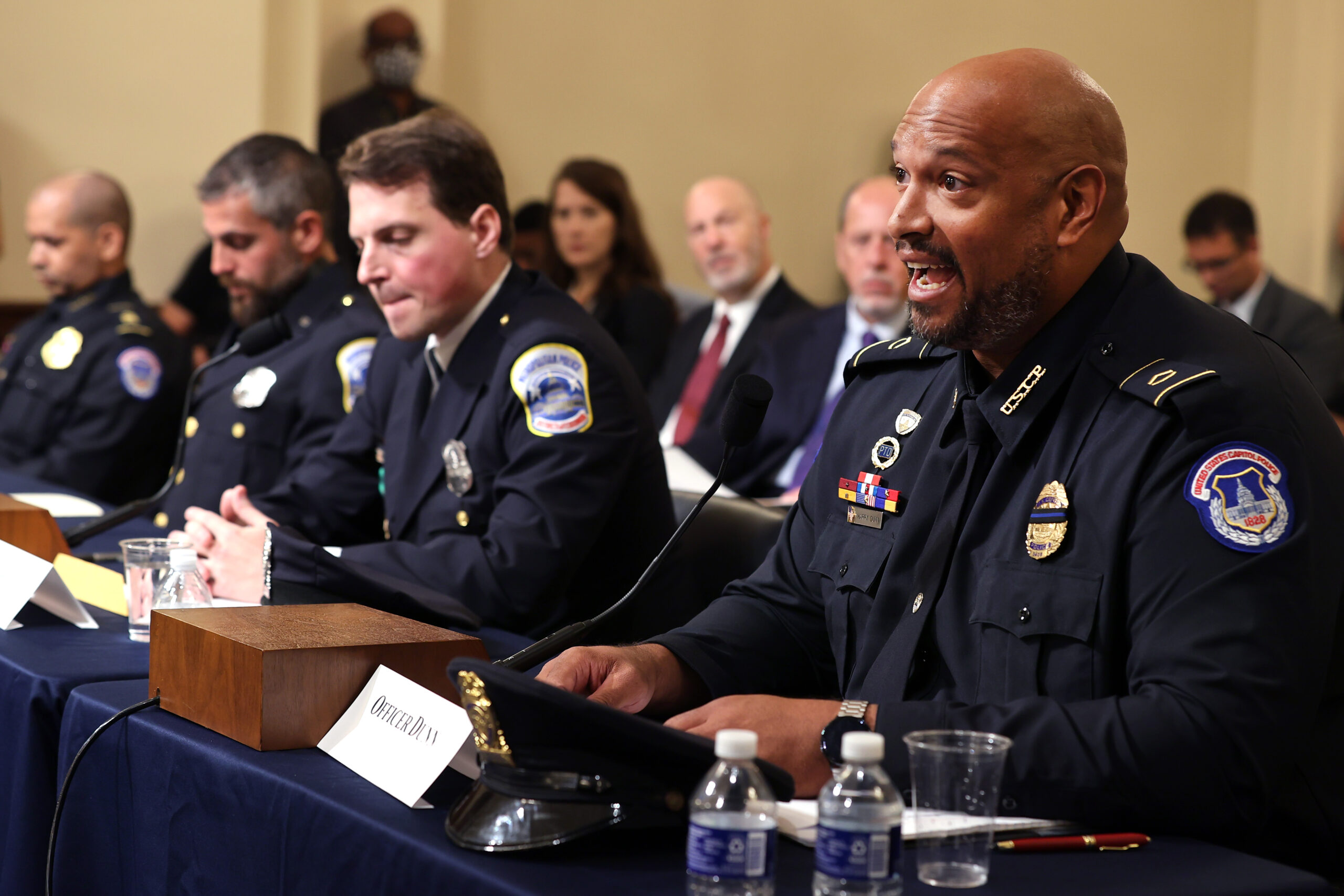
The fund violates federal law and would legitimize political violence, officers Harry Dunn and Daniel Hodges argue in first known challenge.
Read more Former Cuban president Raúl Castro indicted in U.S. on murder, conspiracy charges
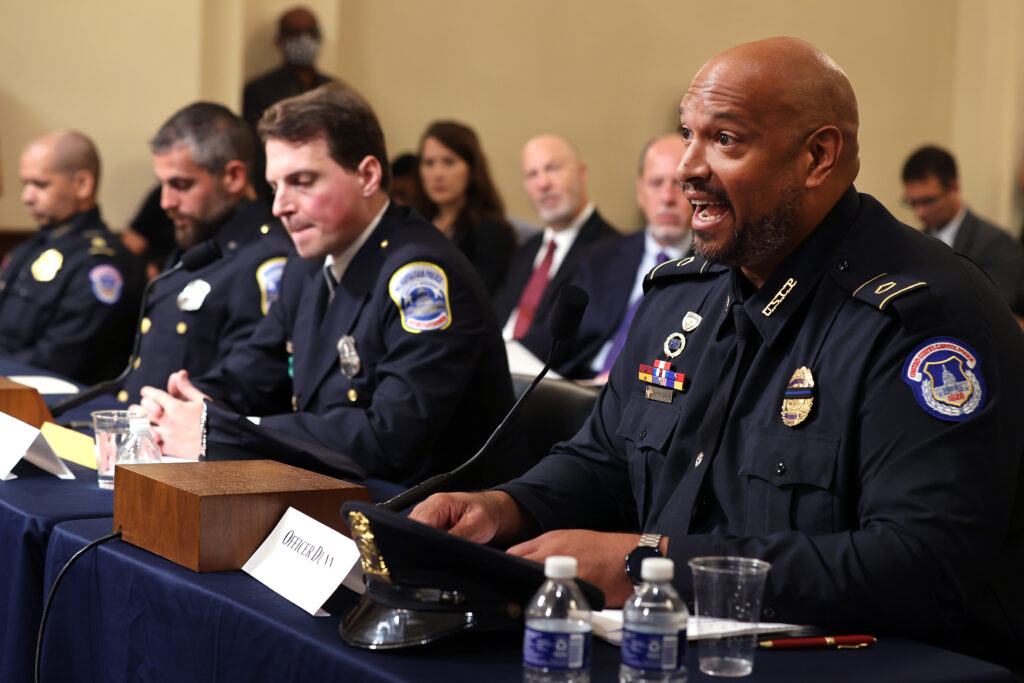
Two police officers who defended the U.S. Capitol during the Jan. 6, 2021, riot filed a federal lawsuit Wednesday seeking to block the Trump administration’s nearly $1.8 billion fund to compensate people who claim they were targets of a “weaponized” legal system.
Harry Dunn, who retired from the Capitol Police, and Daniel Hodges, a D.C. police officer, said in their lawsuit that the Justice Department’s new fund could enrich the far-right extremists who led the attack on the Capitol and embolden those who commit violence in President Donald Trump’s name.
The use of taxpayer money to fund those payments would represent “the most brazen act of presidential corruption this century,” attorneys for Dunn and Hodges said.
The lawsuit, filed in U.S. District Court in D.C., is the first known legal challenge to the “Anti-Weaponization Fund” announced this week by acting attorney general Todd Blanche. No funds have yet been disbursed.
In an unusual move, Trump agreed to drop a $10 billion he filed against the IRS over the 2019 leak of his confidential tax records, and in exchange, his administration agreed to establish a $1.776 billion fund to pay applicants who can show they were improperly investigated or prosecuted.
Trump has long claimed that he, along with allies and supporters, have been wronged by Democratic administrations. Under the settlement, the president and his family cannot receive payments.
A five-member commission that Blanche has yet to appoint would set the criteria for the awards and distribute them to eligible applicants. The $1.776 billion would be drawn from the Judgment Fund, which Congress created in 1956 to cover the cost of legal settlements or court judgments involving the U.S. government.
The settlement — which includes a provision that forever bars the IRS from pursuing unpaid-tax claims against Trump, his family or businesses that predated the agreement — has drawn bipartisan concern. Critics described it as the latest step in Trump’s quest to rewrite the violent history of the Jan. 6 attack.
The Capitol riot followed a rally where Trump repeated his false claims that he had defeated Joe Biden in the 2020 presidential election. A mob stormed and breached the Capitol, forcing lawmakers to evacuate and delaying the certification of Biden’s victory for hours. More than 140 police officers were injured, including Hodges, and the Justice Department has said the attack caused millions of dollars in damage.
In the aftermath, the Justice Department launched the largest investigation in its history. More than 1,500 people were charged in connection with the attack. Trump has pardoned all of them or commuted their prison sentences.
Read more Former CAF general secretary Mosengo-Omba is elected president of Congolese soccer federation
Dunn and Hodges argue in the lawsuit that the Justice Department’s move to potentially hand out reparations to hundreds of rioters violates the Constitution and several federal statutes. The 14th Amendment says “neither the United States nor any State shall assume or pay any debt or obligation incurred in aid of insurrection or rebellion against the United States.”
A federal judge in Florida who had been handling Trump’s lawsuit against the IRS had asked his personal attorneys, government officials and a group of independent, court-appointed lawyers to file legal briefs on whether the case could proceed despite the fact that the IRS works for the president. Usually, federal lawsuits can proceed only if the parties are adversarial to each other.
The Justice Department’s brief was due Wednesday, but it was not filed. The case ended abruptly Monday when Blanche announced the settlement with Trump. Federal law prohibits using the Judgment Fund for “sham” cases that would not lead to a court-approved monetary judgment, the attorneys for Dunn and Hodges argued.
“The Fund’s mere existence sends a clear and chilling message: those who enact violence in President Trump’s name will not just avoid punishment, they will be rewarded with riches,” the lawsuit says. “That message, by itself, substantially increases the already sizeable risk of vigilante violence Dunn and Hodges face on a near-daily basis. And it encourages those who are harassing Dunn and Hodges, and sending them death threats, to up the ante.”
The Justice Department did not immediately respond to a request for comment on the lawsuit.
In Capitol Hill testimony Wednesday, Blanche refused to rule out the possibility that people convicted of violent attacks on police officers during the riot could receive payouts through the fund.
“As was made plain yesterday, anybody in this country is eligible to apply if they believe they were victim of weaponization,” Blanche said. He added: “It’s not limited to Republicans. It’s not limited to the Biden weaponization. It’s not limited in any way, scope or form to January 6.”
Still, several Jan. 6 defendants have hailed the fund’s announcement as a positive sign that the Trump administration is finally willing to engage with claims they’ve filed against the government over their prosecutions.
The Proud Boys, one of the extremist groups leading the riots, already was seeking $100 million in damages over its alleged “political persecution” before the new fund was announced. Hundreds of individual rioters had filed claims against the federal government for alleged property damage and personal injury.
“There’s no amount of money that will make their lives whole,” Mark McCloskey, an attorney representing several of the defendants who filed compensation claims before the fund’s announcement. “But they’re hopeful this process will give them a start.”
Read more Sorry, Arsenal fans, but Botswana’s public holiday for you is fake news
Jeremy Roebuck and Mark Berman contributed to this report.