House Democrats plan to investigate and try to block President Donald Trump’s $1.8 billion payout fund — created by the Justice Department to compensate people claiming to be targets of a politically “weaponized” justice system — if Democrats take back the House in November.
Read more Police officers at Capitol on Jan. 6 sue to block DOJ payout fund
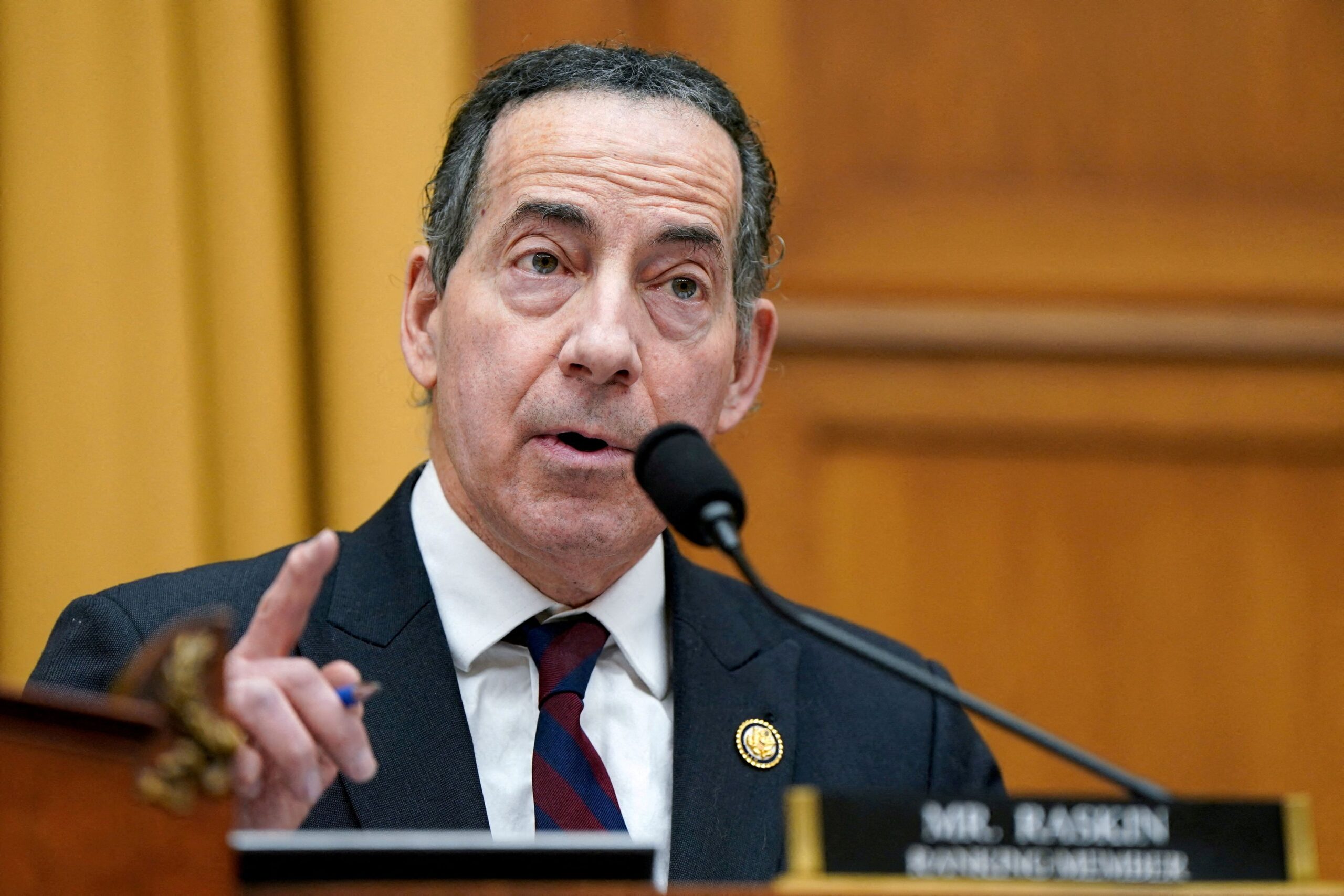
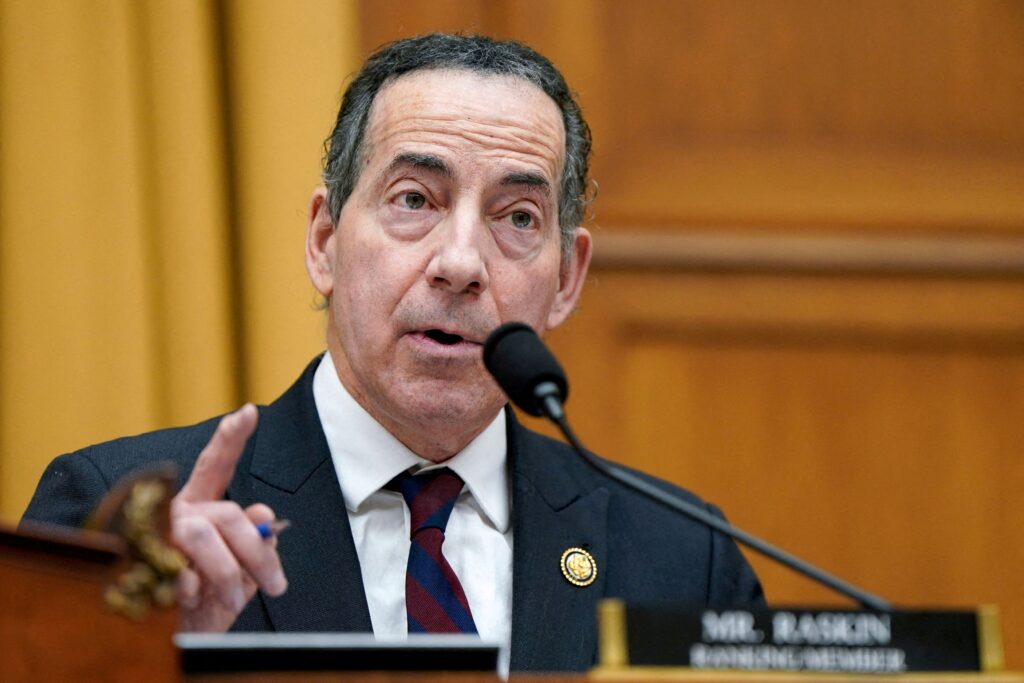
“We will get to the bottom of where every dollar has gone,” Rep. Jamie Raskin (D-Maryland), the top Democrat on the House Judiciary Committee, which oversees the Justice Department, said Tuesday. Raskin is expected to become chair of that committee if Democrats win the House. “They have just gone way too far this time, [and] the public is not going to put up with it.”
The Democrats are well-positioned to take back the House in the coming midterm elections and have vowed to use their investigation powers to check the Trump administration on many fronts. Democrats also have possible paths — though more remote — of taking control of the Senate.
The White House declined to comment on the Democrats’ threats to investigate the new payout fund, referring questions to the Justice Department, which did not immediately respond to requests for comment.
Acting attorney general Todd Blanche on Monday announced the $1.8 billion fund — paid for by taxpayers — as part of a settlement in the president’s lawsuit against the IRS. The payout fund will have limited oversight and broad authority to distribute payments to individuals, sidestepping the normal processes for negotiating legal claims against the government. The unusual arrangement quickly set off alarms among Democrats.
All payouts from the fund will be decided by a five-member panel, appointed primarily by the attorney general. Trump will have the authority to veto any member, according to details released by the Justice Department. The agreement states that payments will be reported quarterly to the Justice Department, but that those records will remain confidential, and that the fund’s members will get to decide whether to disclose their processes for granting or denying claims.
“It looks like they’re doing in everything in their power to hide the actual beneficiaries,” Raskin said. “We would want to investigate exactly where all the payments went.”
Allies and supporters of the president could stand to receive large payouts from the fund, including the roughly 1,600 Trump supporters who were criminally charged in connection to the Jan. 6, 2021, attack on the U.S. Capitol.
The prospect that rioters who stormed the Capitol might receive taxpayer money has especially incensed Democratic leaders. In a statement, Senate Minority Leader Charles E. Schumer (D-New York) described the fund as a vehicle for Trump “to fund his insurrectionist army to the tune of billions.”
An addendum Tuesday to the settlement deal notes that the IRS would also be “forever barred and precluded” from pursuing unpaid tax claims that arose before the settlement against Trump, members of his family or his businesses.
Raskin, a constitutional lawyer, and other Democrats on the panel argued in interviews with The Washington Post that the fund — which totals exactly $1.776 billion, a nod to the year of the nation’s founding — was not approved by Congress, violating Congress’s constitutional power to control federal spending.
Raskin also cited Section 4 of the 14th Amendment, which bars the federal government and states from paying debts or obligations “incurred in aid of insurrection or rebellion against the United States.” Raskin argued that provision would apply to any public money used to compensate Jan. 6 defendants.
“I mentioned this to one of my Republican colleagues, and he said, ‘Well, that just relates to the Civil War.’ I said, ‘No, it doesn’t. … It is stated in general terms. It applies for all time,’” he said.
Blanche himself acknowledged the fund’s unusual nature on Tuesday in testimony before the Senate Appropriations Committee. The acting attorney general, however, insisted that the fund isn’t unprecedented. Blanche also insisted that any payouts would not be decided based on party affiliation — saying that Hunter Biden, for example, could receive funds because of a tax fraud and firearms conviction he received during his father’s administration.
Meanwhile, Democrats aren’t waiting to take back the House. Some are already investigating the payout fund and pressing for transparency with the limited power they currently have.
Read more Former Cuban president Raúl Castro indicted in U.S. on murder, conspiracy charges
Raskin said he plans to propose legislation to block the funding and get Republicans on the record about their support for the fund through a vote.
On Monday, shortly after the payout fund’s creation was announced, 93 House Democrats filed an amicus brief seeking to block it, writing in a filing to a federal court in the Southern District of Florida that Article 3 in the Constitution bars the president from profiteering, and that the fund “would result in the improper and unconstitutional transfer of taxpayer dollars into the pockets of the President, his family, and his allies.”
In an interview, Rep. Becca Balint (D-Vermont), the No. 2 Democrat on the Judiciary Committee, noted one of the strongest tools Democrats have right now against the fund is “reminding any member of this administration [that] just because eventually Trump will leave office [it] does not mean that they themselves will not be held accountable for any wrongdoing.”
“This settlement on its face looks completely like collusion,” she said. “Just to be really clear, this is complete and total madness.”
Rep. Steve Cohen (D-Tennessee), who also sits on the Judiciary panel and recently announced his retirement, said Democrats should make an argument to midterm voters that Democratic control of the House is needed to assert oversight over the payout fund and other alleged improprieties by the Trump administration. But Cohen acknowledged that to go beyond investigating and pass legislation that holds the Trump administration to account, Democrats would also need to win back the Senate with a large majority. But even with just the House majority, he noted, Democrats could still subpoena administration members about the fund.
There also appears to be some quiet appetite among Republicans in the Senate to impose congressional oversight over the fund.
“I think that there are and will be, continue to be, a lot of questions around that that the administration is going to have to answer,” Senate Majority Leader John Thune (R-South Dakota) told reporters Tuesday.
Rep. Dusty Johnson (R-South Dakota) told reporters Wednesday morning that members are “certainly” asking about it.
“I think we want to do oversight over it,” he said. Johnson argued that there have been times where the federal government has treated people “improperly,” but that he wants to make sure that “existing legal mechanisms to redress any damages aren’t sufficient before we do something else.”
When asked whether Jan. 6 rioters should receive payouts, Johnson said he thinks those individuals broke the law and should be held accountable, and that he would want to have a “better understanding” of what damages were inflicted upon them by the Justice Department before they are awarded any money.
House Majority Leader Steve Scalise (R-Louisiana) said his knowledge of the details was vague and that the only thing he’s heard is that any American who’s “been a target of weaponization” can apply. “They have to state their case,” Scalise said, before adding that Trump is “the most notable” victim of government weaponization.
Rep. Kevin Kiley (California), an independent who caucuses with Republicans, more directly said that he has concerns about the fund, saying it is “very strange, very unprecedented.”
“I don’t know why anyone is receiving money from this fund,” he said. “That’s not the way we typically adjudicate claims. … There does need to be congressional oversight into exactly how this came about.”
Read more Former CAF general secretary Mosengo-Omba is elected president of Congolese soccer federation