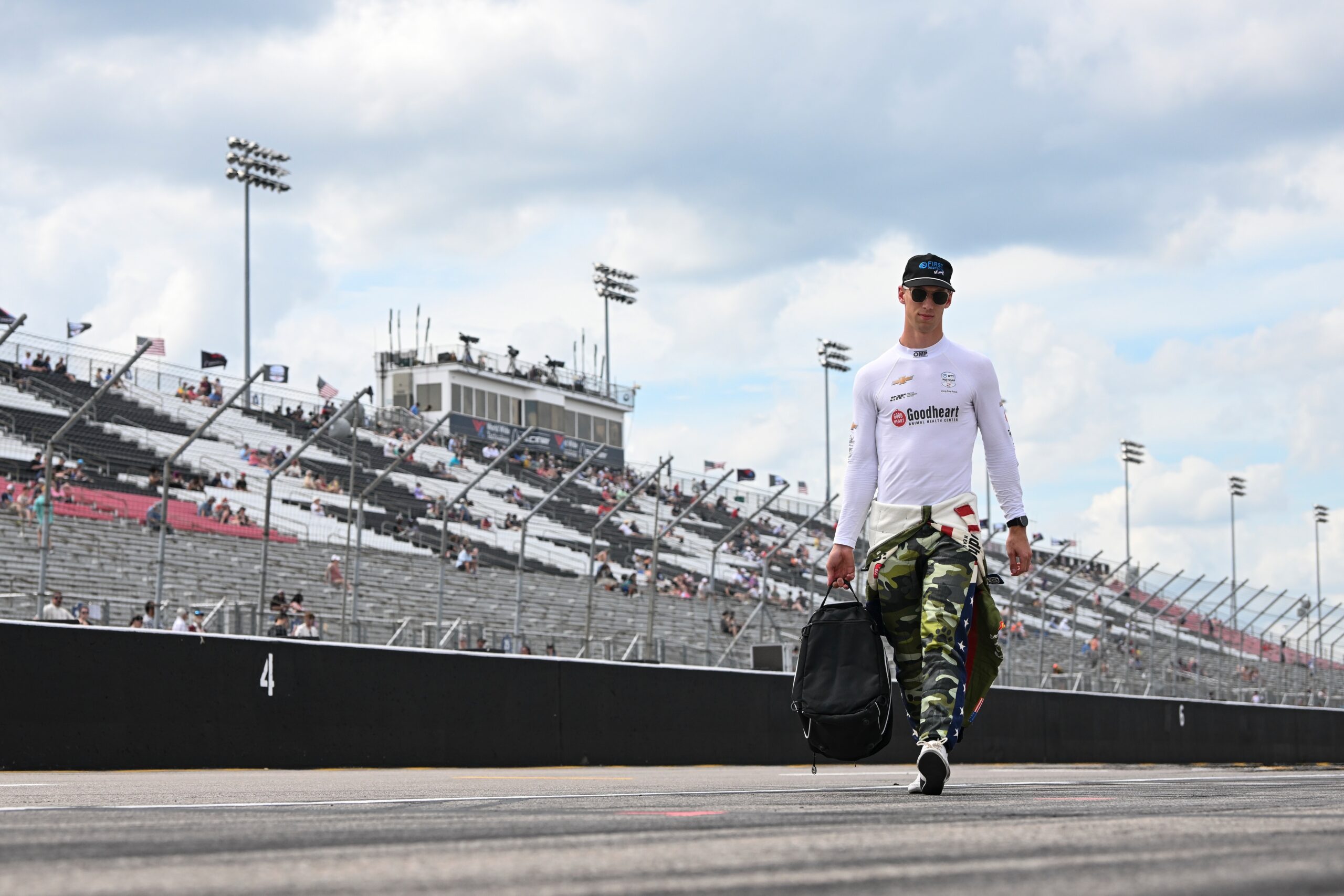
The 24-year-old will take his No. 77 Chevrolet to the roads of Washington for Sunday’s Freedom 250 Grand Prix.
Read more California’s death penalty could end over claims that it’s racist
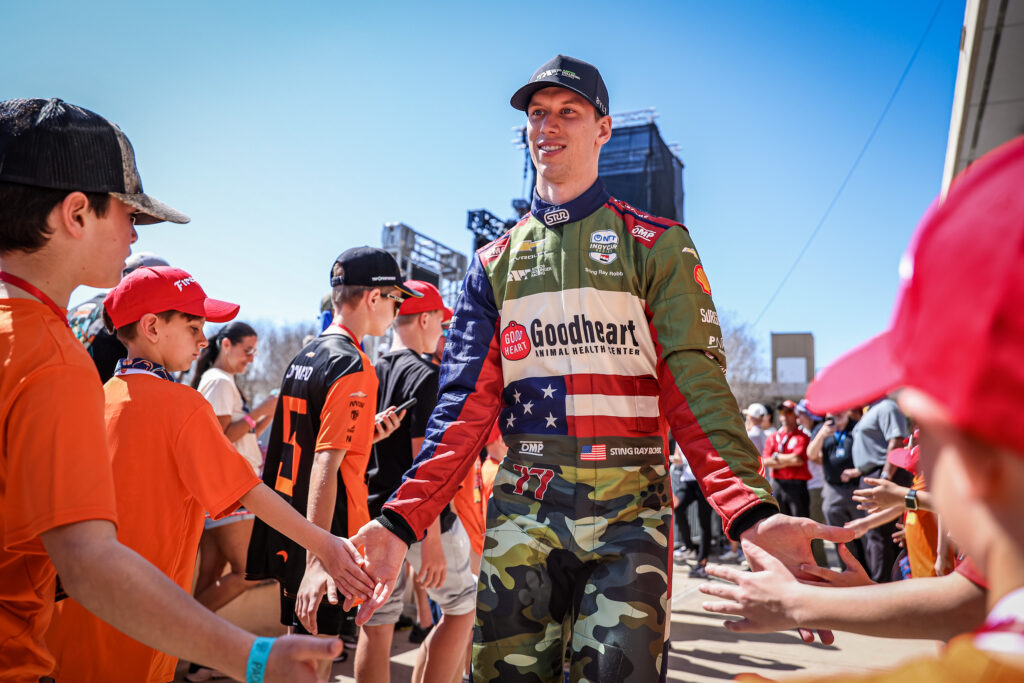
Sting Ray Robb is a racecar driver who was named for a car.
Sting Ray, you see, is his real name, the one printed on his birth certificate back home in Payette, Idaho. His parents were car people, and the car they loved most was the Chevrolet Corvette Stingray, with its sleek, elegant lines, side vents cut like gills and graceful suspension that allowed it to hold tight on tiny country roads.
“You’ve seen girls that are named Porsche or Malibu or something,” says his mother, Kimmie Serrano. “Well, why can’t we name a kid Sting Ray?”
Knowing people might not appreciate the splendor of naming her child after a Corvette, Serrano concocted some convoluted story about melding an ancestral town with the first name of some relatives to come up with Sting Ray. But that was a ruse. Looking back, she admits she might not have thought through the name, even if she split it into two words to seem less like an automobile or a fish.
Nor did she suspect he would grow up to become a racecar driver.
“I didn’t think it would be such a limiting name for him,” she says.
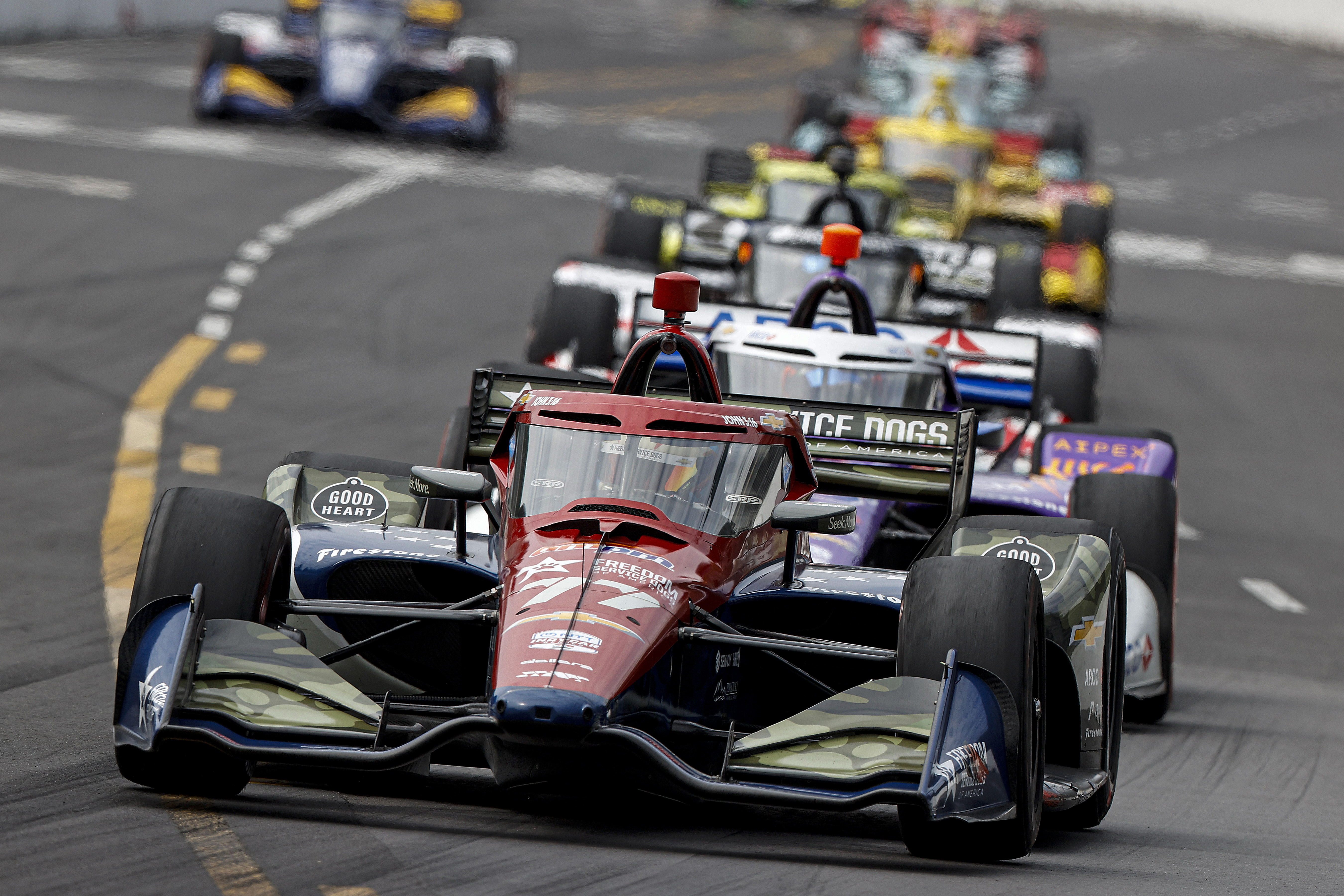
Today, “Sting Ray” rolls off the tongues of IndyCar Series announcers, a name too perfect to be real. It’s helped make Sting Ray Robb one of the most recognized drivers in the circuit of characters hurtling more than 240 mph around tracks and city streets. Some fans even hum the theme to the 1960s TV show “Stingray,” a program Sting Ray had never heard of until someone brought it up on a YouTube channel. Undoubtedly, his No. 77 car — a Chevrolet, of course — will get one of the biggest roars at Sunday’s Freedom 250 Grand Prix in Washington.
Still, naming a child Sting Ray has had its complications. On the day Sting Ray was born, Serrano’s mother held her grandson for the first time and said, “I’m so sorry about your name.” School registrations were tough. So were doctors’ appointments and anything else where a legal name was required.
His half-brothers called him “Jelly,” short for jellyfish. Kids in town called him “Swordfish.”
And whenever Sting Ray winds up on the phone with a customer service representative, there’s always an awkward conversation that he describes as going something like this:
“What’s your name again? Is it Steve?”
“No, Sting Ray.”
“Could you spell that?”
Not that he’s complaining.
“I mean, it worked out well,” Sting Ray says. “For the profession I’m in, you couldn’t get any better. I wasn’t going to be an accountant or an insurance salesman by any means. People would not trust me with their dollars.”
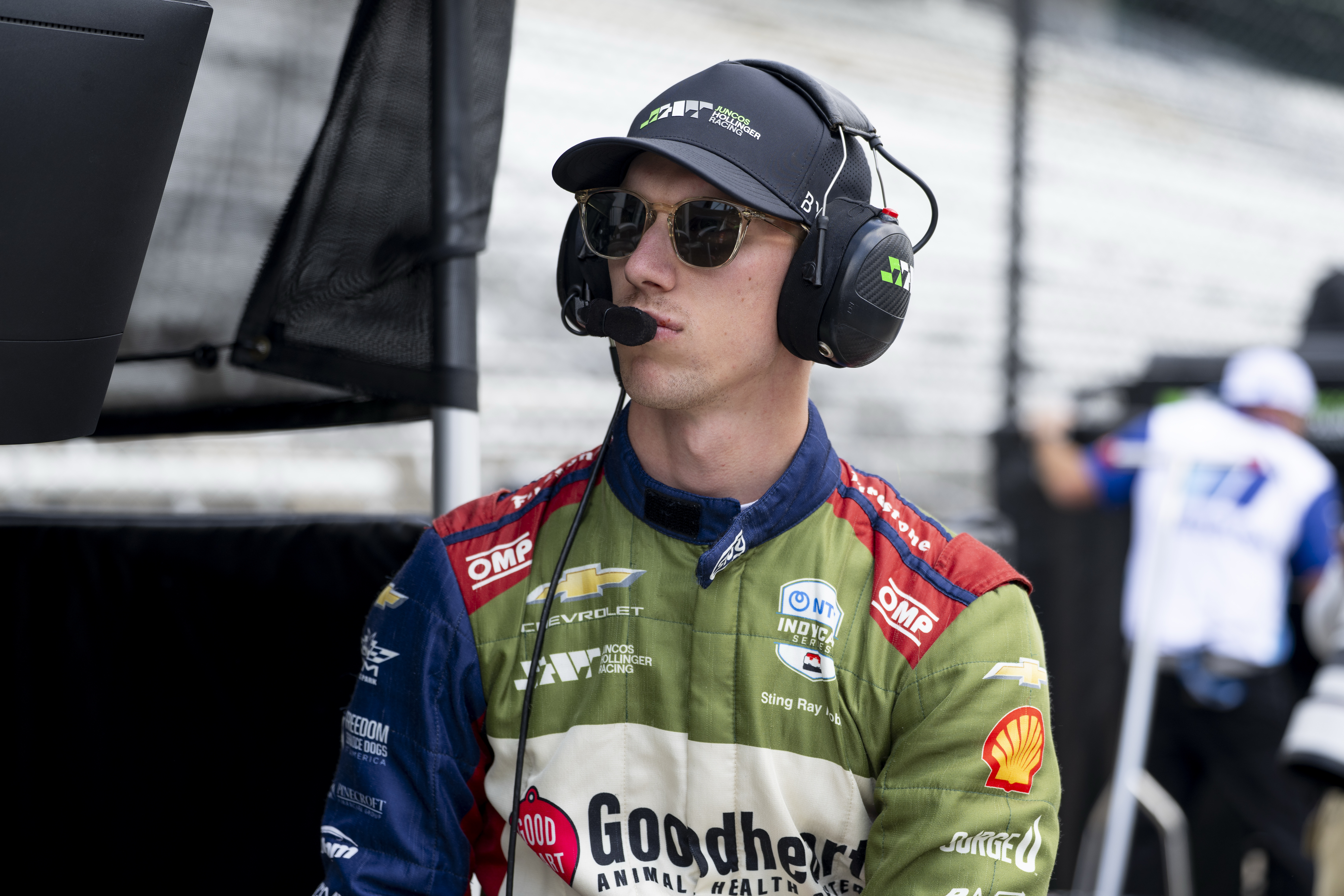
The thing is, Sting Ray Robb doesn’t look much like someone named Sting Ray. Seeing the 24-year-old in khaki pants in the lobby of a fancy Washington hotel, you wouldn’t think he’s a racecar driver. He’s slender and clean-shaven with tussled hair and curious blue eyes that seem to ask questions even as he talks. In conversations, he sometimes leans forward with his knees tucked and hands clasped, thoughtfully, near his mouth. Sting Ray says he’s a “nerd” about the mechanics and aerodynamics of car racing. He doesn’t swagger. His golf shirt, covered with sponsor logos, is buttoned to his neck.
He can talk forever about the details that make IndyCars hurtle at speeds reserved for commuter jets and bullet trains, explaining in polished detail the tremendous G forces that flatten drivers against their seats, making them feel like bobbleheads, and the sweltering humidity of a car’s cockpit.
After a race, he says, his whole body aches.
“Wouldn’t you want to drive 240 miles an hour with 24 other guys who want to drive you off the road?” he asks with a shy laugh. “Doesn’t that sound fun?”
Despite being named for a car, Sting Ray wasn’t born to be a racecar driver. His parents had done some casual racing at tracks in Idaho, but their real business was an independent grocery store run out of an old Safeway near the Idaho-Oregon border. His mother hoped he would play basketball or baseball.
Sting Ray wasn’t interested in the other kids’ sports. He wanted speed. At 3, he told his mother he wanted a motorized go-kart. She told him maybe he could get one when he turned 5, hoping he would soon forget and be on to something else. He didn’t forget. By that point, he was flying so fast on his bicycle down the long driveway of the family’s home she remembers screaming to herself, “Can’t we get him on four wheels?”
Sting Ray got really good at karting. Soon enough, he was a regular on the national circuit, and the family was driving off to some distant track every weekend. When he was 11, he read Malcolm Gladwell’s “Outliers” and absorbed the theory that mastery of any skill requires doing it for 10,000 hours. He decided to fill every one of them.
Serrano kept hoping Sting Ray’s fascination with speeding cars was just a phase, but there was no hope. Sting Ray was hooked, and he was on the IndyCar Series by the time he turned 20. A year later, he finished 15th at the Indianapolis 500.
Sting Ray doesn’t know what makes him crave going fast. He’s not a reckless driver in his daily life. Serrano thinks he drives too slowly when doing errands. He doesn’t think he’s crazy like some racers who have a gift for careening down tracks and ducking around the other cars. He sees his approach as cerebral, and figures he’s got “a screw loose” like anyone who drives an IndyCar vehicle.
Read more She’s a Trump acolyte. He’s a ‘gringo Sandinista.’ Meet the Harps.
“Whether it’s a calculated screw I have loose or an actual screw is a conversation for someone else to have,” he says. “[But] I’ve got something.”
He mentions Alex Honnold, famous for his solo climbs of El Capitan and the 101-story Tapei Tower in Taiwan. Doctors once did a scan of Honnold’s brain and found the part that processes fear was inactive.
“I think the same is the case for many drivers,” Sting Ray says. “We’re calculating risk through milliseconds, and you have to dance on that edge of controlled chaos every lap. And if you don’t, you’re already behind.”
Two summers ago, Sting Ray was in a big wreck. A really bad one. It came at a race in Iowa when his car hit the back of another and rose straight in the air like a rocket before crashing upside down on the track and skidding in a shower of sparks. Miraculously, he was not injured, though he did pass out from shock after stepping from the car.
A week later, he was racing at the next IndyCar Series stop in Toronto.
Sting Ray describes his accident in almost surreal terms, as if it had been an out-of-body experience. Time, he says, slowed down “in the worst way possible.”
As he flew, he thought about the drivers who had been in the same position, such as James Hinchcliffe, who wound up with pieces of his car wedged into his body during an Indianapolis 500 practice run, or Robert Wickens, who was paralyzed in a 2018 crash at Pocono Raceway in Pennsylvania. Sting Ray wondered if he was going to be like them, too.
“Am I going to walk away from this?” he asked himself.
He wasn’t afraid. If anything, he was stuck by the overwhelming sense of acceptance he felt about his fate. Christianity had been a big part of his family life since he was a child. But as Sting Ray got older, he started to wonder what his faith meant. Was it something he had been taught or truly believed? He needed to read and research, and find ways to test what he thought to be true.
“I think that should be the case for anyone that has a faith of any sort, right?” he says. “There are seasons of a lack of faith. But that’s why it’s called faith.”
Soaring upside down at the track in Iowa, Sting Ray realized that moment was one of those tests.
“It was an eye-opening experience because I saw that my life has to have meaning outside of racing,” he says. “I have identity outside of racing. And if I don’t, then why am I here? Why am I doing this? Because at the end of the day, if my identity is tied to the results of the day, and in a results-driven industry like this, with the highs and lows that we go through, I’m not going to be able to the best that I can be.”
Sting Ray knows that talking about such things can be complicated. He doesn’t want his religion to be seen as political, especially during a week like this, when everything about Washington’s Grand Prix is going to be about President Donald Trump, one way or another. He sees faith as something that should bring people together, not drive them apart.
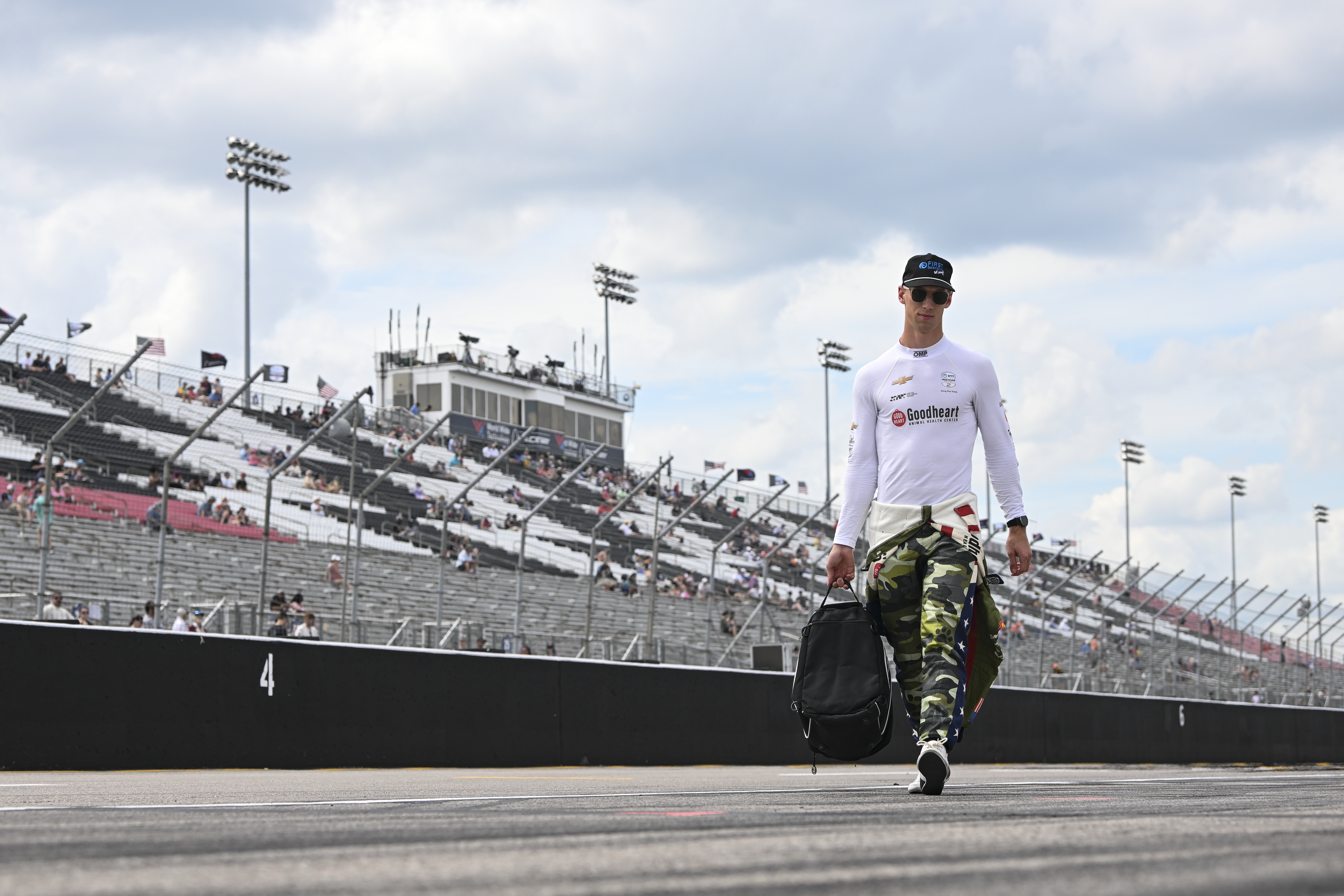
He’s excited about the D.C. race because he sees it as a celebration of the country’s 250th birthday. Earlier this year, he had “We the people” painted on his car. He sees the country and the Constitution as something “bigger than ourselves.”
“We’ve been going through a tough time in our country, and we always have, and we always will, right?” Sting Ray says. “It’s just the struggle of the modern world.”
He also knows there isn’t much he can do about the politics that will loom over the race. He tries to focus on the things that make him happy. On his first day in town this week, he took a tour of the track, gaping at the view of the Capitol near the finish line and marveling at the fact that he will be thundering past the National Gallery of Art at close to 200 mph.
He promises that he won’t try to peek as he’s driving.
Mostly, Sting Ray would love a victory. He still has not won an IndyCar Series race in the 3½ years he’s been on the circuit. The closest he’s come is a couple of ninth-place finishes, though he was 11th last weekend in Ontario and 15th a couple of weeks before in Nashville. But maybe he’s getting closer.
Because it seems only fitting that a racecar driver named for a car should be winning some races.
Read more Led by Olivia Miles, Lynx end Mystics’ home winning streak