In today’s edition … The state of reproductive rights as a political issue … We ask you about how to spend $33 million … but first …
Read more Mamdani emerges as kingmaker, and other takeaways from Tuesday’s primaries
The Senate voted yesterday to block President Donald Trump from carrying out further strikes on Iran, the first time it’s passed such a measure during Trump’s presidency.
Four Republicans joined every Democrat but Sen. John Fetterman in voting to pass a war powers resolution, 50-48. (Two Republicans, Sen. Dave McCormick and Sen. Mitch McConnell, who is recovering from a recent hospitalization, missed the vote.)
The House voted to pass the measure earlier this month, but Democrats and Republicans disagree over whether war powers resolutions are legally enforceable.
Theodoric Meyer and Noah Robertson have more on the vote.
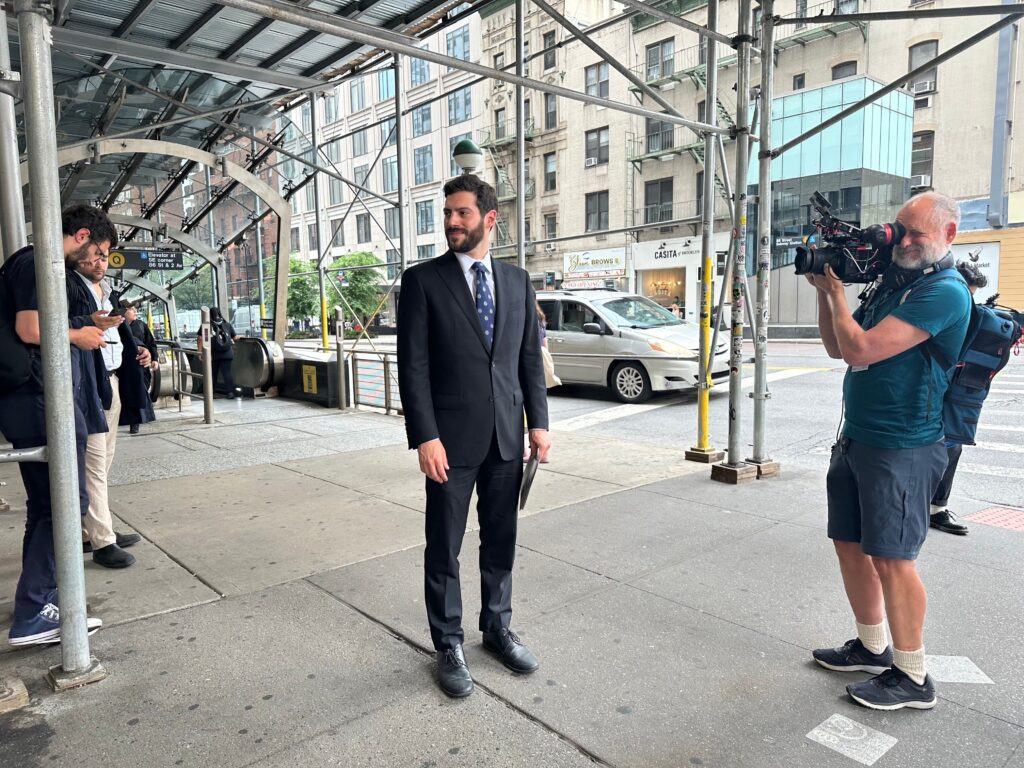
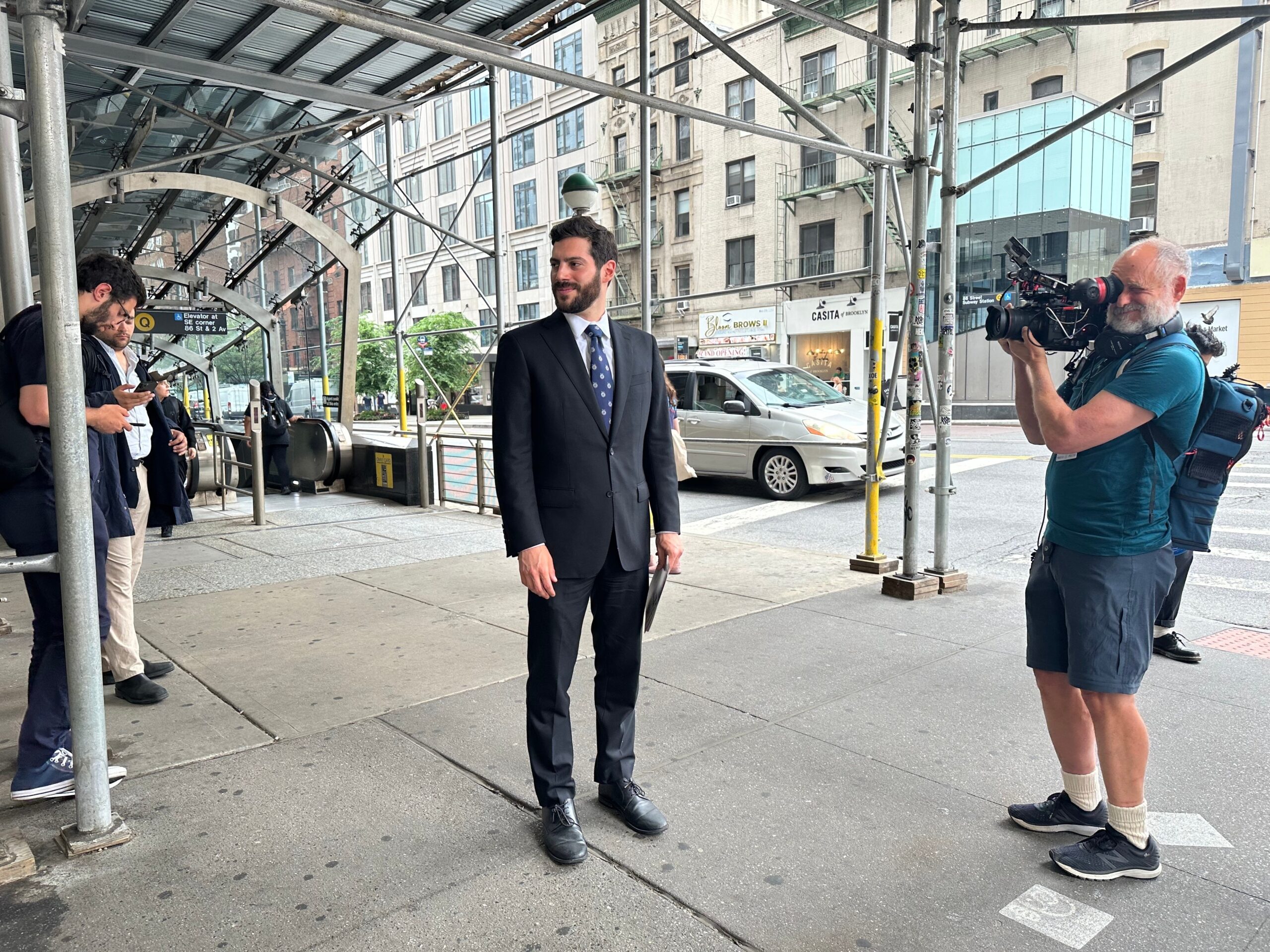
It’s odd that the congressional district stretching the width of Manhattan — from the wealthy Upper West Side and the even wealthier Upper East Side — would turn into the center of the political debate on the role of artificial intelligence in society.
But that is exactly what happened Tuesday night, when Democratic state Assembly member Micah Lasher defeated fellow assembly member Alex Bores in a race that became a proxy for how artificial intelligence should be regulated at the state and federal levels.
Sure, this race to replace retiring Rep. Jerrold Nadler was always going to draw national attention, thanks to the famous names in the contest (a Kennedy heir and a Republican-turned-anti-Trump personality) and the reality that New York gets more attention than it deserves. Nadler endorsed Lasher.
But it was the policy question at the heart of the contest that turned the race into a pseudo-shadow contest between big-spending tech giants eager to put their mark on politics. Bores became a lightning rod for the debate over AI after shepherding a high-profile AI regulatory bill through the state assembly last year.
That was clear on Tuesday night when Bores conceded to Lasher, casting the race as a preview of fights over AI to come.
“The message that we sent in this campaign is far more important than the specific person that represents the seat, and with this outcome, we have sent that message,” he said in a loss.
Ad spending in the contest topped $26 million, according to AdImpact, a firm that tracks spending on political races. Think Big PAC, a group funded by investors behind OpenAI and others, spent more than $3.6 million on a slate of negative ads hitting Bores, while Jobs and Democracy PAC, a group funded by the AI firm Anthropic and others, spent more than $5 million to boost Bores. That wasn’t all the spending, either. Stand for New York, a pro-Lasher group, spent more than $8 million on ads touting the state assembly member.
The ads became so incessant that the most-run ad from Jobs and Democracy PAC opened with a narrator simply saying, “Yep, another ad about this race. We’ll make this one painless, promise,” before launching into a pro-Bores message.
To say those behind the anti-Bores spending were elated on Tuesday night is an understatement — they viewed the Democrats as one of their top targets of the year.
“Even with a significant spending advantage, Bores failed to build support with the broader electorate,” said a strategist familiar with the race, who spoke on the condition of anonymity to talk openly about their strategy on the race. “The debate around AI policy isn’t going away, and not every race where it becomes a factor will resemble the makeup of NY-12.”
Bores did not run away from the AI discussion. Instead, he embraced it and argued that more candidates should do the same.
“Congress is completely missing the boat,” Bores said in an interview ahead of Election Day. “This is an issue that surveys show Americans trust neither party in right now, and they see it affecting their daily lives.”
The spending — on both sides — helped elevate Bores, a relatively young, largely unknown lawmaker, boosting him in a race that had a lot of better-known names. But it also turned the contest into a bitter feud not only between lawmakers but between OpenAI and Anthropic, two AI titans with competing views on the industry who have been feuding for months and using the midterms as their battlefield.
“I have some news for the two big AI companies who’ve taken such an unusual interest in who won this congressional seat: I won’t be taking my cues from either of you when it comes to protecting our kids, our jobs, our environment,” Lasher said in his victory speech, highlighting how even with all the spending, the coalition behind AI regulation will likely grow after the midterms.
A few other headlines from last night’s election results:
Reproductive Freedom for All, a reproductive rights group formerly known as NARAL Pro-Choice America, plans to spend $23.5 million mobilizing voters around November’s midterm elections with the goal of targeting antiabortion candidates and electing pro-choice politicians.
Read more After clashes, Senate Republicans prepare to talk it out with Trump
The announcement comes on the four-year anniversary of the Supreme Court’s decision in Dobbs v. Jackson Women’s Health Organization, the ruling that overturned long-standing abortion rights outlined by Roe v. Wade, the court’s landmark 1973 decision.
The spending is interesting for myriad reasons. That level of targeted spending could help in a few key races, and the group plans to target voters in Arizona, Michigan, Nevada, California, and Georgia. But the most interesting reason may be how it addresses the broader questions of whether abortion rights — an issue that has dominated left-leaning politics since Roe was overturned — will be a top-of-mind issue for voters four years later.
“Four years after Dobbs, abortion bans have created a dangerous and chaotic patchwork where access to care depends on where someone lives, how much money they have, and whether they can travel,” said Mini Timmaraju, the president of the group. “Anti-abortion politicians created this crisis, and this November, Americans will make sure they are held accountable.”
We have documented the questions around the potency of abortion rights in these midterm elections — especially after the issue failed to motivate voters in 2024. But activists like Timmaraju and others believe that the further the nation moves away from the rights enshrined in Roe v. Wade, the more potent the issue becomes.
“Reproductive freedom remains a top issue for Americans, and an anti-abortion stance is a disqualifier for voters,” Timmaraju said. “The Dobbs anniversary is a reminder to the American people of what Trump’s Supreme Court, his administration, and his allies in state governments have delivered.”
The group is targeting three House districts in particular: the race to oust Republican Rep. Juan Ciscomani in Southeastern Arizona, the bid to defeat Republican Rep. Tom Barrett in Central Michigan and the effort to protect Democratic Rep. Susie Lee in Southern Nevada.
Times of San Diego: Records from Otay Mesa detention center show how one man’s health fell apart while detained by Immigration and Customs Enforcement. “It’s been three days since I received my insulin … and I’ve been feeling really bad,” the man wrote.
The Spokesman-Review: Spokane, the largest city in Eastern Washington, becomes the latest community to put a moratorium on large data centers. No large data centers can be built in the city for the next year “after an emergency moratorium was approved 6-1 by the Spokane City Council Monday night.”
VT Digger: We had never heard the concept of the ‘National Park System for rivers,’ but now that we know it, we are intrigued. It appears three rivers — two in Vermont — have been proposed for the system.
Many of you care a lot about Trump’s Reflecting Pool fiasco.
“The Reflecting Pool saga is the Cliff Notes version of the Trump presidency: proclaim expertise, denigrate predecessors, hire a crony at extreme expense, exalt the result as ‘something no one has seen before,’ deny the obvious outcome, make up reasons for failure, and move on to the next debacle,” wrote Peter Storandt.
“Whether it’s The Reflection Pool, the Ballroom, the renaming of the Kennedy Center, or attacking Iran, the Reflection Pool fiasco is a reflection of the way in which this president operates: the bull in the china shop doesn’t stop to carefully consider what he might break,” added Mary Ciriello.
Many of you were particularly exercised that the president is blaming vandals for the damage, not acknowledging the possible flaws in his plan from the outset.
“As for vandalism, Trump is incapable of accepting responsibility for anything. Trump needs to man up and admit his ‘world’s best’ contractor was wrong about the fix and the job was botched,” wrote Patrick Dimmitt.
Not everyone agreed with this sentiment. While it was the overarching response, some said this issue was not important.
“It doesn’t matter. If drained, repainted, and refilled, as it will be, it will be forgotten within days,” wrote Michael McBride, a reader in Virginia. “It — and the paint color chosen especially — is the least important political matter of my 75 years.”
Our colleague Erin Cox wrote a standout piece about the massive amounts of money being spent in a tony Maryland district — and the absurdity around the relationship between the candidates. The race, she writes, was a more-than-$33-million public brawl. As of this morning, April McLain Delaney was projected to win — see the results here. So we wanted to ask you: What could $33 million be better spent on than this feud? What does it say about these candidates that they are willing to spend that much of their fortune to work in the House? Let us and your fellow Early Brief readers know at [email protected].
Thanks for reading. You can follow Dan and Matthew on X: @merica and @matthewichoi.
Read more Capitals complete search for high-end winger with trade for Jordan Kyrou