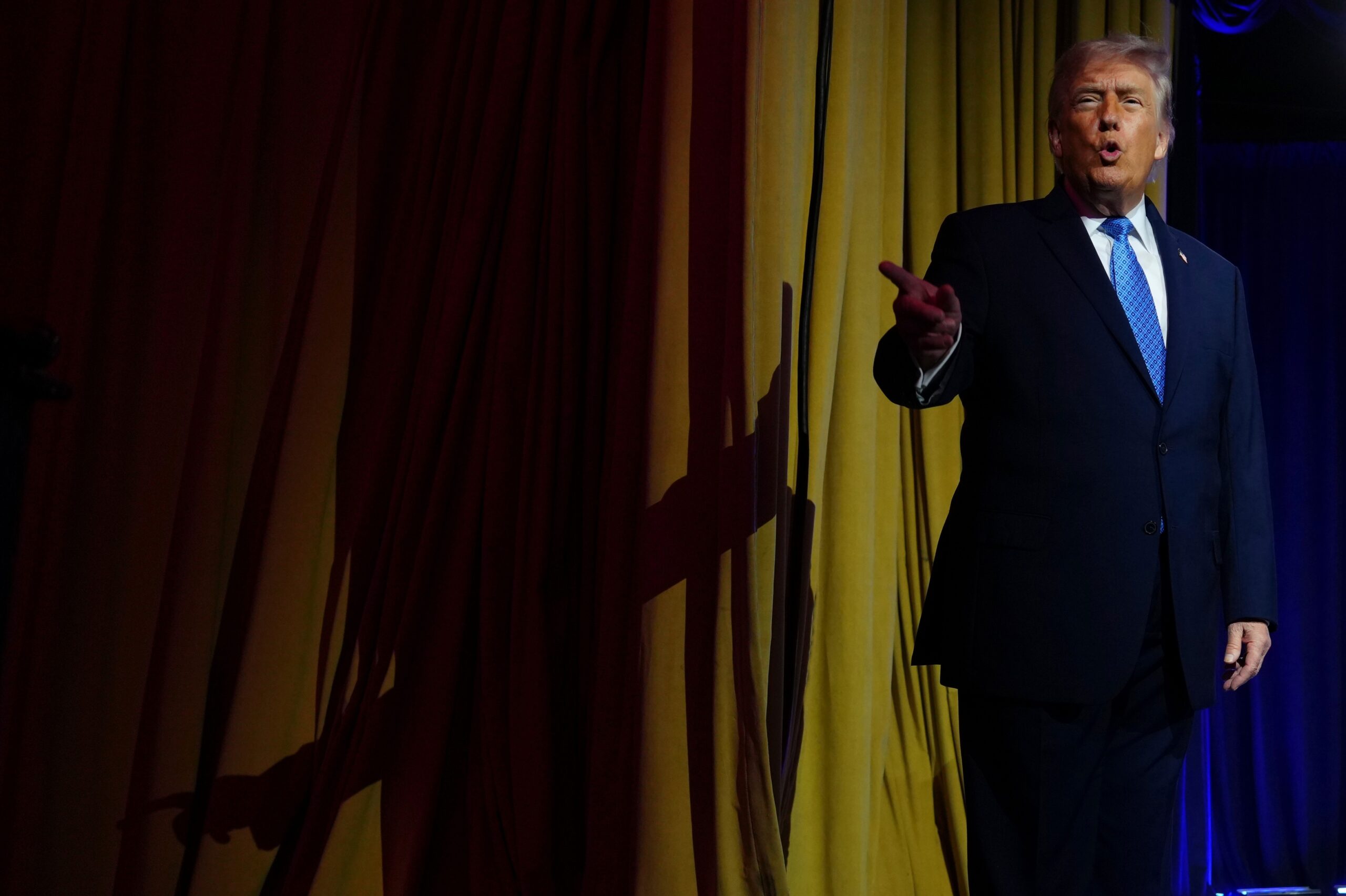
In a term in which the president’s policies dominated the docket, one dynamic explains why the court often ruled for him but didn’t always give him what he was seeking.
Read more Supreme Court losses cause some transgender activists to rethink legal strategy
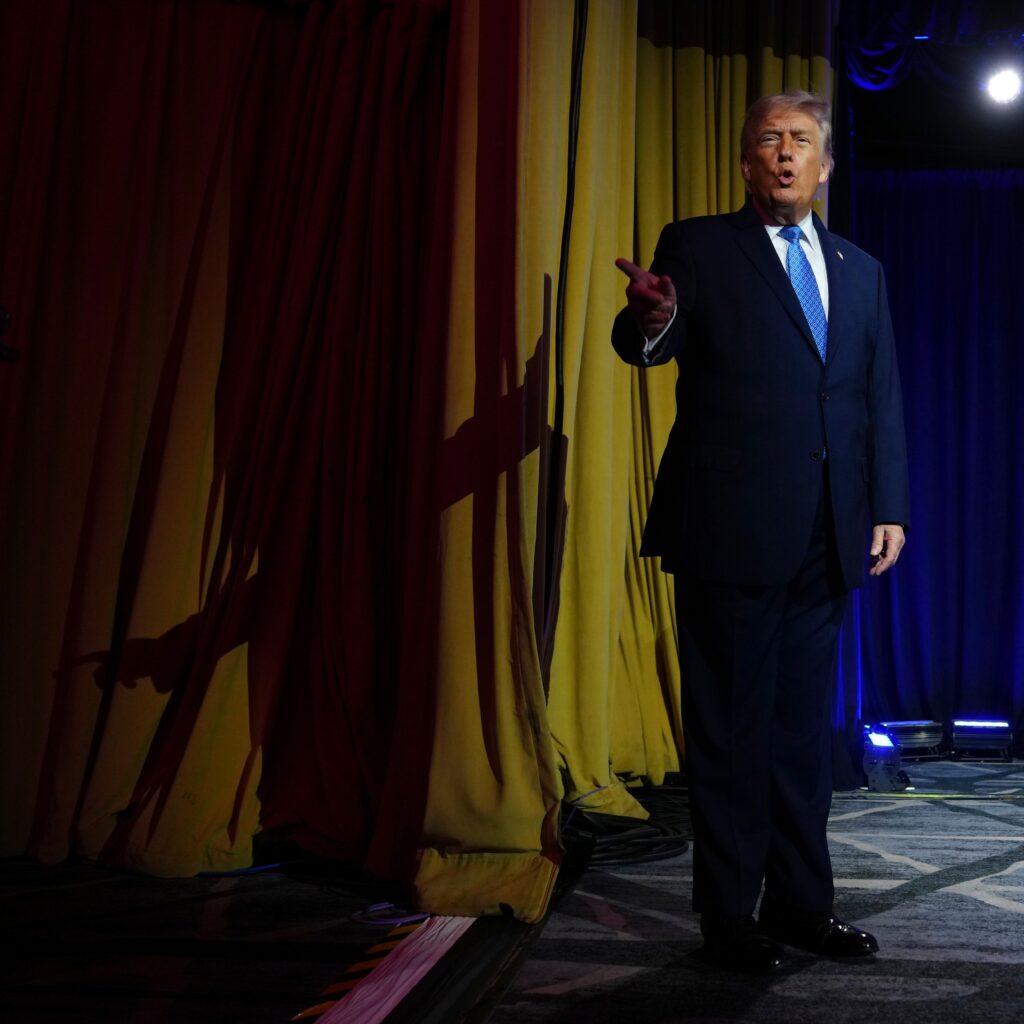
Liberal Supreme Court Justice Ketanji Brown Jackson scorched her conservative colleagues in a dissent this term, accusing them of contorting the law in a series of rulings so President Donald Trump “always wins.”
Months later, Trump ripped some of the same conservative justices, calling them disloyal and an “embarrassment to their families” for striking down his sweeping tariffs.
In a term in which the president’s policies dominated the docket, some saw a high court overly beholden to Trump’s agenda, while others thought the justices tried to thwart it.
The high court cemented Trump’s authority to bend the executive branch to his will in ways his predecessors did not and to aggressively pursue sharp limits on legal and illegal immigration. But the court stopped short of granting him more power to impose trade barriers, shape the economy and redefine who is American.
Legal experts said both his wins and losses reflect a divide in conservative ideology.
The court has been largely solicitous of Trump, but it broke with him when his Make America Great Again agenda clashed with traditional conservative orthodoxy, said Aziz Huq, a University of Chicago law professor.
“I think of a majority of justices on the court as being broadly aligned with the Republican political project as it has unfolded over the last few decades,” Huq said. “I view them as being in sync with Trump so far as they view him as extending and deepening that political project. And contemptuous where they see him as being at odds with that project.”
While Trump appointed three of the six conservatives on the nine-justice court, all emerged from mainstream conservative legal circles rather than the populist wing of the Republican party that has come to dominate under Trump. The court’s conservative bloc has also emphasized an interpretation of the Constitution based on its public meaning at the time it was ratified.
Overall, the Trump administration racked up an impressive series of wins on the Supreme Court’s emergency docket, at which the justices decide whether to let policies go forward temporarily while lawsuits challenging them play out. The administration won 21 such cases on Trump policies in his second term so far, while only losing six.
The conservative majority allowed Trump for now to bar transgender soldiers from the military, gut the Education Department, fire 16,000 federal workers, freeze millions in federal funding and allow DOGE broad access to Americans’ sensitive data. The rulings are provisional, but many have the effect of a final verdict because the changes will be hard to undo even if the challengers ultimately prevail.
The justices, however, blocked Trump’s bid to exert more control over the Federal Reserve, ordered the administration to “facilitate” the return of Maryland resident Kilmar Abrego-Garcia from El Salvador in a high-profile immigration case, and stopped a group of Venezuelans from being deported using a controversial war-time authority.
The administration’s record was more mixed on the court’s regular docket this term, where the justices issue final rulings on the legality, and sometimes constitutionality, of policies. The administration won two cases and lost three.
The justices allowed Trump to fire the heads of agencies that Congress set up to be independent of the president and to permit immigration agents to turn away asylum seekers at the border.
On the other side of the ledger, the high court struck down Trump’s bid to end birthright citizenship, nixed his sweeping tariffs and blocked him from deploying National Guard troops to Chicago.
Huq said the court and Trump were most in sync on executive authority and curbing immigration.
The ruling on Trump’s authority to fire agency heads was among the term’s most consequential. The conservative majority cleared the way for Trump, and future presidents, to potentially remove the leaders of more than 20 agencies without cause.

Republicans say the ruling will make the agencies more accountable to the president, but Democrats worry the executive could reward cronies or punish enemies using regulatory agencies that rule on safety standards, elections, nuclear energy and more.
When coupled with the court’s decisions to allow Trump to fire federal workers and downsize the Education Department, the rulings added up to one of the biggest changes to the structure of the federal government in decades and unshackle the president in his dealings with the executive branch.
The majority opinions in those cases are in keeping with the “unitary executive theory,” an idea popular with Trump allies and traditional conservatives that posits the Constitution allows the president to wield largely unfettered control over the executive branch.
Even so, the court was unwilling to take the theory as far as Trump wanted, showcasing another fault line between Trump’s brand of conservatism and the court’s.
The justices blocked Trump from removing Fed Governor Lisa Cook for the time being. Trump has accused her of mortgage fraud — allegations she denies — while agitating for the bank to lower interest rates.
Trump’s efforts were at odds with the traditional conservative idea that the central bank should be independent from the president. The fear is the executive could lower interest rates for short-term political gain, which could spark inflation in the long run and tank the economy.
Conservative Justice Brett M. Kavanaugh touched on that point during arguments in the case, saying a president could gin up reasons to fire governors under the system Trump wanted with destabilizing implications for the bank and the economy.
“What are we doing when we have a system that incentivizes that?” Kavanaugh asked.
The court and Trump were arguably even more aligned on restricting immigration, which has been pushed by conservatives for decades and has featured prominently in Trump’s appeals to voters. The changes blessed by the court vastly limit avenues for migrants seeking refuge in the United States.
In one of the major rulings of the term, the justices cleared Trump to lift temporary humanitarian protections that allow hundreds of thousands of Haitian and Syrian migrants to remain in the U.S. The ruling came over the objections of the court’s liberals who said Trump administration officials failed to take the proper steps in assessing whether the current conditions in those countries are safe.

The decision could have broader implications. Approximately 1.3 million immigrants from 17 countries hold what is known as temporary protected status (TPS) because of war, famine or other issues in their countries.
Earlier this term, the court also allowed agents to use race as a factor in immigration stops. The decision followed rulings last term in which the court curtailed a program that allowed more than 500,000 migrants to live and work in the U.S. while their immigration cases play out and let the administration deport migrants to countries that aren’t their homelands.
On the whole the body of decisions the court issued this term have largely ratified the administration’s moves, said Nathaniel Persily, a law professor at Stanford University.
Read more Trump to honor a president he sees as a peer — Theodore Roosevelt
“Yes, it’s true in certain areas they have issued opinions on tariffs and birthright citizenship that are contra what the administration wanted, but as a general rule the court is quite friendly to the Trump agenda,” Persily said.
The liberal justices have not just taken issue with the decisions for Trump, but how the court has made them.
Jackson criticized the conservative majority for rushing to ratify too many of Trump’s policies on the court’s emergency docket without full briefings or arguments in a rare joint appearance with Kavanaugh. Kavanaugh said the court has treated Trump and former president Joe Biden similarly.
Other times the liberal justices have complained the court has ignored its own precedents.
Conservative Justices Neil M. Gorsuch and Kavanaugh criticized lower court judges in an emergency opinion for ignoring precedent they had set in some Trump cases.
“Lower court judges may sometimes disagree with this court’s decisions, but they are never free to defy them,” Gorsuch wrote for the pair in one case.
The most significant clashes between Trump and the court came in the tariff and birthright citizenship cases.
The justices ruled Trump did not have the authority to impose tariffs under a 1977 law and struck down Trump’s move to deny citizenship to children born to parents here temporarily or illegally.
The traditional, free-market branch of the Republican Party is skeptical of tariffs, while the populist, Trump-aligned wing has embraced import taxes.
Likewise, the effort to rewrite who can be considered American has gained ground in the mainstream conservative legal movement in recent years, but it does not have deep roots and is opposed by some Republicans.
Ilya Shapiro, a senior fellow at the conservative Manhattan Institute, said there’s another way to view how the court has acted in Trump cases that has less to do with differences in ideology between traditional Republicans and Trump.
“It’s not because the court is politically conservative, populist or pro-Trump,” Shapiro said of its decisions this term. “It’s simply the way that it reads statutes. It’s much more originalist and textualist than it has ever been. I think that is a vindication of the long-term conservative legal movement.”
Shapiro was referring to the legal theory popular with the court’s conservatives that holds the Constitution should be interpreted based on its public meaning at the time it was ratified. Textualism refers to judging a law based on the plain meaning of its words, rather than the intent of lawmakers.
Shapiro added one of the defining features of the court’s decisions against Trump this term was the president “can’t unilaterally change the law or take over competencies from Congress or other government branches.”
Shapiro pointed to the Constitution giving Congress the power to levy tariffs, not the president, while the 14th Amendment grants citizenship to “All persons born or naturalized in the United States.”
Leah Litman, a law professor at the University of Michigan, offered a counterpoint, saying some of the high court’s most significant rulings came in lesser watched cases. On the emergency docket, the justices allowed Trump to unilaterally freeze $4 billion in foreign aid and cancel roughly $800 million in NIH grants for the study of health issues in minority and gay communities.

The high court ruled on technical grounds for the Trump administration in both instances, but Litman said the cases were important because the Constitution assigns Congress the power of the purse.
“Giving the president the power over federal funds is just a huge sweeping reallocation of the separation of powers,” Litman said.
Litman said there was also a major difference between how the court handled Trump policies during his first term and its approach in the second that was particularly evident in the case dealing with deportation protections for Haitians and Syrians.
Conservative Justice Samuel A. Alito Jr. wrote the opinion for the majority, finding the high court did not have the authority to review the Trump administration’s move and the policy was “race-neutral.”
The court’s liberals sharply dissented on the latter contention, pointing out a litany of Trump’s ugly comments about Haitians that they said proved the plaintiffs’ contention that the policy was improperly based on racial animus.
Justice Elena Kagan enumerated how Trump had accused Haitians of eating pets in Ohio, has said Haitians and other migrants are “poisoning the blood” of America and that Haitians “probably have AIDS.”
Litman contrasted the case with another from Trump’s first term, dealing with the administration’s push to include a citizenship question on the U.S. census.
Then-Commerce Secretary Wilbur Ross said the question was necessary to aid in enforcement of the Voting Rights Act, but evidence emerged in lower courts the administration’s real goal was to drive down the counting of minorities for political reasons.
Chief Justice John G. Roberts Jr. wrote in a majority opinion in that case that officials offered a “contrived” reason for wanting the citizenship question.
Agencies must offer “genuine justifications for important decisions, reasons that can be scrutinized by courts and the interested public,” Roberts wrote. “Accepting contrived reasons would defeat the purpose of the enterprise.”
Litman said the case demonstrated the court’s deference to the Trump administration’s explanations for policies in his second term.
“Thus far while the justices have ruled against the administration they have been unwilling to do it on the grounds that they call out the administration’s stated justification or rationale,” Litman said. “The TPS case kind of invited the court to do so.”